


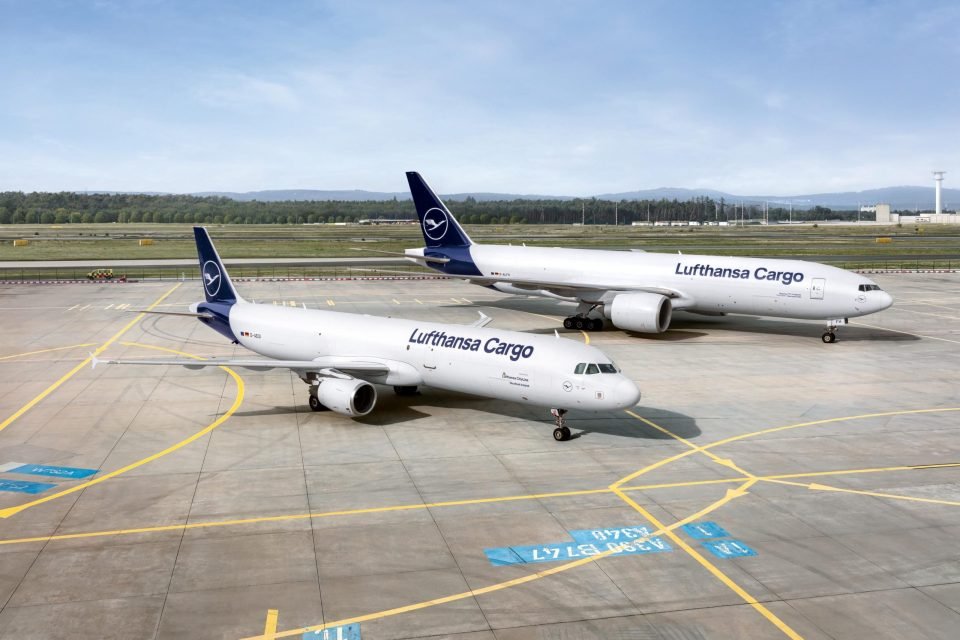
Sustainable Aviation Fuel (SAF) may or may not become the norm for airlines that care about their environmental footprint in the years to come, but German cargo carrier Lufthansa Cargo is certainly one to believe in its value.
Lufthansa Cargo is promoting the use of SAF with its customers and partners and has set out a strategic approach to using more sustainable fuel based on three-year framework agreements, clearly defined quality and verification standards, and flexible follow-up arrangements.
This model, the carrier believes, provides planning certainty while allowing additional SAF volumes to be integrated at short notice and the use of more sustainable aviation fuels to be scaled up step by step.
Bettina Petzold, head of corporate responsibility for Lufthansa Cargo, declared: “The market ramp-up of SAF requires reliability, transparency and long-term collaboration. This is exactly where our structured approach comes in.
“Our agreements create the foundation on which we want to achieve measurable progress together with our customers in reducing CO₂ emissions across global supply chains.”
Lufthansa Cargo pointed to its relationship with CEVA Logistics as an exemplar. Building on a multi-year SAF framework agreement reached in 2025, an additional SAF volume for 2026 has now been agreed.
The cargo carrier said that the existing contractual framework had enabled both companies to implement further SAF volumes for CEVA Logistics “quickly and reliably”.
And while the first agreement for 2025 facilitated a CO₂ reduction of around 8,000 tonnes, the newly added volume is expected to contribute a further reduction of around 7,000 tonnes of CO₂ in 2026.
Driverless towing
In other news, since November the freight carrier has been using driverless tow tractors in regular operations at its Lufthansa Cargo Center in Frankfurt, both outdoors and in two warehouses.
The vehicles, manufactured by TractEasy (a joint venture of GSE supplier TLD and autonomous driving specialist EasyMile), move freight between the import and export terminal. They are – said the carrier – covering approximately 2,000km a month.
Use of the autonomous tractors marks a key milestone in the modernisation of the infrastructure and automation of transport processes at the hub, Lufthansa Cargo said.
It plans to deploy three types of driverless transport vehicles in the future, which will handle a variety of transport tasks. The goal is to strategically relieve skilled staff from routine tasks, enabling them to focus on value-adding activities and also thereby addressing the growing shortage of skilled labour.
A statement from Lufthansa Cargo said that, by 2030, a highly automated transport system will be implemented in several phases, seamlessly integrating into future on-site infrastructure. Additional pilot projects will follow in the coming years.
Thus, later this year, an automated vehicle for ULD transport will be introduced, with automated forklifts to follow in 2027. In addition, a central fleet management software will be introduced to assign all transport orders to the most suitable driverless vehicle within the fleet.
Bearing up
Plus, Lufthansa Cargo recently flew two rescued brown bears, named Gordo and Florencia, from Buenos Aires in Argentina to their new home at the Four Paws Bear Sanctuary Belitsa in Bulgaria.
Their relocation required months of preparation, including crate training, veterinary checks and coordinated logistics across continents, before a Lufthansa Cargo Boeing 777 freighter carried them on the first leg of their journey to Frankfurt.
The two animals received species-appropriate care at the Lufthansa Cargo Animal Lounge at the airport there, Lufthansa Cargo’s home hub, before continuing their journey on board an Airbus 321F.
Upon arrival in Bulgaria, Gordo and Florencia underwent final health checks and then travelled on to the bear sanctuary. The facility provides forest habitats, pools, dens and lifelong expert care for rescued bears from across Europe.
