


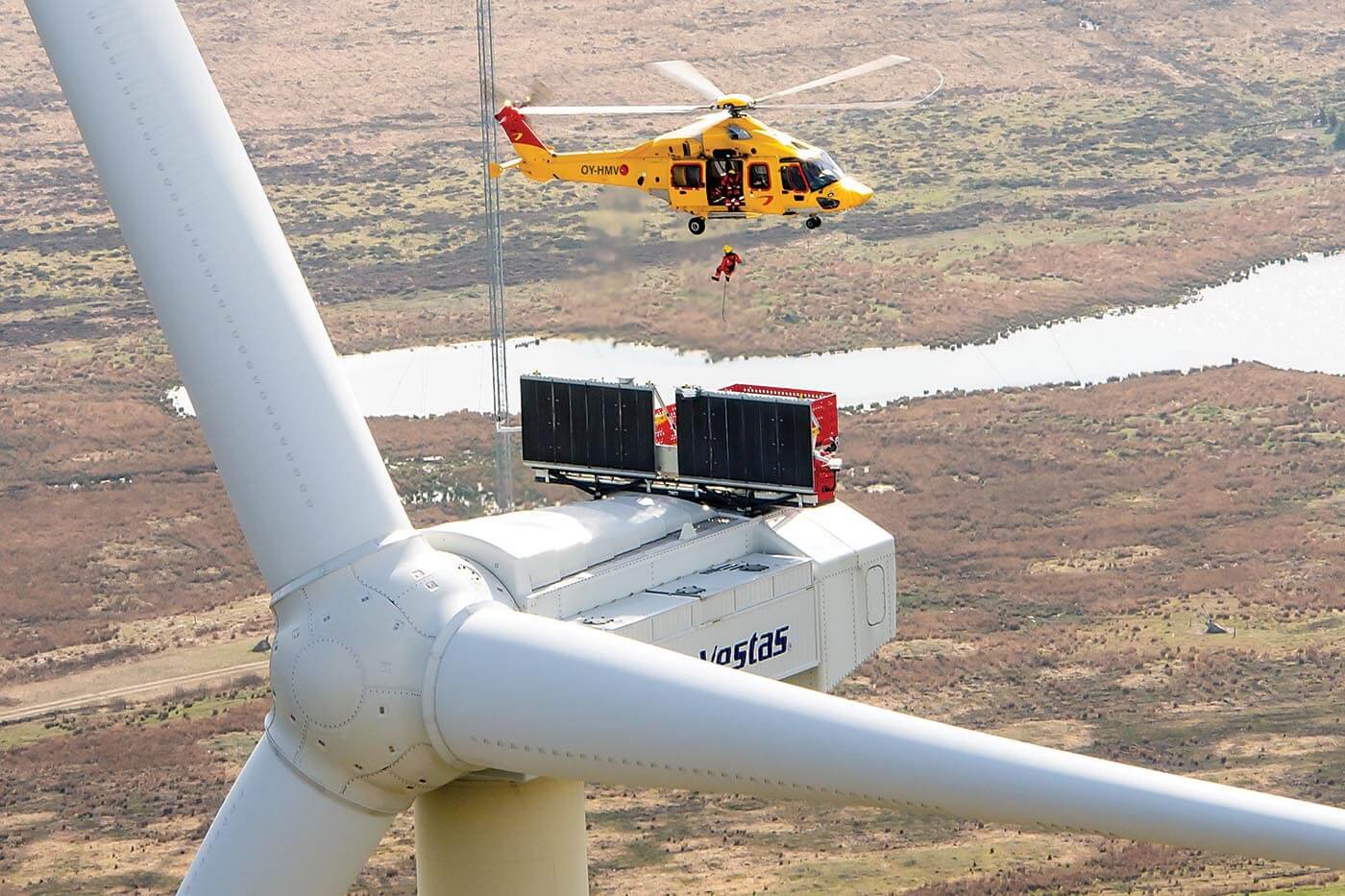
Over the course of a decade in Aberdeen, Scotland, NHV Group has established itself as a key provider of helicopter services to the local oil-and-gas industry. The company is now looking to the future of its Airbus H175 fleet, identifying strong opportunities for hoist operations in the growing wind farm sector.
NHV established its base in Aberdeen in 2015, joining a range of other hubs for the operator, including Oostende in Belgium; Blackpool and Norwich in England; Esbjerg in Denmark; and Den Helder in the Netherlands.
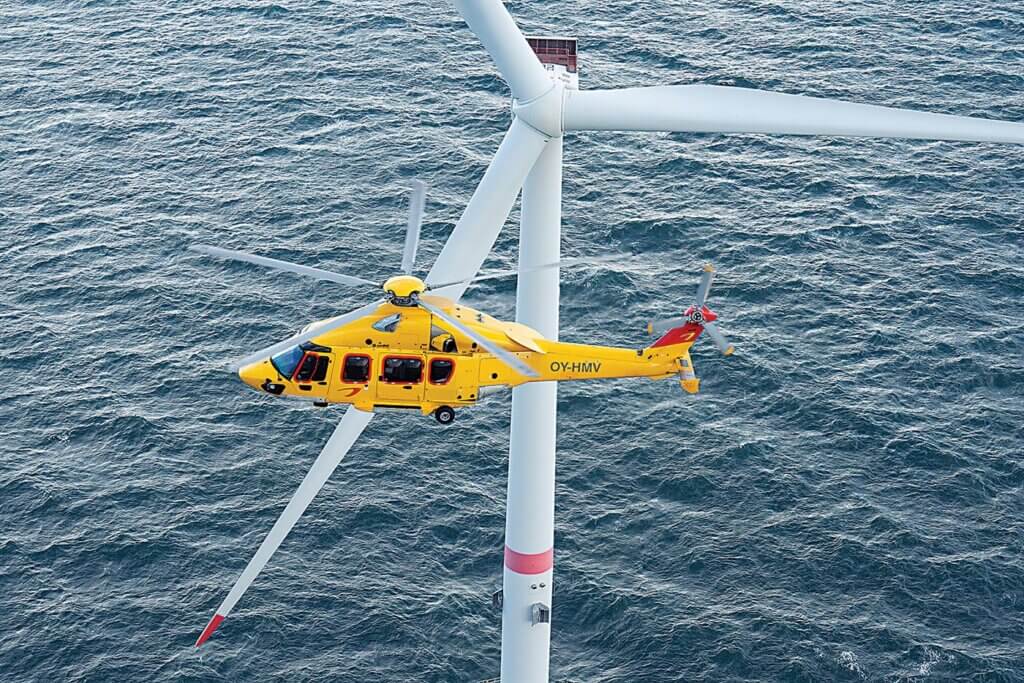
NHV was the launch customer for the H175 aircraft in 2014. According to Jamie John, NHV Group’s chief commercial officer, the company identified strong potential for the super-medium platform in the Aberdeen market.
“It piqued the interest of many customers because it was a smaller aircraft and more efficient than some of the heavier platforms,” he explained.
The crown jewel
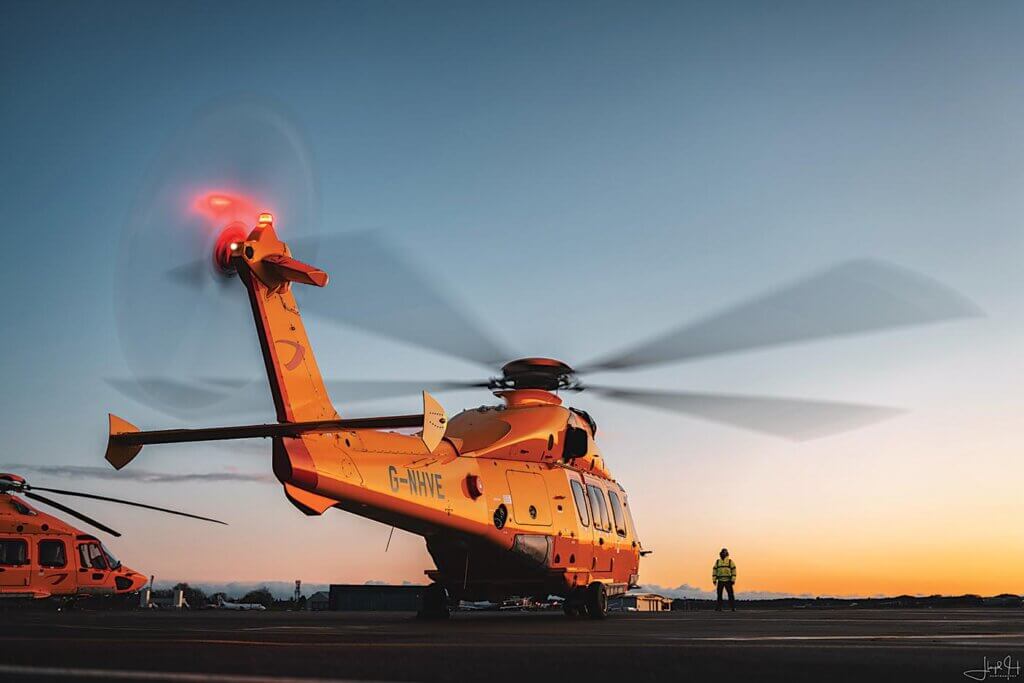
NHV had already established a Scottish operation in Wick, in the far north of the country, in 2012, where it operated on behalf of a single oil-and-gas client. However, it was keen to build a base in Aberdeen — the central hub of the U.K.’s energy sector and a major center for North Sea oil production and exploration.
The services provider eventually identified a site that met its needs. It invested £15 million (US$18 million), upgrading an existing warehouse, adding a second hangar, and building a passenger handling facility and terminal, along with other key infrastructure.
Just 10 years after the Aberdeen headquarters was established, it is now NHV’s busiest base, John said. The operation has grown from one client to around 10, with flight hours increasing from approximately 100 to 700 per month. It has expanded from operating a single aircraft (and a spare platform) to seven, while employee numbers have risen from 15 to more than 130, spanning roles from pilots and engineers to support staff.
NHV today holds about 20 percent of the market share in Aberdeen, “which was our aim when we started here,” John said. “Aberdeen is our busiest base — it’s the crown jewel.”
Much of this success is driven by interest in the super-medium H175, he said. Before building its Aberdeen hub, NHV conducted market research, examining average seat utilization over three-, six-, and 12-month periods. This analysis helped identify market potential among customers needing to transport a maximum of 16 passengers, rather than the 19 carried by heavier aircraft.
“If a customer was carrying, on average, 14 passengers per flight based on historical data, we could show them that the H175 would be the perfect aircraft for them because of its new technology, speed, comfort, and lower fuel burn. That’s what set us apart.”
Servicing wind farms
NHV has seen growth in other markets with the H175. The offshore wind sector is a particular target, with the company performing crew-change operations for the construction of the Baltic Power offshore wind farm since July 2025, utilizing an H175 from the General Aviation Airbase at Gdańsk Lech Wałęsa Airport in Poland. This work is part of a partnership with Vestas.
“It’s a powerful aircraft and performs really well from a hoisting perspective,” John said. “It has a lot of capacity in the cabin, so you can take more people. Instead of transporting just one set of technicians and lowering them to one hoist and then going back to base and picking up another set, we can carry multiple teams within the aircraft.”
The multirole capabilities of the H175 make it a one-stop shop for wind farm operations, he said, meeting requirements for both hoisting and passenger transport. “We can provide greater efficiencies for the client.”
Because Vestas has multiple wind farm projects across Europe, NHV moves its aircraft across different geographic locations depending on operational needs, including its base in Den Helder, as well as from Gdańsk and Esbjerg in Denmark.
“They have an extremely capable platform from both a passenger transport and hoisting perspective, and they have full autonomy on where they need it,” he said. “It takes the stress out of logistics.”
New markets for the H175
NHV currently has one dedicated aircraft working with Vestas, flying up to 100 hours per month, John said. However, he noted that wind farms represent a relatively new market, with further growth expected in the coming years.
In particular, he said NHV is pursuing HEMS tenders with the H175 in the wind farm sector.
“There are a lot of safety cases around operations to wind farms — you need to have some form of rescue,” he said, noting that the H175 is capable of hoisting stretchers, for instance. “That’s something we’re moving into.”
The growing potential of the wind sector points to the future of the H175, John concluded. He noted that wind farms are being constructed farther offshore, meaning helicopters will play a vital role in transporting construction staff and crew members.
“The mission profile and range of the H175 really hits a sweet spot in that market and even exceeds the requirements for these missions,” John said. “Customers get a lot more flexibility and capability with this machine.”
