


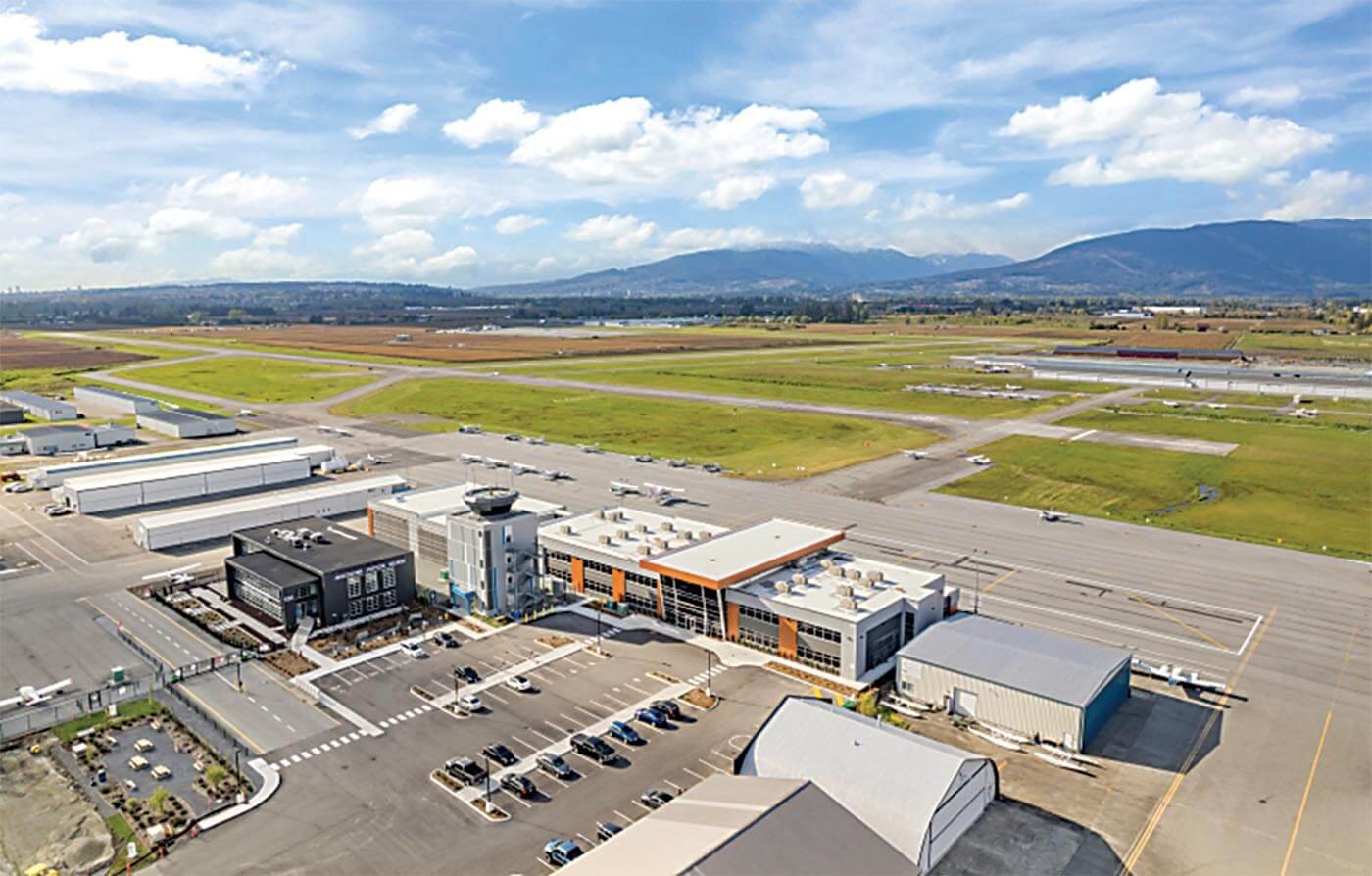
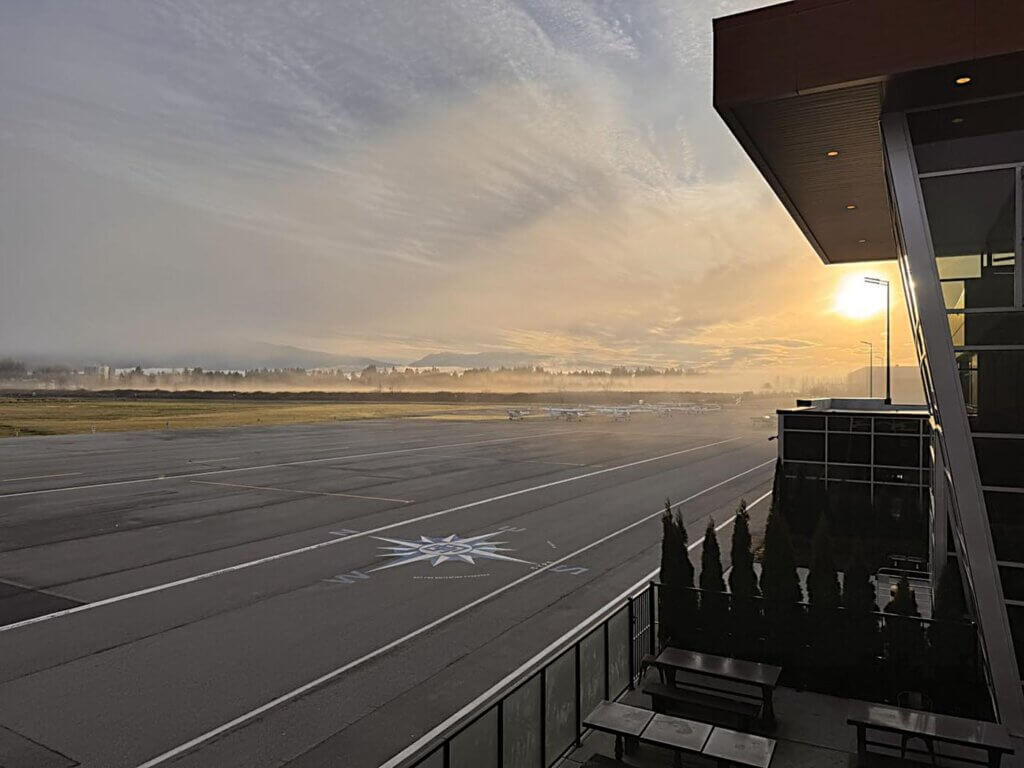
Pitt Meadows Regional Airport is couched in the foothills of British Columbia’s snow-capped Coastal Mountains, a 45-minute drive from downtown Vancouver and a stone’s throw from rambling outdoor playgrounds that delight thousands of adventure-seekers every year.
The airport is a small, tight-knit business community in the midst of a major transformation, making it an ideal site for maintenance, repair, and overhaul (MRO) providers.
“We’re very uniquely positioned,” said Guy Miller, chief administrative officer and general manager of Pitt Meadows Regional Airport (YPK). “We are situated in the heart of the Fraser Valley, strategically on the doorstep of Vancouver’s major international airport, YVR. We are both a convenient and opportune location for aerospace businesses looking to settle and/or relocate to this dynamic and vibrant region of British Columbia.”
“The cost of living is competitive and significantly less in the Fraser Valley than in the City of Vancouver,” he added. “It makes good sense to consider a location like Pitt Meadows Regional Airport for expanded helicopter flight operations and/or a new maintenance, repair, and overhaul facility.”
Over the past eight years, Pitt Meadows Regional Airport has launched several major infrastructure investment projects, pouring approximately C$11 million (US$7.9 million) into upgrading its helipads, runways, taxiways, lighting, branded signage, and more.
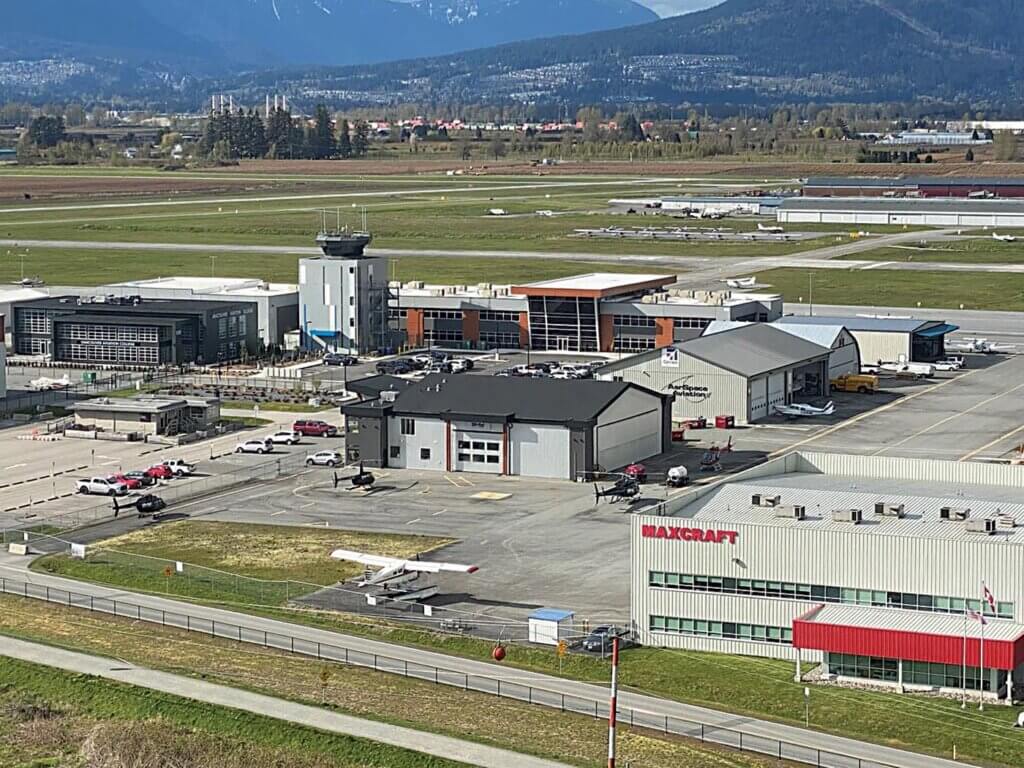
The result is a modern, state-of-the-art airport with a large complement of existing MROs, helicopter and fixed-wing operators, business jet providers, and private general aviation aircraft.
“We have expansion potential via 300 acres of available land,” said Ashley Byrne, director of administration and operations. “Our key differentiator is flexibility. Whether that’s in leasing options, available locations within the airport, or the size and configuration of the leaseholds, we’re able to offer a level of adaptability that other local airports are unable to provide at this time.
“What we’re seeing at many other airports is that the available footprint for development is largely built out,” Byrne added. “Our airport spans more than 750 acres, giving us a significantly larger land base to support growth and development.”
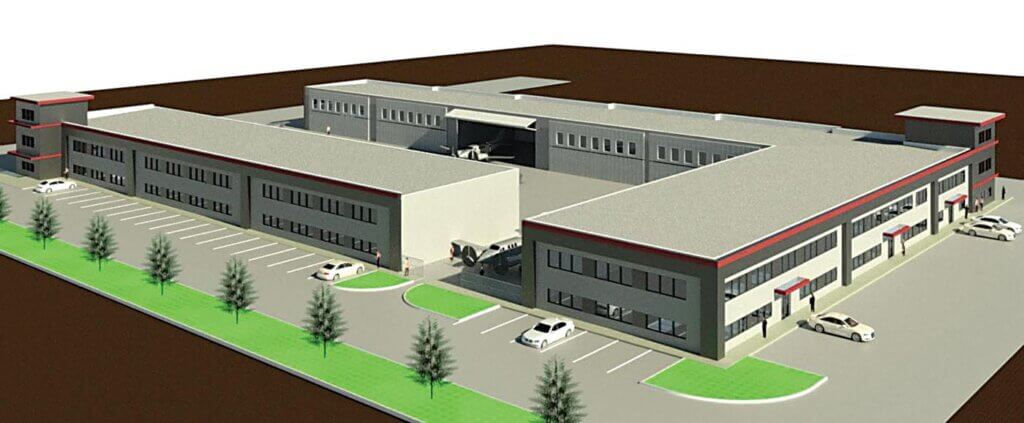
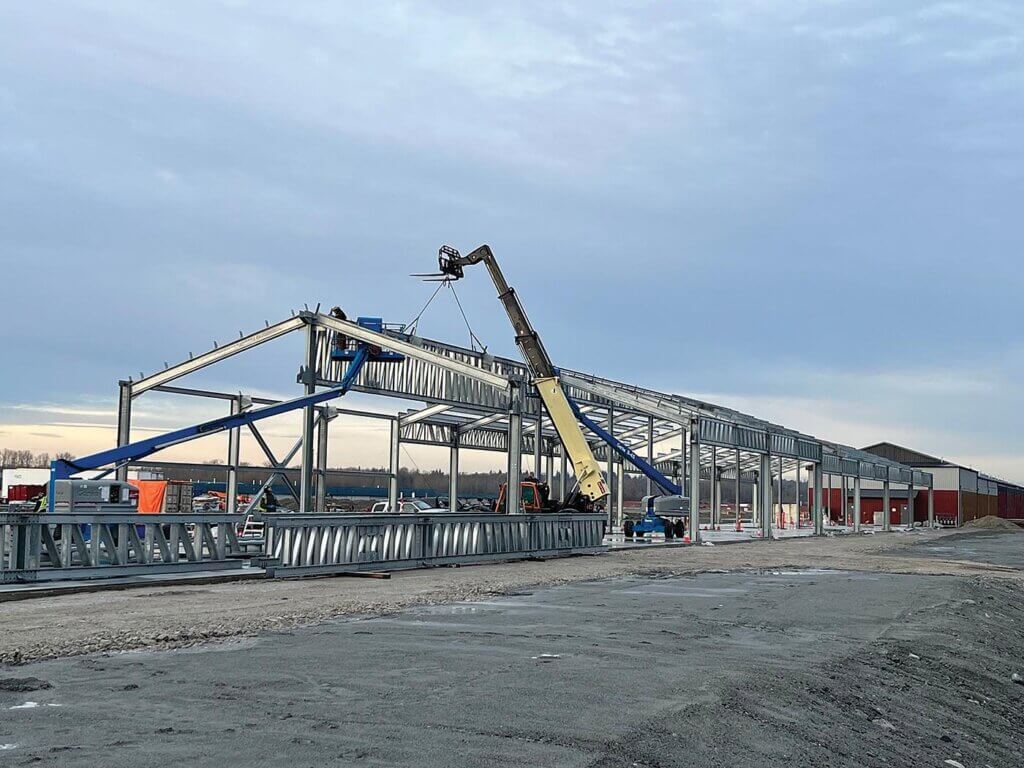
In a region where land is scarce, YPK is ready to grow. As much as C$120 million (US$86.3 million) in new development is planned for the next five years, with ample space and opportunity for MROs to expand or relocate here.
“We are definitely pursuing that important market segment,” Miller said. “We can certainly accommodate a larger MRO, such as an Airbus Helicopters facility, through to a mid-sized operation in the 30- to 50-employee range. Pitt Meadows Regional Airport is uniquely positioned for development of all sizes and scope.”
Pitt Meadows Regional Airport (YPK) is currently home to several MRO providers and operators. The airport has three helipads located on its south side, adjacent to the main apron, as well as an additional two stalls on the north side. A dedicated heli-park is under development on the airport’s north side. This development has the potential for five large 55,000-square-foot (5,110-square-meter) hangar buildings, all of which can accommodate operations across the full rotary-wing spectrum.
“There is an opportunity for each new development to have its own private helipad as well,” Miller noted. “We are moving toward a very integrated approach, whereby we can accommodate the combined operations of executive aircraft, flight schools, rotary-wing, general aviation, and floatplanes.”
As a community, Pitt Meadows is a jewel of B.C.’s Lower Mainland, with unique market advantages that make it a gateway to sea, sky, and land. YPK is located within an integrated network of aviation, road, rail, and marine infrastructure that provides easy access to the U.S.
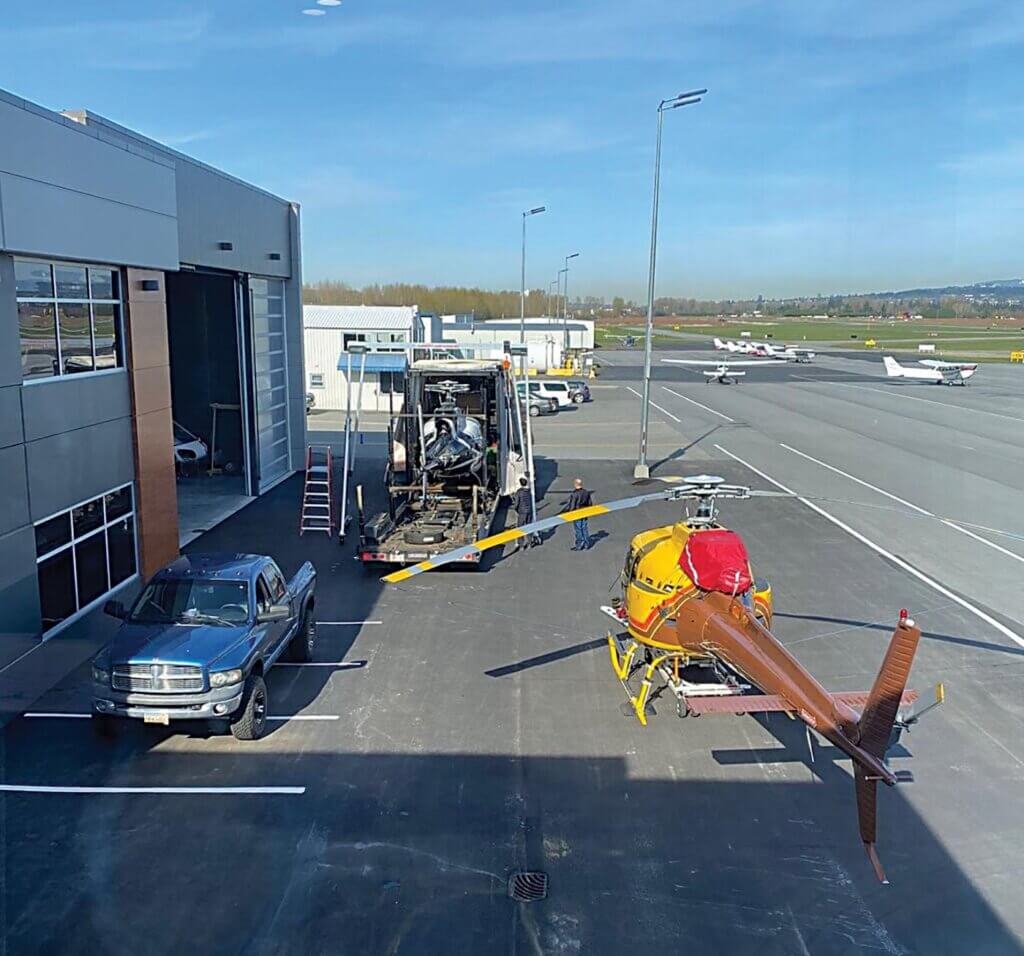
Highway 7 leads into Metro Vancouver via the Golden Ears Bridge, allowing MROs to ship aircraft, engines, and components via the Global Container Terminal at Delta Port, Canada’s largest marine container terminal. As well, just down the street from YPK, a railway hub provides access to North American markets.
Helicopter companies located at the airport tend to grow intrinsically from within.
“It is very common,” Miller said. “Aerospace companies will begin with a modest-sized hangar and, in time, require an increase in size and space of 20,000 or 30,000 square feet, which seems to be the way it works within the industry.”
The lower cost of living in the City of Pitt Meadows is a lure for business providers and their employees, offering an enjoyable quality of life, all the benefits of small-community living, endless outdoor adventures, and easy access to big-city getaways.
“Location-wise, we’re largely unmatched,” Byrne said. “We’re set within a pristine, outdoor-oriented suburban environment.”
This small, inclusive, community-oriented approach is part of what makes YPK special. Its dedicated staff are deeply invested in helping their business partners succeed.
“The experience is highly professional and responsive,” Byrne said. “Our tenants have clear points of contact and a direct working relationship with all levels of our team.”
“That’s our job — to help support those businesses within our community and within our municipalities, to ensure they thrive,” added Amanda Zannet, administration manager.
YPK’s transformation is far from complete. There’s an ongoing commitment to move forward with further investment, continued improvements, and a nimble mindset that is ideally suited to MROs looking to relocate from the Pacific Northwest and other parts of western Canada.
“This is the place to be within the region,” Miller said. “We are a desirable location, we have desirable services, we have desirable development, and we have desirable investment. Without question, we are your destination of choice.”
This sponsored article was created by Insight magazine, the sponsored content division of MHM Publishing.
