


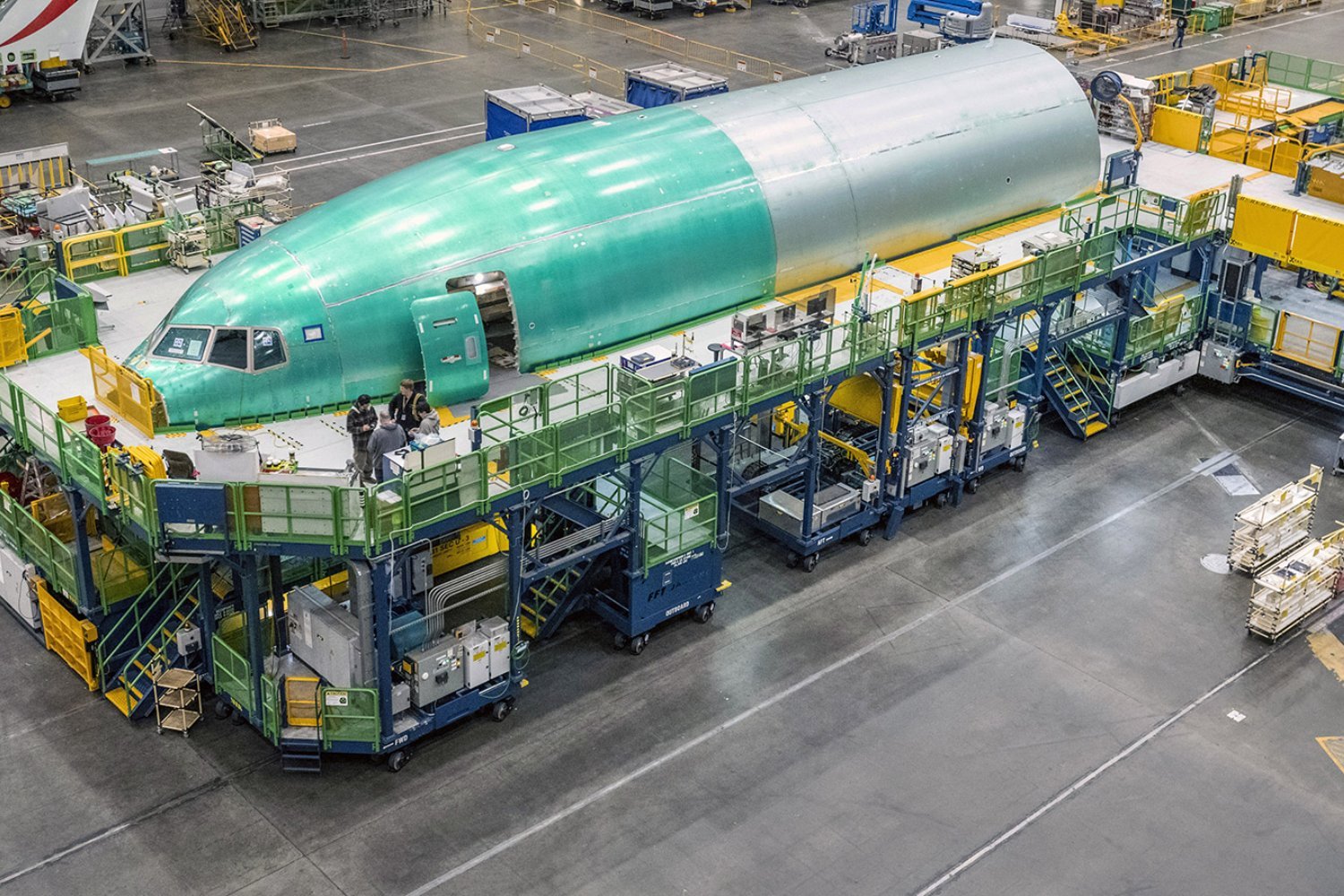
Boeing has reached a key production milestone on the first 777-8 Freighter, with the aircraft entering final assembly at its Everett facility in Washington state.
The company confirmed that the wing-body join has been completed, bringing together the composite wings and the mid-fuselage section of the aircraft. At the same time, teams have begun installing systems and wiring in the forward and aft fuselage sections, marking the transition from structural assembly to systems integration.
The 777-8F is the cargo variant of the 777X family and is intended to succeed the current 777 Freighter. Boeing has secured 68 orders for the model to date, positioning it as its next-generation widebody freighter offering.
Follow us: WhatsApp | BlueSky | Google News | Instagram | LinkedIn | Facebook
The existing 777F is expected to leave production by the end of 2027, as new ICAO environmental standards will prohibit the manufacture of aircraft that do not meet updated emissions requirements. This regulatory deadline is a key driver behind the development and timing of the 777-8F.
The milestone also comes shortly after Atlas Air, one of Boeing’s largest cargo customers, announced an order for Airbus A350F freighters, the main competitor to the 777-8F. The development underscores increasing competition in the large freighter segment, where both manufacturers are targeting replacement demand for aging Boeing 747-400F fleets.

In terms of performance, the 777-8F is designed to carry up to 118 tonnes of structural payload, with a usable revenue payload of around 112 tonnes. The aircraft will offer a range of approximately 4,410 nautical miles, enabling long-haul cargo operations across major global markets.
The freighter measures about 70 meters in length and features a wingspan of 71 meters with extended wingtips, which can fold on the ground to 64 meters for airport compatibility. It will be powered by GE9X engines, the same powerplant used on the passenger 777X variants.
Boeing has not disclosed a firm entry-into-service date for the 777-8F, but the program is expected to follow the certification of the passenger 777-9, which remains delayed.

