


Safran Aircraft Engines is scaling up its hybridisation demonstration efforts and will this summer run a Silvercrest business jet engine incorporating 250kW electric motors on both the low- and high-pressure spools.
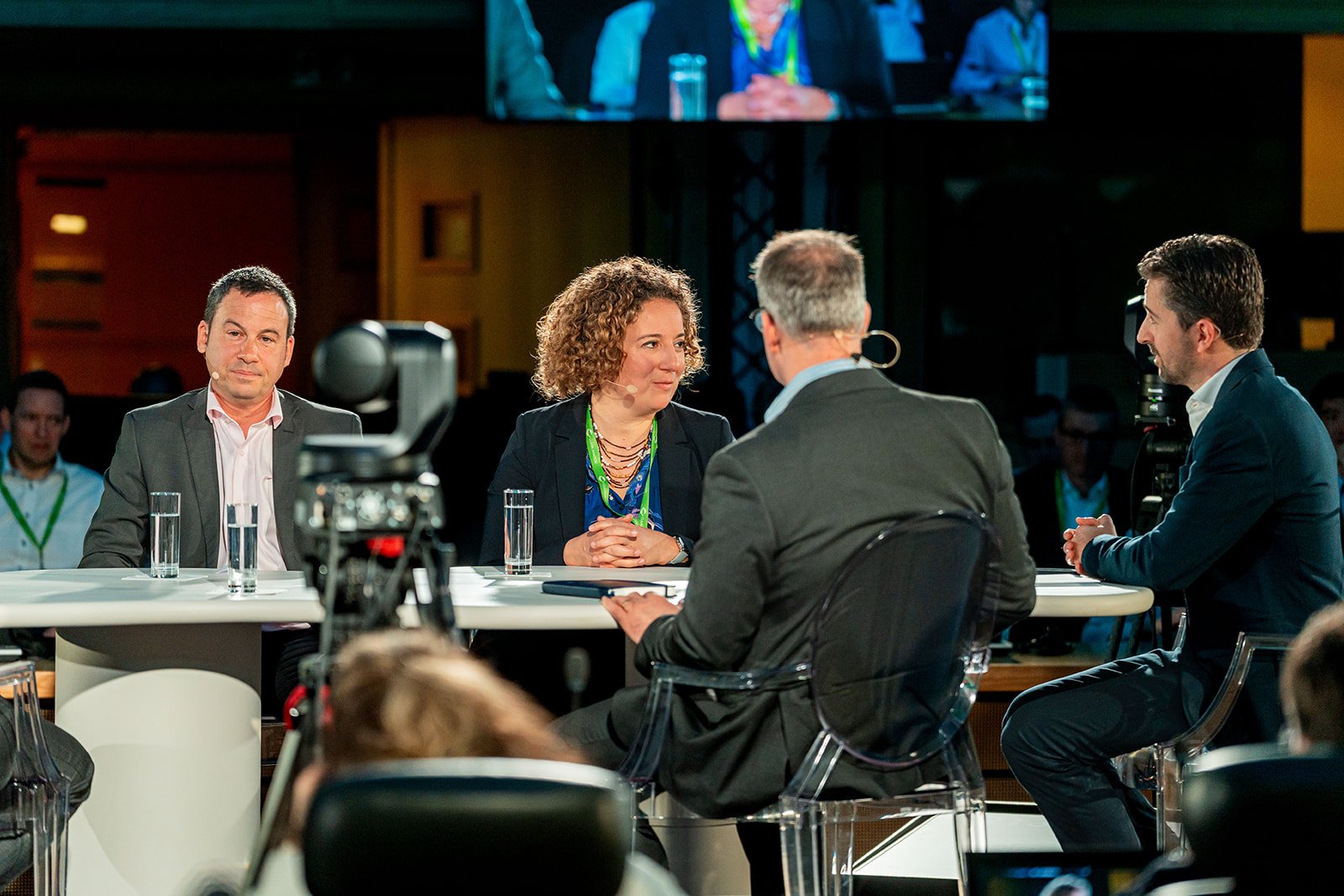
Presenting at Clean Aviation’s annual forum in Brussels on 18 March, Delphine Dijoud, deputy vice-president engineering and R&T at Safran Aircraft Engines, said that alongside an open-fan architecture, hybridisation is “a complementary lever” to further increase engine efficiency.
“It can be powerful for power extraction, for power transfer between the spools and also for the real-time optimisation of the engine,” she says.
Part of an initiative funded internally and by France’s DGAC civil aviation authority, the latest round of trials builds on previous test phases that have seen Safran adding hybrid-electric power to progressively larger turbine engines.
“When we started on the hybridisation journey, we said we would not go directly to a full-scale engine – even one slightly smaller than the [CFM International] Leap,” says Eric Dalbies, senior executive vice-president R&T and innovation at Safran group.
Instead, Safran took a small turbofan acquired from a start-up and hybridised that engine with input from its Electrical & Power business “to work on the regulation, the control of the engine, on the impact on different spools and so on”, adds Dijoud.
From there, Safran moved to the Silvercrest – a 10,000lb (44kN)-thrust business jet engine-development programme axed last decade – running 300h of tests in 2023 with an electric motor attached to the high-pressure spool, which was used to inject or extract power.
“We learned a lot about operability and the impact on control laws,” says Dijoud.
Additionally, says Dalbies, the company gained a better understanding of how the electric motor interacts with the gas turbine. “What is the consequence for the compressor – is there a risk to stall it because you rapidly inject power?”
Safran’s next step is to add electric motors, again from the Electrical & Power business, to the high- and low-pressure spools, with the engine now in final assembly ahead of tests planned for this summer in Istres in the south of France.
It has sized the electric motors – each delivering 250kW – to be “representative of the RISE needs”, the open-fan technology demonstrator it is developing through the CFM partnership alongside GE Aerospace.
“This means that we will integrate [the electric motors] to the engine consistently with the RISE requirements – in terms of power, in terms of use cases and so on,” she adds.
A small element of hybrid research is included within the open-fan-focussed Clean Aviation OFELIA project that Safran Aircraft Engines is leading.
But the company is hopeful of attracting funding for a full-scale ground-test demonstrator through Clean Aviation’s fourth call for proposals, which closes for applications in May. The EU body has allocated €60 million ($69 million) for up to three such demonstrators.
In addition to the engineering challenges of hybridising a gas-turbine engine, consideration needs to be given on how a larger electrical system – including high-voltage batteries and power distribution – will be integrated into the overall aircraft, says Jean-Baptiste Manchette, Airbus vice-president engineering R&T, propulsion of tomorrow.
He says the airframer’s “initial view on hybridisation has changed” as its understanding of the technology has evolved.
“Our initial thoughts were very engine-centric,” he says, based around the assumption of “the bigger the better” in terms of the electrical contribution.
“But this drives some constraints when you integrate it onto the aircraft”, particularly around weight and thermal management considerations.
“The biggest decision we had was to understand what the balance is between the ideal at engine level and the integration at aircraft level.”
Airbus also is working on the assumption that it will store batteries in a pressurised part of the fuselage, with the under-floor cargo area viewed as “most suitable”, says Manchette.
