


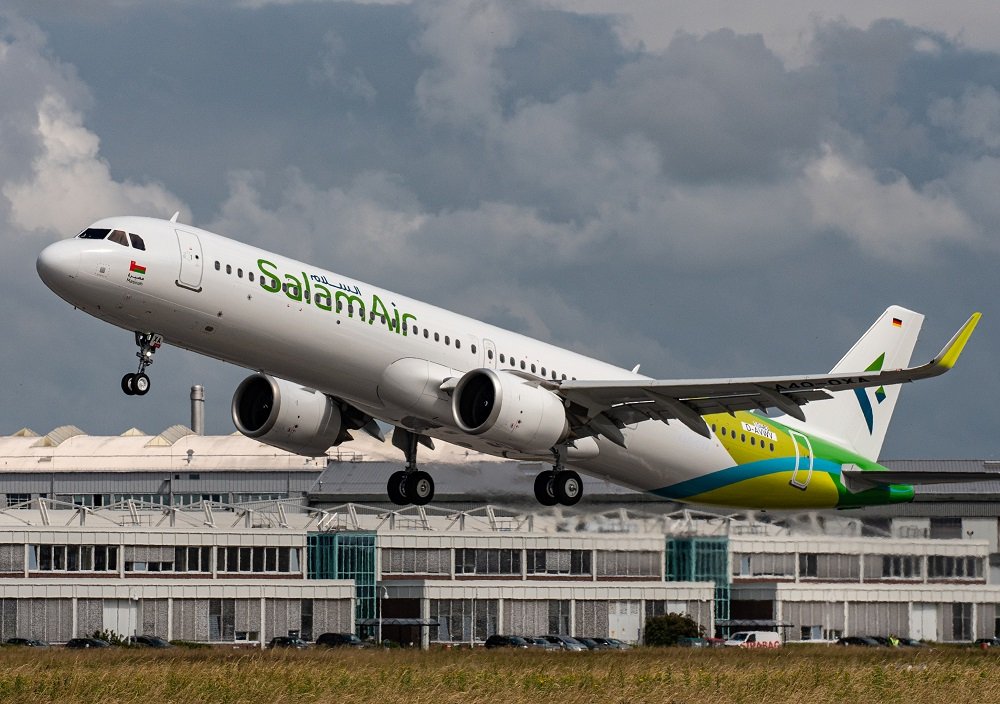
Oman’s government has carried out an acquisition of SalamAir, the carrier which emerged as a budget airline for the sultanate about a decade ago.
The Omani government states that the acquisition is part of an effort to “build an integrated and sustainable national aviation sector”.
But it says SalamAir and flag-carrier Oman Air will continue to operate independently, with separate brands.
“The [government’s] acquisition of SalamAir does not imply any merger with Oman Air,” it states.
Oman Air came under government control in 2007 when the sultanate withdrew from participation in Bahrain’s Gulf Air and took a majority share in the home airline.
But Oman Air, which embarked on its own long-haul operations as part of the strategy, suffered heavy losses and the government unveiled a broad restructuring initiative in 2023.
This initiative indicated that Oman Air would undergo close integration with SalamAir.
SalamAir began services in 2017 and has built a fleet of around 15 Airbus single-aisle jets – largely comprising A320neo and A321neo models – and had been aiming for its own long-haul and regional expansion with A330neos and Embraer 195-E2s.
The Omani government, which has newly disclosed the “completion” of the SalamAir acquisition, says the measure will “enhance integration” between the carrier and Oman Air.
It says this will lead to “reducing overlap” in their destination networks while “preserving their operational identity” and expanding connections.
“This strategic step aims to reshape the aviation sector into a more integrated system,” it adds, allowing sustainable support of connectivity and tourism.
Each carrier will retain its own fleet but consider resource-sharing if this proves of value to both sides as well as passengers. Loyalty programmes will stay separate.
“There are no changes to the workforce in the near term, and any future changes will focus on developing national talent,” the government adds.
It says the route network and pricing structures will be reviewed in the medium term.
“Several opportunities will be explored for resource sharing in areas such as maintenance, operations, and the exchange of best practices, which will positively impact costs,” adds the government.
