


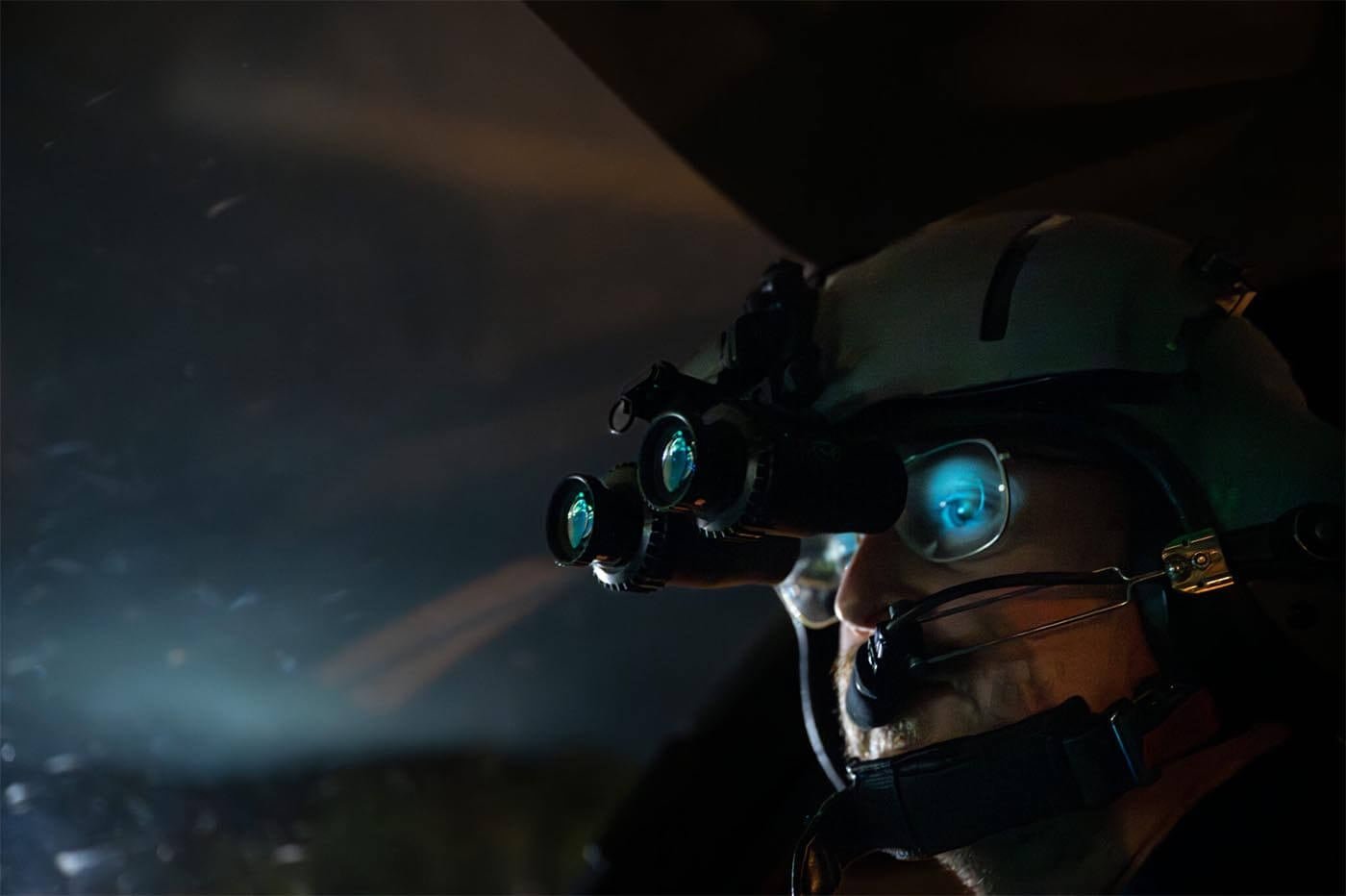
For more than three decades, Aviation Specialties Unlimited (ASU) has been synonymous with night vision technology in aviation. While the company is widely recognized for its equipment and aircraft integration expertise, ASU has built its reputation on delivering complete night vision goggle (NVG) solutions — combining hardware, modification, and training to support safe, effective operations after dark.
“Our mission at ASU is to provide night vision solutions that save lives,” said Dan Meyer, ASU vice president of sales. Built around that goal, ASU’s training program emphasizes operational credibility, mission understanding, and decision-making grounded in decades of real-world experience.
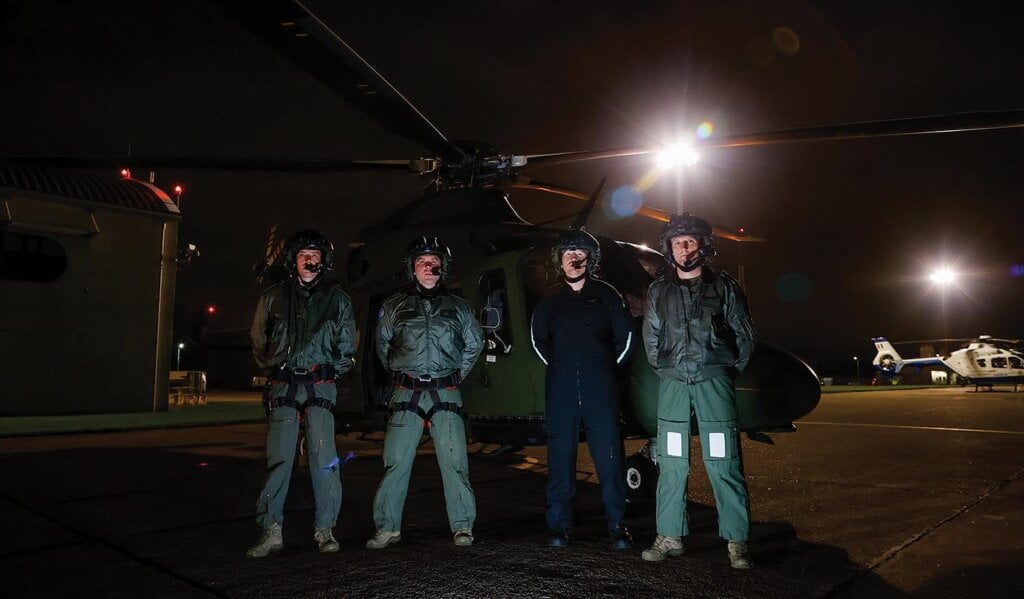
A turnkey approach to night vision training
ASU’s roots in training trace back to its founder, Mike Atwood, whose career began in night vision operations long before the technology became common in civil aviation. That early experience shaped the company’s philosophy from the outset.
“There are many companies that do something associated with night vision,” said Tony Tsantles, ASU director of operators. Some sell goggles, others offer training or cockpit modifications. ASU, he explained, delivers a turnkey NVG solution that supports operators through every stage of adoption — from cockpit modifications and regulatory paperwork to equipment familiarization and flight training. Instruction is not treated as an add-on, but as an essential element of the operational system.
ASU’s training is deliberately tailored to the missions its customers actually fly. Public safety, particularly law enforcement and emergency medical services, remains central to the program, reflecting the company’s founding vision. “We know what that mission profile looks like,” Tsantles said. “Many of us, the instructors, come from that background.”
Instructors shaped by operational experience
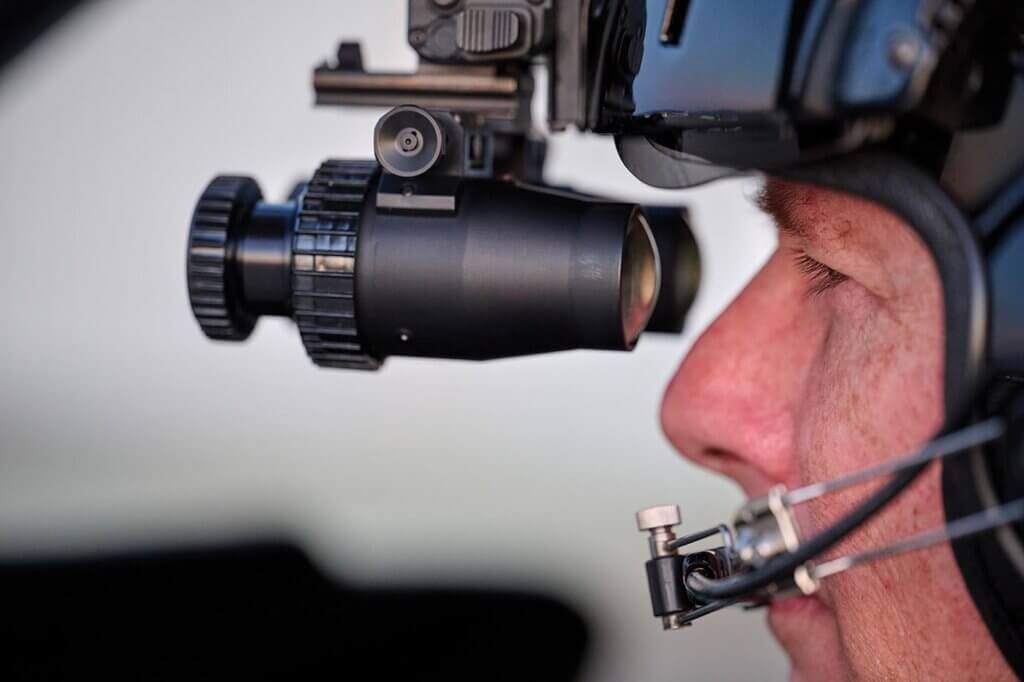
That firsthand operational background is a defining feature of ASU’s instructor cadre. Collectively, ASU instructors bring experience across military aviation, medevac, reconnaissance, firefighting, and law enforcement support. This breadth allows them to tailor instruction not only to aircraft type, but also to crew roles, operational tempo, and the specific risks crews face in their operating environment.
ASU maintains a core team of full-time instructors based in Boise, Idaho, supported by an international training network. Tsantles himself is a retired U.S. Army aviator with extensive medevac and instructional experience, including time as a crew member — a perspective he says is particularly valuable when training tactical flight officers and medical crews. Senior instructors include former National Guard aviators and night firefighting pilots, along with an international chief pilot based in Europe with experience across both rotary- and fixed-wing platforms.
Before training begins, ASU conducts pre-course discussions with each operator to understand how NVGs will be used within their specific mission set. Training can be delivered at ASU’s Boise facility or on location in customers’ own aircraft, including international deployments. Across all locations, the goal remains the same: to speak the same operational language as the crews being trained and anticipate challenges before they become safety issues.
Where environment becomes part of the curriculum
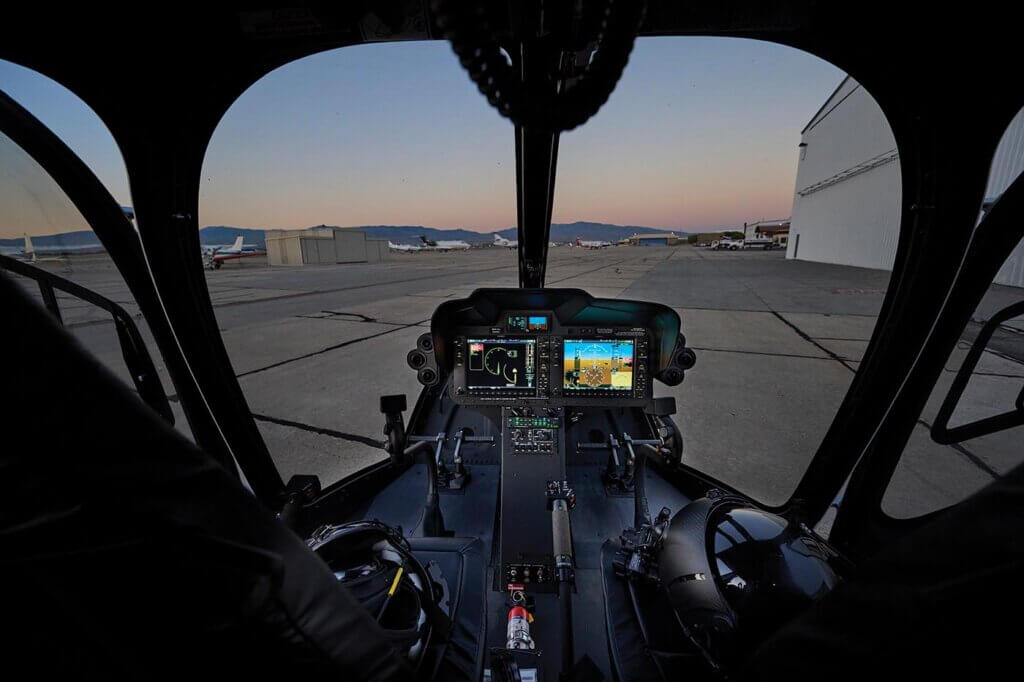
That operational perspective is reinforced by where ASU conducts much of its training. Boise offers an unusually diverse operating environment within minutes of the airport, allowing instructors to align real-world experience with real-world conditions.
“Within about 15 minutes flight time, I can show them all of it,” Tsantles said. Crews can transition rapidly from urban lighting into complete darkness, mountainous terrain, over-water operations, desert environments, and dust-obscured landing scenarios.
That variety allows instructors to expose pilots to higher-risk situations in a controlled setting, building confidence and judgment. “If we can get them comfortable being uncomfortable here, it pays huge dividends for their safety when they return to their flying environment,” Tsantles said.
A deliberate path from initial to recurrent
ASU’s initial NVG training course begins with a full day of ground school, followed by three nights of flight training. The classroom portion covers human vision limitations, scanning techniques, regulatory differences between military and civil operations, helmet fitting, and crew coordination.
Flight training then progresses step by step from basic maneuvers to more complex scenarios, emphasizing situational awareness, instrument cross-check, and hazard recognition. The final night serves as a formal evaluation, with pilots completing about five hours of NVG flight time demonstrating safe and effective use of the equipment.
Recurrent training shifts the focus from introduction to refinement, targeting risk areas that tend to emerge over time. These include complacency, spatial disorientation, and the subtle cues associated with deteriorating weather. “When they get over reliant on technology, they can get themselves in trouble,” Tsantles said. Recurrent courses reinforce cue recognition and disciplined decision-making to counter those risks.
That training philosophy has produced real-world results. Tsantles recalled a police aviation unit that identified a faint, intermittent light on a distant ridgeline during routine patrol. Traced through NVGs, the light led to a suspect vehicle linked to a kidnapping, allowing the crew to maintain visual contact from the air until a successful apprehension.
Beyond mission effectiveness, that same capability also enhances safety during unplanned landings and emergency scenarios. With NVGs, pilots can assess terrain, obstacles, and hazards from significantly higher altitudes than would otherwise be possible at night, improving decision-making when margins are thin and time is critical.
Training trusted at the highest levels
ASU’s credibility is further underscored by its role as the only company that trains Federal Aviation Administration pilots in night vision use for both helicopters and fixed-wing aircraft, a distinction that reflects the program’s technical depth and instructional rigor.
The training program continues to evolve alongside technology. ASU regularly updates its curriculum to reflect new equipment, accident investigations, and safety bulletins. The introduction of ASU’s new E3 lightweight NVG has also driven updates in both pilot and maintenance training, addressing fatigue and long-term ergonomic risks.
For ASU, training is not a checkbox — it is the foundation that turns technology into capability, and capability into safer night operations.
This sponsored article was created by Insight magazine, the sponsored content division of MHM Publishing.
