


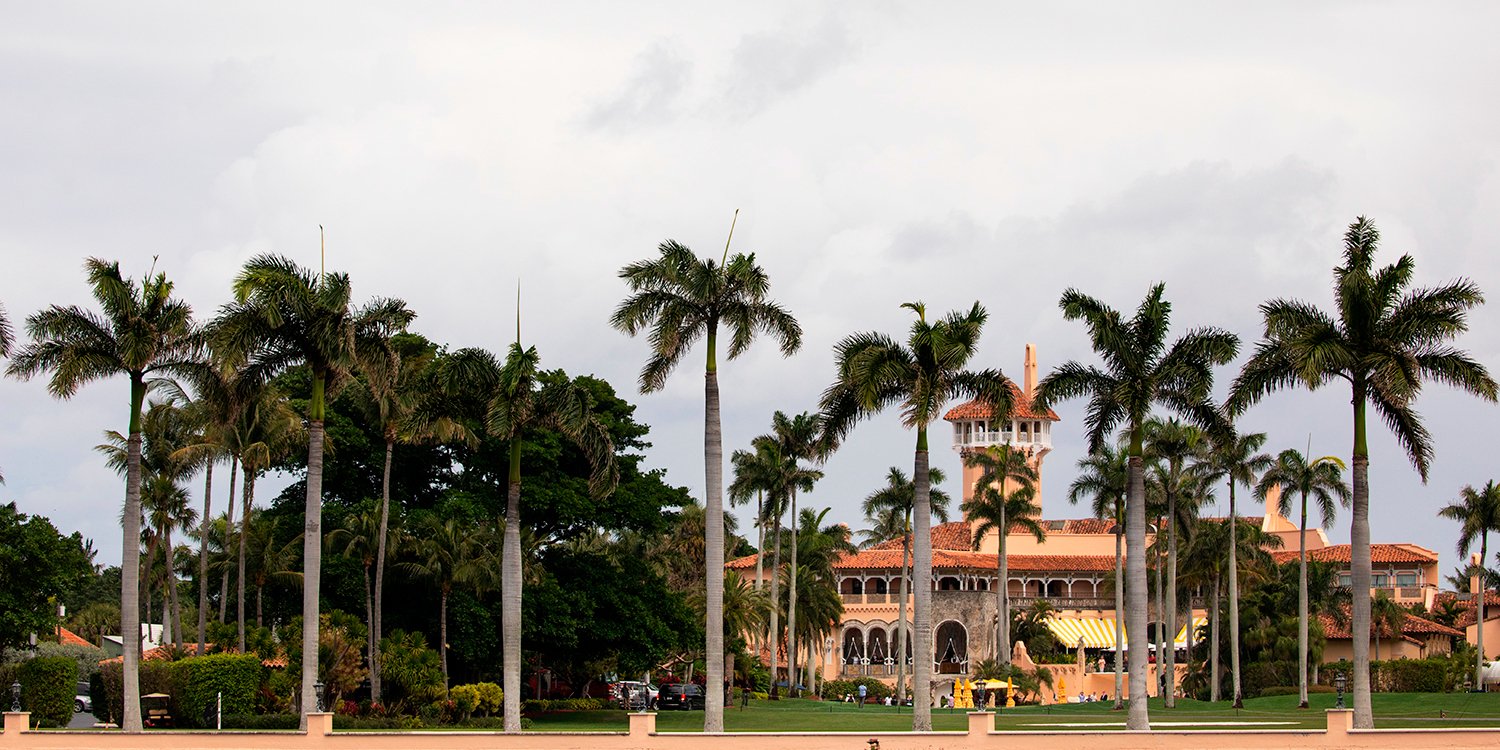
A strange-looking installation atop a building near Palm Beach International Airport (KPBI) in Florida was revealed Tuesday to be an anti-drone laser, intended to protect President Donald Trump, his Mar-a-Lago estate, and commercial aircraft amid a rise in suspicious activity over U.S. military bases.
WPTV-TV in Palm Beach said it confirmed that the device is a counter-uncrewed aircraft system (C-UAS) mechanism, though it is unclear when it was installed or whether it has been used.
Per the television station, the system uses a direct energy weapon to fire a laser that is invisible to the naked eye, much like an anti-drone laser system that the Pentagon deployed in February. Little is known about the Pentagon system, which prompted recent airspace closures near El Paso International Airport (KELP).
Though Mar-a-Lago has been under a year-round, 24/7 temporary flight restriction (TFR) since October, the anti-drone system could shield Trump, Air Force One, and other assets from aircraft that violate the TFR.
“All of those things that you’re seeing are sensors, they’re radar, and they’re jammers to be able to bring down any drone or counter air threat,” Matthew Buckley, a graduate of the U.S. Navy’s Top Gun academy and chairman of the veteran-focused nonprofit No Fallen Heroes, told WPTV. “They can use lasers to shoot drones down, and they can also use direct energy to scramble the electronics and to jam the systems to knock these drones down.”
DeWitt Ingram, a former FAA employee, told WPTV that similar C-UAS devices could soon pop up at airports nationwide. Ingram said the system at Palm Beach International is mobile and can be installed in hours. He added that the technology has “been here all along” but is only now becoming visible due to escalating threats to U.S. military assets.
High Alert
The Washington Post in March reported that the Pentagon is ramping up scrutiny of drone threats as the U.S. wages war against Iran and contends with strikes on its bases in the Middle East, fearing Iranian attacks could enter the domestic sphere.
Several domestic U.S. bases have raised their threat levels in recent weeks due to security scares. That includes MacDill Air Force Base (KMCF) in Florida—home to the U.S. Air Force’s fleet of KC-135 aerial refueling tankers and headquarters for U.S. Central Command, Special Operations Command, and other major units.
On Sunday, national security personnel suffered a scare when an aircraft violated the Mar-a-Lago TFR and did not respond to radio calls. F-16 fighters intercepted the aircraft, which turned out to be a civilian plane. Trump at the time was golfing in West Palm Beach while Air Force One was on the Tarmac at PBI.
The Pentagon is considering installing an anti-drone laser at Fort Lesley J. McNair in Washington, D.C., which houses Defense Secretary Pete Hegseth, State Secretary Marco Rubio, and high-ranking military officials. It reportedly weighed relocating Hegseth and Rubio after multiple unidentified drones were sighted over the base in March.
A spokeswoman for the Army-led Joint Task Force-National Capital Region (JTF-NCR) told The New York Times there was “no credible threat” to Fort McNair but said the task force “increased its anti-drone activities.”
Also in March, a spokesperson for Barksdale Air Force Base (KBAD) in Louisiana told ABC News that waves of unauthorized drones overflew the base over the course of a week. The drones reportedly loitered for hours at a time and dispersed to different areas of the site. Barksdale houses long-range, nuclear-capable B-52H bombers and the E-4B “doomsday plane,” as well as the Air Force command that conducts nuclear deterrence operations.
Similar drone incursions have not been reported over Mar-a-Lago. But the anti-drone system could enhance security if they are in the future.
Counter-Drone Measures Raise Questions
It is unclear if the C-UAS device in Palm Beach is the same as the one that prompted unexpected airspace closures in Texas earlier this year.
The Pentagon has reportedly been experimenting with an anti-drone laser at Fort Bliss, about 50 miles from the El Paso airport. In early February, it used the device to shoot down what is now believed to be a party balloon. The airspace was closed a second time later that month after the laser was deployed again, this time downing a misidentified Customs and Border Protection (CBP) drone.
The military in March conducted safety testing of the system in New Mexico as it looks to deploy it in busier airspace.
The Pentagon is required by law to coordinate any C-UAS activities that could impact aviation safety or operations with the FAA and Transportation Department. But in the instances the anti-drone laser has been used, local officials, airports, and air traffic controllers said those activities were not communicated in advance.
The Times reported that the FAA did not approve either use of the laser. The airspace closures have also roiled lawmakers.
“This was a major and unnecessary disruption, one that has not occurred since 9/11,” El Paso Mayor Renard Johnson said of the early February incident.
In a joint statement in February, the FAA, CBP, and Pentagon said the laser was deployed “far away from populated areas and there were no commercial aircraft in the vicinity.”
Drone incursions over sensitive sites are not new. A spokesperson for the U.S. Northern Command in October told digital news site Breaking Defense it recorded 230 of them over military installations between September 2023 and ’24. That figure rose to 420 the following year.
However, regulations protecting civilian air travel have effectively muzzled the military’s ability to mitigate drone threats over its bases. Signal jamming can interfere with civilian radars. And as seen in February, using a laser can disrupt commercial aviation. Other C-UAS methods involve cyber attacks, shooting the drone down, or using another drone to capture it with a net.
Things could change under guidance that Hegseth issued in December. The Pentagon now treats surveillance of military facilities as an explicit threat even before drones breach the perimeter, authorizing C-UAS activities at certain “covered” sites. The guidance also makes it easier to designate such sites.
Also in December, the Safer Skies Act extended C-UAS permissions—previously reserved for certain federal agencies—to state and local entities. The Federal Emergency Management Agency’s (FEMA) C-UAS Grant Program will allocate $500 million to bolster their anti-drone capabilities. Half will go to states hosting FIFA World Cup matches and America’s 250th anniversary celebrations this year.
In March, Joint Interagency Task Force 401—a unit dedicated to synchronizing C-UAS activities across the federal government—awarded Anduril an $87 million contract to provide a government-wide, anti-drone command and control platform.
