


Research from Aevean has highlighted the airports most affected by changes in cargo capacity as a result of the Middle East conflict.
The figures (see chart at the end of the article) produced by the consultant show that Doha, Dubai International (DXB), Dubai World Central (DWC) , Bahrain International and Kuwait International were the most affected in terms of outbound cargo tonnage capacity.
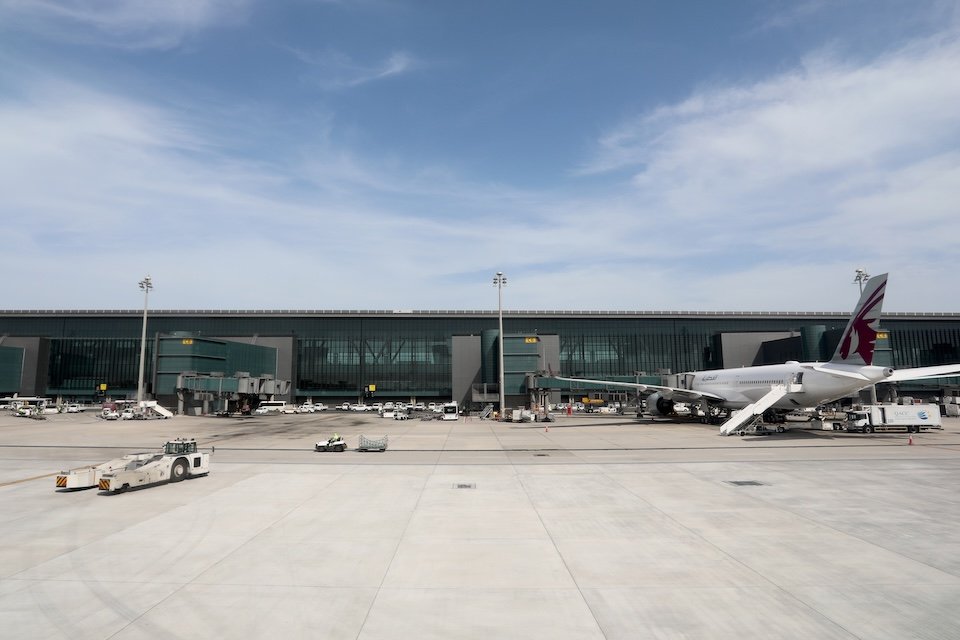
Doha, the home of the world’s largest cargo airline, Qatar Cargo, saw its cargo capacity drop by 37,000 tonnes year on year, or by 77%, in the week ending 30 March.
Qatar Cargo has been slowly ramping up its freighter operations and the carrier announced that from 21 March it would operate flights to destinations in Vietnam, China, Thailand, South Korea, Nigeria, Kenya, Germany, the Netherlands, Belgium, the US, Brazil, Ecuador and Panama
Meanwhile, capacity at DXB was down by 24,000 tonnes year on year, or 57%, and DWC was down 14,000 tonnes, or 59%.
In Bahrain, there was a 12,000 tonne decline and Kuwait registered a 7,000 tonne drop off.
There were other airports that registered an increase, however, with cargo capacity out of Muscat in Oman and Istanbul on the up.
Aevean head of consulting Maarten Wormer said that global cargo capacity remains pressured as the Gulf Conflict continues and drives up jet fuel cost.
“Airports across the Middle East account for the largest capacity shifts seen anywhere in the world,” Wormer said in a LinkedIn post.
“While the broader trend points to declining capacity, several origins show capacity growth.”
He described the increases in cargo capacity registered in Muscat and Istanbul as substantial in relative terms, though he added that these increases are nowhere near the declines at other Middle East airports.
Wormer added that Abu Dhabi International Airport had seen a decrease of just 3% compared with last year, so it was “doing relatively well given the circumstances”.
Last week, Aevean revealed that cargo capacity on a global basis was just 2% down on the levels recorded in the same period last year.
At the height of the crisis, cargo capacity had been around 20% down on last year’s levels as carriers faced airspace closures across the Middle East.
