


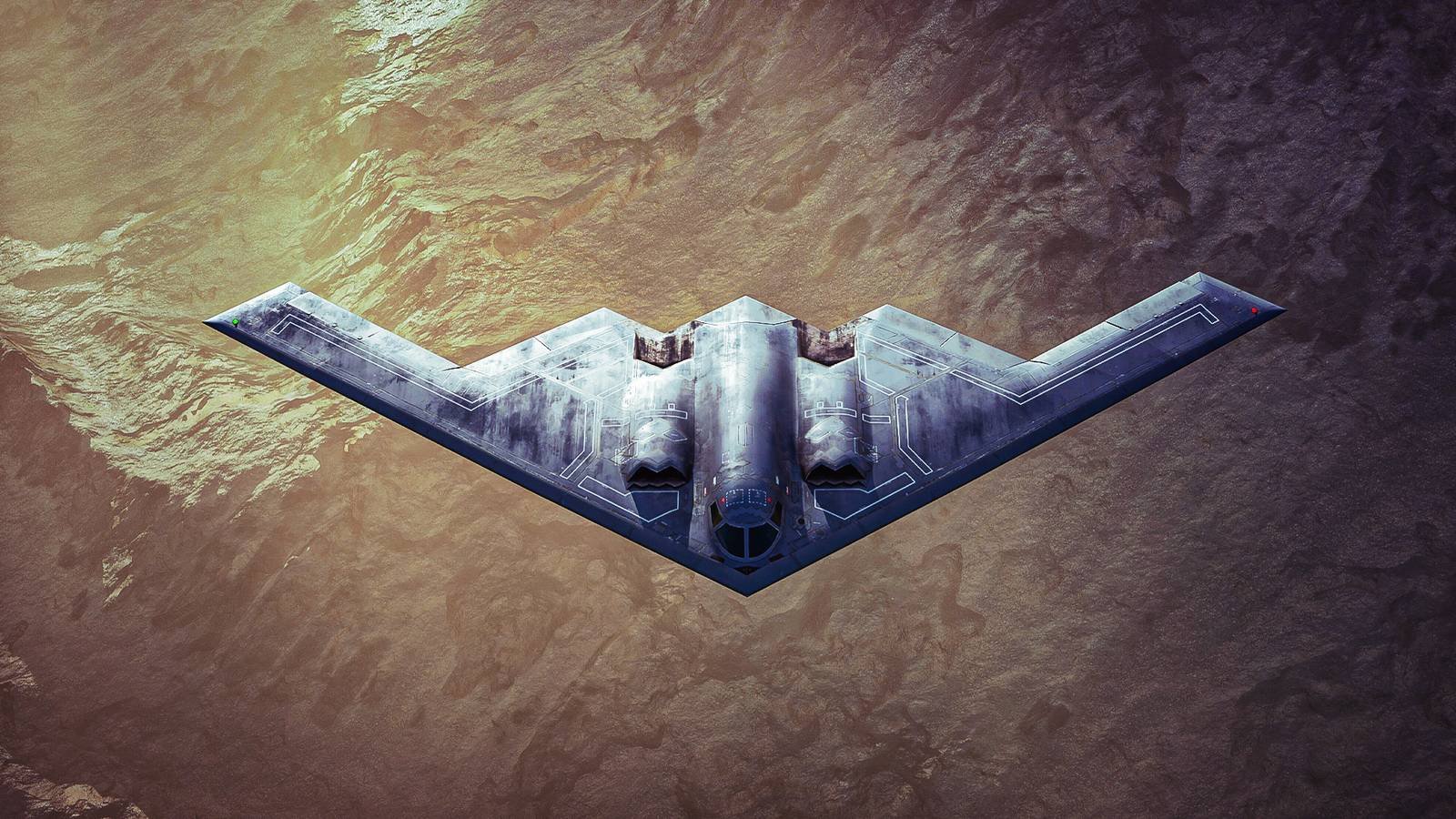
For decades, the United States Air Force has operated one of the most powerful, yet surprisingly small, strategic bomber fleets on the planet — and that is about to change dramatically. The stealth bomber force is expected to grow from 19 Northrop Grumman B-2 Spirit bombers to as many as 145 Northrop Grumman B-21 Raiders, with the first operational aircraft scheduled for 2027 at Ellsworth Air Force Base and billions now flowing into increased production capacity.
The past few months have seen a flurry of announcements, budget requests, and strategic signaling around the B-21 program that, taken together, paint a picture of a military force that is truly serious about expanding its long-range strike capability. A $4.5 billion production deal confirmed by the US Air Force, a March 2026 budget request topping $10 billion reported by Militarnyi, a push from US Strategic Command to grow the planned fleet from 100 to 145 aircraft, and the possibility of a second assembly line all point in the same direction: the Air Force is done moving cautiously on procurement and is ready to build its next-generation bomber at real scale. Here is everything you need to know about how, and why, America’s stealth bomber fleet is about to get a lot bigger.
Why B-2 Spirits Were Never Enough
When the B-2 Spirit entered service in the late 1990s, it represented one of the most expensive and technically complex aircraft ever built. With a price tag of more than $2 billion per airframe, the program was always going to be limited in scale. The original plan called for 132 aircraft, but post-Cold War budget cuts and the so-called “peace dividend” of the 1990s reduced that number to just 21 aircraft built. In reality, the operational fleet is smaller: “Spirit of Kansas” was lost in 2008 at Andersen AFB, Guam, due to faulty air data caused by moisture in sensors, and “Spirit of Hawaii” was destroyed in December 2022, after a fire following a landing gear collapse at Whiteman AFB.
Therefore, 19 operational bombers are available for combat missions. Every B-2 that goes in for depot maintenance represents a disproportionate dent in the Air Force’s penetrating strike capacity. The fleet’s small size has been a recurring concern in defense circles, and as China and Russia have invested heavily in advanced integrated air defense systems, the gap between what the US needs and what it effectively has keeps growing. The B-1B Lancer, while an exceptional supersonic platform in its own right, was never designed for stealth penetration. It shed its nuclear certification in 1994 and has since served as a conventional precision striker.
More than 40 B-1Bs remain in service, but they are increasingly costly to maintain and are not survivable against the dense air defense environments that a peer adversary could present. The B- 52 Stratofortress, beloved and long-serving, similarly cannot survive a high-threat environment on its own. The conclusion was increasingly obvious even before the B-21 program got rolling: the US needed a new generation of stealth bombers, and it needed a lot more of them.
What Is The B-21 Raider, And Why Does It Matter?

The B-21 Raider is Northrop Grumman’s answer to all of those problems. Developed under the Long Range Strike Bomber program, it is designed from the outset to be a sixth-generation capable, highly survivable platform that can operate in the most contested airspace on earth. Unlike the B-2, the B-21 is being built with affordability and productivity as core requirements, a deliberate lesson from the Spirit’s troubled procurement history.
The Air Force and Northrop Grumman have been tight-lipped about many specifics, but what is publicly known points to a flying-wing design with a smaller radar cross-section than the B-2, open-architecture systems that allow rapid capability upgrades, and the potential to operate in an optionally-manned or unmanned configuration in the future.
The Raider is slated to replace both the B-2 Spirit and the B-1B Lancer, taking on the critical penetrating strike role that neither the B-52 nor aging legacy bombers can reliably fulfill against a sophisticated adversary. It is also expected to serve as a nuclear delivery vehicle, maintaining the Air Force leg of America’s nuclear triad.
With those responsibilities in mind, fleet size is a strategic necessity. A program of record targeting only 100 aircraft would still leave the US with a relatively modest bomber force given the breadth of its global commitments.

7 Reasons Why The US Air Force Still Operates The B-52
From nuclear deterrence to missile truck missions, the B-52 Stratofortress remains essential to US airpower even in 2026.
The $4.5 Billion Production Surge

In early 2026, the US Air Force and Northrop Grumman inked a $4.5 billion deal to increase B-21 production capacity by 25%. The funding was made possible through the fiscal year 2025 ‘One Big Beautiful Bill’ reconciliation legislation, a broad defense spending package that gave the Pentagon new room to accelerate several high-priority programs.
For the B-21, the practical effect is straightforward: more aircraft are built faster. The baseline production rate was previously estimated at around seven aircraft per year, and the 25% capacity increase is intended to push that figure higher, though exact revised figures remain classified.
The significance of this investment extends beyond the raw numbers. Increasing production capacity means hiring more workers, expanding supply chains, qualifying additional vendors for sensitive components, and in some cases building or upgrading manufacturing facilities. These are not changes that can be quickly reversed. Once the defense industrial base scales up for a higher B-21 tempo, the infrastructure is in place to sustain it, and potentially increase it further still. For Northrop Grumman, the deal cements the B-21 as the anchor program of its defense manufacturing operation at Palmdale, California, for decades to come.
Cost per aircraft is another crucial variable. Estimates currently place the unit cost of a B-21 Raider at between $700 million and $750 million, a figure that represents remarkable value compared to the B-2’s inflation-adjusted price, and which has reportedly held relatively steady despite the complex technology involved. Should production volumes increase further, there is a reasonable expectation that per-unit costs could come down still further, as fixed development and tooling costs are spread across a larger production run. That economic logic is one of the underpinning arguments for pushing the fleet towards 145 aircraft.

The Air Force’s official program of record has long stood at 100 B-21 Raiders. That number was always considered a floor rather than a ceiling by many in the defense community, and in early 2026, US Strategic Command (STRATCOM) Commander Admiral Richard Correll made that view official. As reported by 19FortyFive, Correll publicly confirmed that STRATCOM is actively pushing to expand the planned fleet from 100 to 145 aircraft, a 45% increase over the current baseline, and indicated that opening a second production line is under active consideration to meet the higher demand.
The number reflects a detailed assessment of the force structure required to meet the US’s current and projected strategic commitments: deterring China in the Indo-Pacific, maintaining a credible nuclear posture, supporting allies across NATO, and preserving the capacity to respond to contingencies simultaneously across multiple theaters. Correll’s advocacy is significant because STRATCOM is the command responsible for the nuclear mission: if the combatant commander is saying 100 aircraft is not enough, that carries enormous weight in Pentagon planning discussions.
The prospect of a second assembly line is particularly notable. Currently, all B-21 production runs through Grumman’s facility in Palmdale, California. A second line, whether at Palmdale or elsewhere, would not just increase output but would also add resilience to the production program, reducing the risk of a single-point-of-failure disrupting deliveries in a time of heightened international tension. The March 2026 budget request, which exceeds $10 billion for the B-21 program, includes funds specifically earmarked to prepare for exactly that possibility.

The Top 10 Superior Bombers Flying Today
The future of long-range strike aviation is here, and it’s more adaptable than ever before.
When And Where Will The First Operational B-21s Arrive?

For all the excitement around production numbers and fleet size targets, the most immediately tangible milestone for the B-21 is its first operational deployment. According to the Air Force, the first operational B-21 Raiders are on track to arrive at Ellsworth Air Force Base in South Dakota in 2027. Ellsworth is the natural choice: it is already home to the Rockwell B-1 Lancer fleet, has the infrastructure and airfield characteristics suited to a large bomber, and sits in a geographically central location well away from coastal vulnerabilities. The base is expected to serve as the primary B-21 hub in the early years of the program.
Following Ellsworth, Whiteman Air Force Base in Missouri, the current home of the B-2 Spirit, is slated to receive B-21s as well. This makes logical sense: Whiteman has decades of experience operating stealth bombers, possesses the maintenance facilities, cleared workforce, and security infrastructure that the B-21 demands, and will presumably serve as the transition site as the B-2 is gradually retired. Dyess Air Force Base in Texas, which currently houses B-1B Lancers, is the third installation named for B-21 basing.
The refueling imagery that surfaced on social media in early 2026, showing a B-21 operating over Lone Pine, California, near Edwards Air Force Base, offered a rare public glimpse of the aircraft conducting what appeared to be routine flight test operations. Such sightings have become somewhat less unusual as the test program matures, but they never fail to generate interest among aviation enthusiasts and defense analysts alike. The Raider’s distinctive flying-wing silhouette is already becoming familiar, and as 2027 draws closer, the transition from test asset to operational warplane is rapidly approaching.
What This Means For America’s Deterrence — And The World

Taken together, the production ramp-up, the STRATCOM fleet size push, the multi-billion dollar budget requests, and the looming initial operational capability paint a picture of an American long-range strike posture that is about to undergo its most significant expansion in a generation. Jumping from a fleet of 21 (now 19) B-2 Spirits to a potential force of 145 B-21 Raiders changes deterrence both strategically and numerically. Adversaries planning to challenge US power projection would have to account for a much larger, more modern, more survivable force than anything currently in the inventory.
For NATO allies, the implications are reassuring. A larger and more modern US penetrating bomber fleet underpins the credibility of America’s extended nuclear deterrence commitments in Europe and Asia. For Indo-Pacific partners monitoring China’s rapid military build-up, including its own emerging stealth aircraft programs, the B-21 fleet growth sends a clear signal that the United States intends to maintain its qualitative and quantitative edge in long-range strike for decades to come. The B-21 is not just a replacement for old hardware; it is a statement of intent about America’s place in the emerging global security order.
There are still significant uncertainties ahead. Congressional budget approvals are never guaranteed, second production lines take years to stand up, and geopolitical conditions can shift faster than procurement cycles. But the direction of travel is clear. America is building the B-21 Raider in earnest, expanding its capacity to build more, and planning for a fleet that is more than six times the size of the B-2 fleet it is replacing. Whether the final number lands at 100, 145, or somewhere in between, the era of the stealth bomber has decisively arrived, and this time, the US intends to have enough of them.
