


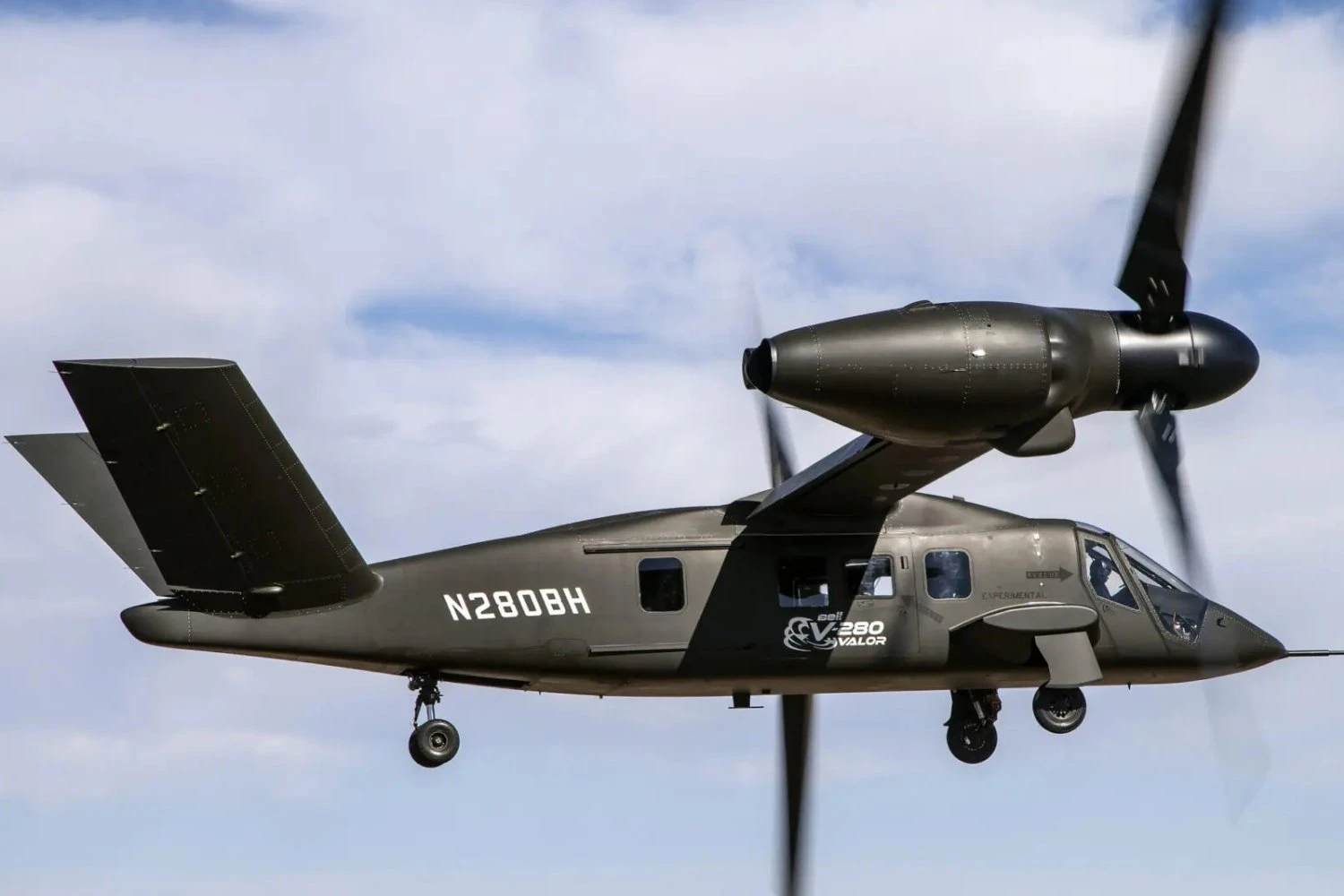
The U.S. Army has officially named its Future Long-Range Assault Aircraft (FLRAA) the MV-75 Cheyenne II, marking the first time the service assigns a formal designation and name to its next-generation vertical lift platform.
The announcement was made on April 15 during the Army Aviation Warfighting Summit, confirming both the mission designation and the name chosen for the aircraft developed by Bell Textron. The MV-75 is the Army’s first operational tiltrotor aircraft, a configuration that combines vertical takeoff with airplane-like cruise performance.
According to the Army, the “MV” designation stands for Multi-Mission Vertical Takeoff, while “75” references the year 1775, when the service was established. The name “Cheyenne II” follows a long-standing tradition of naming Army aircraft after Native American tribes.
The aircraft is expected to reach speeds above 300 mph and carry up to 14 सैनिक, in addition to an external payload of up to 10,000 pounds. It is designed to operate over longer distances than conventional helicopters, a requirement shaped by scenarios in the Indo-Pacific region.
The first operational unit to receive the MV-75 will be the 101st Combat Aviation Brigade, based at Fort Campbell, Kentucky. Initial deliveries are planned for 2027, when the aircraft is set to begin replacing part of the Army’s existing fleet of utility helicopters.
The Cheyenne II stems from the FLRAA program, launched to replace the long-serving UH-60 Black Hawk. Bell’s design, derived from the V-280 Valor demonstrator, was selected over a competing proposal from Sikorsky and Boeing based on a compound helicopter concept.
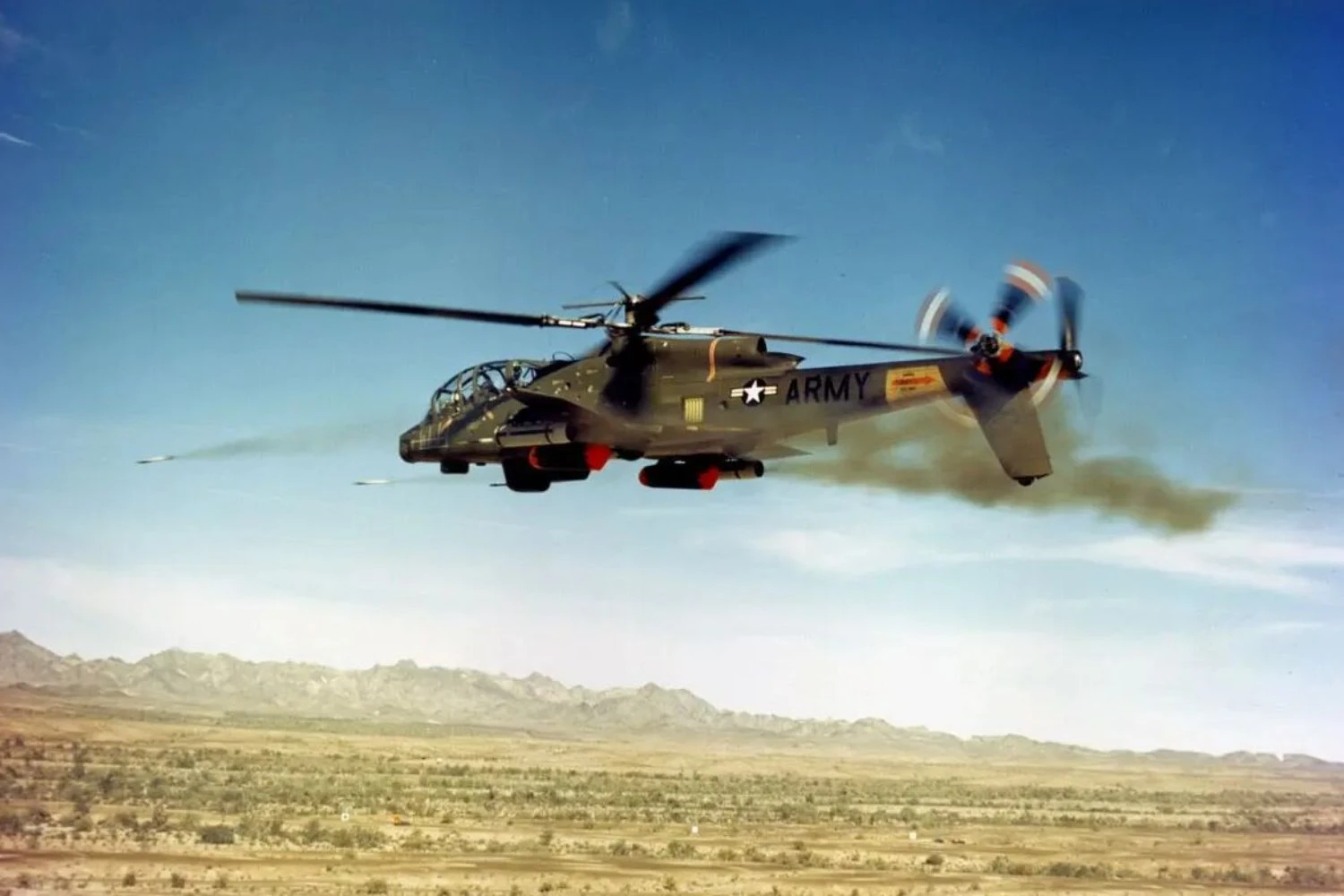
Who was the original Cheyenne helicopter?
The original Cheyenne, the Lockheed AH-56, was an experimental attack helicopter developed in the 1960s. It featured a compound design with a rigid main rotor, short wings and a rear-mounted pusher propeller, allowing higher speeds than conventional helicopters of the time.
The program advanced through prototype testing, with the first flight taking place in 1967. However, technical challenges, a fatal crash and changing operational requirements led to delays. The project was ultimately canceled in 1972 before entering service.
Although it never became operational, the AH-56 introduced concepts that would reappear decades later in advanced rotorcraft designs, including the compound configuration proposed by Sikorsky in the FLRAA competition.
