


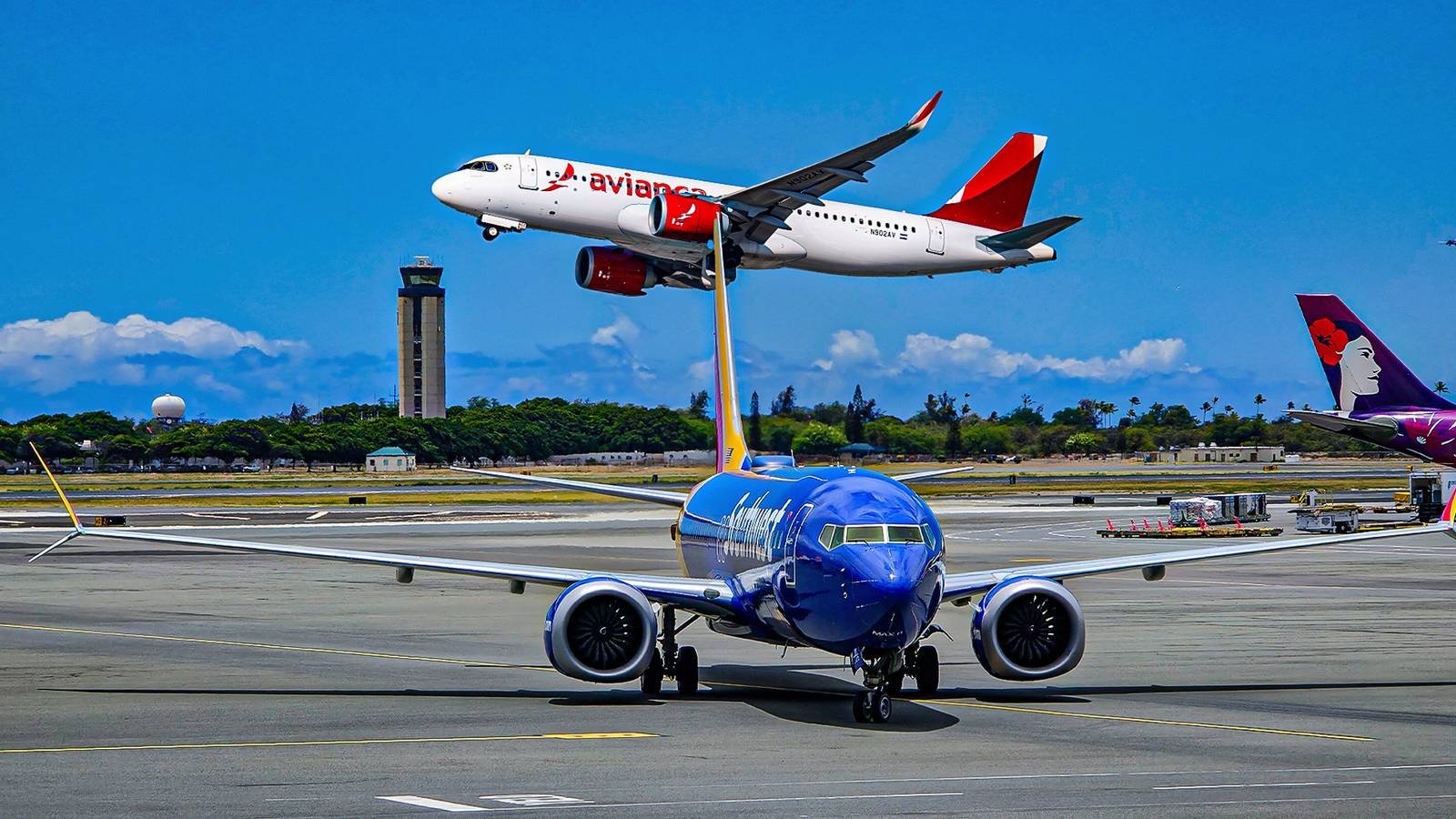
To the casual observer looking out from a terminal window, the Airbus A320neo and the Boeing 737 MAX might look like nearly identical twin-engine narrowbodies designed for the same purpose. However, for the ground crews tasked with turning these aircraft around in as little as 25 minutes, the two platforms represent two fundamentally different eras of aviation engineering. Walking onto a busy ramp reveals that the Airbus stands tall and level like a modern high-rise, while the Boeing sits low and aggressive with a distinct nose-high pitch.
The roots of these differences stretch back more than 50 years, reflecting a long-standing philosophical divide between the two dominant manufacturers. Airbus designed the A320 in the 1980s with enough height to accommodate massive high-bypass engines. Boeing has spent decades refining the 1960s-era 737 airframe to stay competitive without a costly clean-sheet redesign. This heritage has forced Boeing engineers into a series of ingenious but complex compromises, such as flattening engine nacelles and lengthening nose landing gear struts to prevent modern engines from scraping the tarmac.
Different Stances

The most immediate differences ground crews encounter are the physical height of the aircraft fuselage and the resulting stance on the tarmac. The 737 MAX features a nose landing gear that is 8 inches (20.3 cm) taller than the previous NG models, a modification required to lift the airframe high enough to accommodate its larger engines. This change gives the MAX a permanent nose-up attitude while parked, which contrasts sharply with the A320neo, which sits almost perfectly level on its struts. For a tug driver or a marshaller, this pitch shift changes the visual perspective of the aircraft’s center line and alters the height of every service door on the forward half of the plane.
The 737 was originally designed in the late 1960s to operate from gravel strips and airports with minimal infrastructure, and so, it sits significantly lower to the ground than the A320. The door sill height on a 737 MAX 8 is approximately 9.2 feet (2.8 meters), while the A320neo stands taller with a sill height of roughly 11.2 feet (3.4 meters). Such a difference means that ground equipment like jetways and catering trucks must be adjusted to different heights. A catering driver who is used to the A320’s generous clearance must be extra cautious when approaching a 737, as there is less room for error between the truck’s roof and the aircraft’s fuselage or open cabin door.
This lower stance also affects the physical labor required for the ground crew during the turnaround process. On the Airbus, the height of the cabin and cargo doors requires specialized equipment for almost every task, whereas the 737’s low-slung nature still allows for some old-school manual intervention if necessary. Today’s operational environment favors the A320’s taller stance for one major reason: it provides more headroom for ground vehicles to maneuver underneath the wings and fuselage. The safety circle around a parked A320neo feels spacious, while the area beneath a 737 MAX can feel cramped, forcing ground handlers to move with greater precision to avoid clipping the airframe with baggage carts or fuel hydrants.
Similar But Different

One of the most visually striking differences ground crews notice when walking under the wings is the shape of the engine nacelles. On the A320neo, the massive powerplants are perfectly circular, hanging in a conventional pod position that looks balanced and symmetrical. In contrast, the engines on the Boeing 737 MAX feature a distinct, flattened bottom often referred to by ramp workers as a hamster pouch. This geometry is not a stylistic choice but a mechanical necessity born from Boeing’s low-slung heritage.
The physical difference between the two engines begins with the diameter of the intake fan. The A320 airframe sits significantly higher off the tarmac so it can accommodate the LEAP-1A engine, which features a massive 78-inch (198 cm) fan diameter. This allows for a superior bypass ratio of 11:1. The 737 MAX utilizes the LEAP-1B, which is limited to a smaller 69-inch (175 cm) fan to maintain safe clearance from the runway. To make this larger engine work on the short-legged Boeing, engineers had to move the assembly further forward and higher on the wing, flattening the bottom of the housing to maximize the gap between the intake and the ground.
Metric | Airbus A320neo (LEAP-1A) | Boeing 737 MAX (LEAP-1B) |
Fan Diameter | 78 inches (198 cm) | 69 inches (175 cm) |
Bypass Ratio | 11:1 | 9:1 |
Nacelle Shape | Perfectly Circular | Flattened Bottom |
Ground Clearance | ~ 29.5 inches (75 cm) | ~ 17 inches (43 cm) |
For those working on the ground, these differing shapes change the ergonomics of daily maintenance and servicing. When fitting engine covers or positioning cowl ladders, the circular geometry of the Airbus allows for standardized movements and a predictable fit. On the MAX, however, the flattened underbelly means that service platforms must be positioned with different clearances in mind. The tighter 17-inch (43 cm) gap between the MAX engine and the ground makes inspecting the lower fan blades or checking for foreign object debris a more physically taxing task that requires the technician to crouch much lower than they would for the A320.

Why Did Boeing Build The 737 MAX With Heightened Gear?
A seemingly minor tweak to the 737 MAX’s design holds a deeper story of engineering ingenuity.
Being Aware Of Engine Positioning

The actual mounting position of the engine relative to the wing stands as a key difference between the two types. On the A320neo, the engines hang in a conventional position directly beneath the wing, supported by a vertical pylon that keeps the weight centered. On the 737 MAX, however, the engines are mounted noticeably forward and higher up. This forward-leaning posture is a direct response to the clearance issues; since the engines could not go down without hitting the runway, Boeing engineers had to move them ahead of the wing to find the necessary vertical space.
Repositioning in this way creates a unique silhouette that ground crews must account for during every pre-departure walkaround. The LEAP-1B engines on the MAX reach so far forward that the intake suction area, the danger zone where the engine can ingest objects or personnel, extends further ahead of the aircraft than it does on previous 737 models. This forward mount also changes the accessibility of the engine pylons and the rear of the nacelle for line maintenance. A mechanic can easily reach the pylon area on an A320neo from a standard height ladder, but the 737 MAX engine placement requires a different approach angle to inspect the connection points where the engine meets the wing structure, sitting approximately 8 inches (20.3 cm) further forward than on the older 737NG.
The logistical impact of this forward and high mounting is particularly evident during pushback and towing operations. Ground handlers must be acutely aware of the engine’s position relative to ground power units and start carts, as the 737 MAX engines sit closer to the nose than those of the Airbus. This requires a tighter coordination between the tug driver and the wing walkers to ensure that the protruding engines do not clip any ground equipment parked near the forward fuselage. Very importantly, the higher mounting on the wing means that the top of the engine is harder to inspect from the ground, often requiring a taller service platform than usually expected for a narrowbody aircraft that sits so low to the tarmac.
The Cold Airport Favorite

At the wingtips, ground crews encounter two completely different architectural styles that affect everything from gate clearance checks to seasonal de-icing procedures. The A320neo features the Sharklet, a massive, single-blade device that stands 7.9 feet (2.4 meters) tall and sweeps back with a clean, vertical profile. The 737 MAX utilizes the Advanced Technology (AT) winglet, a dual-feather design that splits into upward and downward-pointing surfaces. Both are designed to reduce drag and improve fuel efficiency, but their physical footprints on the ramp require different levels of spatial awareness from ground marshals.
The downward-pointing scimitar of the 737 MAX winglet presents a unique challenge during ground maneuvering, as, like its engines, it sits significantly closer to the tarmac and ground service equipment than the tip of an Airbus wing. This lower vertical clearance means that wing walkers must be especially vigilant when the aircraft is being towed into a tight hangar or parked at a gate with adjacent light poles or terminal walls. The Sharklet is easy to spot due to its height; the split design of the MAX can be more difficult to track in low-light conditions, increasing the risk of hangar rash if a crew is not properly trained on the specific span of the aircraft.
The complexity of the AT winglet also translates to longer de-icing times and higher fluid consumption during winter operations. The split-winglet has more surface area and internal joints, so de-icing crews must use more Type I and Type IV fluid to ensure even the smallest sections are clear of frost or snow. In contrast, the streamlined Sharklet on the A320neo allows for a faster, more efficient spray pattern. For airlines running high-frequency schedules in cold climates, these extra minutes spent on the wingtips can accumulate, making the simpler Airbus design a favorite among winter ramp teams.

Inside The Boeing 737 MAX’s Flight Control System
How pilots fly the Boeing 737 MAX.
Roomy For Cargo

The low-slung fuselage of the 737 MAX creates a distinct belly cargo access geometry that baggage handlers notice on every turnaround. The 737 remains a popular choice for airlines that prefer bulk loading, where individual bags are stacked by hand within the hold. In contrast, the A320neo was designed with a taller stance to accommodate Unit Load Devices (ULDs), which are standardized metal containers that are mechanically lifted into the belly. While this makes the Airbus more efficient for processing high volumes of luggage at major hubs, the 737’s low threshold allows ground crews to service the aircraft easily at smaller airports that may lack specialized container loading equipment.
The cargo door sill height on the 737 is low enough that a belt loader sits at a shallow, manageable angle, making it easier for a worker to transition heavy suitcases from a cart into the aircraft. On the A320neo, the taller stance requires steeper angles for ground equipment and creates a higher lift for the crew. However, the A320’s larger cargo hold volume provides significantly more headroom for the agents working inside, whereas the 737 hold is notably cramped, often leading to quicker physical fatigue during a shift involving hundreds of individual bags.
Feature | Boeing 737 MAX | Airbus A320neo |
Primary Loading Method | Bulk (Manual stacking) | ULD (Containerized) or bulk |
Cargo Sill Height | ~4.3 feet (1.3 meters) | ~5.9 feet (1.8 meters) |
Hold Ergonomics | Low ceiling/cramped | Higher ceiling/more spacious |
Ground Equipment | Standard belt loaders | High-loaders or belt loaders |
Outside of the cargo holds, the braking systems of these two aircraft significantly influence how quickly a crew can safely approach the landing gear after arrival. The 737 MAX is equipped with carbon fiber brakes, a major upgrade that provides superior performance at high temperatures compared to the steel brakes found on older 737-800 models. These carbon brakes cool down much faster, allowing ground crews to perform tire checks, wheel well inspections, or towing operations sooner during a tight 25-minute stop. The A320neo has also long utilized carbon brakes as a standard. With the modernization of the MAX, both aircraft can handle the thermal stress of high-frequency operations without risking a hot brake delay during the turnaround.
Keeping Flights Safe

For the ground crews managing the daily hustle of the apron, the variations between the Airbus A320neo and the Boeing 737 MAX are a study in how legacy constraints impact modern efficiency. The A320neo represents a cleaner operational profile; its taller stance and circular engine nacelles provide a predictable, spacious environment for ground support equipment. Crews generally favor the Airbus for its headroom and the ergonomic relief of its containerized cargo system. However, this modernity comes with the complexity of choice, as MRO teams must often navigate the logistical split of maintaining two entirely different engine types across a single fleet.
The Boeing 737 MAX, by contrast, is a triumph of adaptation over an aging architecture. Its low-slung fuselage and flattened engine nacelles create a more cramped working environment, but the aircraft remains the undisputed king of minimalist operations. Its ability to be serviced at regional airports without specialized high-loaders, combined with the extreme commonality of a single-engine platform, makes it a rugged and reliable workhorse for short-haul specialists. The transition to carbon fiber brakes has further leveled the playing field, ensuring that the Boeing can match the Airbus for tight turnarounds.
Ultimately, ground crews recognize that neither aircraft is objectively better; instead, they are simply optimized for different philosophies. The A320neo is built for the high-volume, equipment-heavy hubs of the future, while the 737 MAX is a refined evolution of a 1960s classic that refuses to be sidelined. As these two titans continue to dominate the narrowbody market, the personnel in the high-visibility vests will continue to adapt their movements to the specific geometries of the ramp. Regardless of the differences, ground crews can still achieve the common goal of getting each aircraft ready for a safe flight.
