


Following various news reports that a potential merger between United Airlines and American Airlines was being considered, both of the USA-based carriers have released statements in response to the rumours, each with a slightly different tone.
On 17th April, American Airlines Group issued a formal statement regarding the airline’s stance on the potential for a merger: “American Airlines is not engaged with or interested in any discussions regarding a merger with United Airlines.
“While changes in the broader airline marketplace may be necessary, a combination with United would be negative for competition and for consumers, and therefore inconsistent with our understanding of the Administration’s philosophy toward the industry and principles of antitrust law. Our focus will remain on executing on our strategic objectives and positioning American to win for the long term.
“We look forward to continuing to work collaboratively with the Administration as it takes steps to strengthen the broader airline industry,” the statement added.
There was no background context to the American Airlines statement, but United Airlines has today added its official response, and a clarification of the events that led to the issuing of their respective statements.
The American Airlines response
United Airlines CEO Scott Kirby has stated:
“Over the last two weeks, there’s been a lot of commentary about a potential merger between United Airlines and American Airlines. And to be direct, here’s what happened: I approached American about exploring a combination because I thought we could do something incredible for customers together.
“I always knew that the only way any merger could be successful (and approved) is if it was great for customers and with a willing partner that shared my big, bold vision. I was confident that this combination, which would have been about adding and not subtracting, creating a truly great airline that customers love, could get regulatory approval.
“I was hoping to pitch that story to American, but they declined to engage and instead responded by publicly closing the door. And without a willing partner, something this big simply can’t get done.”
Kirby added more detail regarding his reasoning for a United-American merger:
“In the past, airline mergers usually have been about two struggling airlines coming together to cut costs, flights and headcount. My aspirations could not be more different. The bold idea I wanted to pursue was about growth that would usher in a brand-new era of leadership by US aviation.
“After all, flight was born here and the storied names of the past, including both United and American, set the standards that the rest of the world aspired to. By combining our airlines and using that scale to revolutionise our customers’ experience, we’d create a new, thriving U.S. airline that would be the very best in the world for customers – full stop.
“While American’s public comments make it clear that a merger like this is off the table for the foreseeable future, I do think it’s worth taking the time to describe in some more detail what this could have looked like.
“To start, it’s clear the strategy United has been implementing over the last several years is winning: building a brand loyal airline by de-commoditising travel, investing in the customer experience and creating value for every customer no matter where they are sitting.
“In the simplest terms, combining United and American could: 1) scale and grow that winning, customer-focused approach, 2) unlock incredible, new opportunities for both airlines’ customers, employees and the communities we serve and 3) create a great, new U.S. airline with the scale to compete and lead around the globe.”
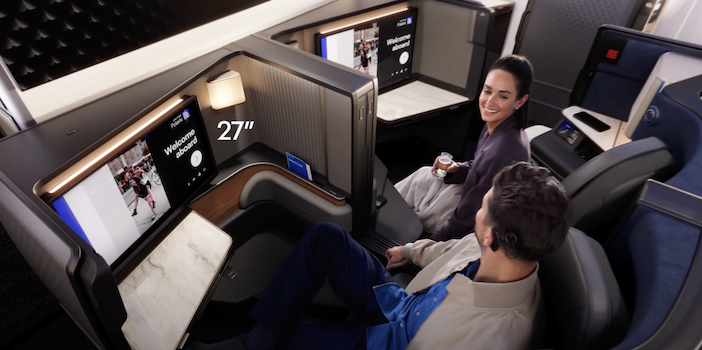
United’s vision of an American union
Kirby went on to outline some benefits he believes a combined United-American could produce:
Combined passenger experience benefits
A combination of the airlines’ services, technologies, reliability, and products, to give customers of both airlines more choice and more value, and a more valuable loyalty and rewards programme.
“The combined airline would have been about growth – especially internationally and with expanded service to smaller communities – both of which are mathematically enabled by having a larger network,” stated Kirby.
Better value for customers
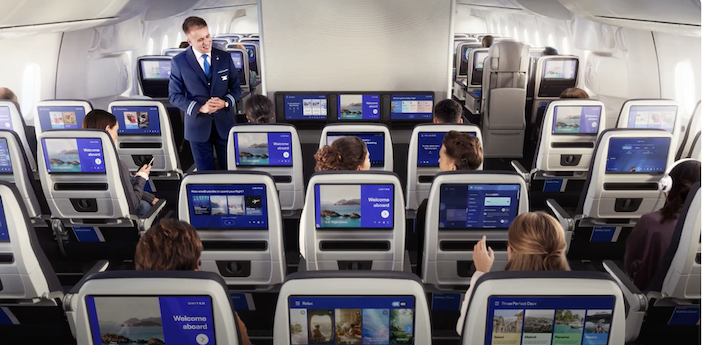
Kirby cited a figure that in 2025 ticket prices were 29% less expensive than they were pre-pandemic (adjusted for inflation), while United customers also benefit from investments in newer aircraft with bigger overhead bins, IFE screens in every seat, Bluetooth connectivity, and free access to Starlink wi-fi.
“A merger of United and American (and the growth that would have come with it) would have dramatically increased the total number of economy seats in the marketplace, offering cost-conscious customers more affordable ways to fly to more places and greater choices across all price points, while still delivering industry-best value to all customers,” said Kirby. “We wouldn’t propose a combination that would cause prices to rise for customers.”
A globally competitive airline
Kirby noted that a larger US global airline would deliver jobs and economic opportunities in the USA. As he stated, “Today, there’s a big trade deficit with foreign flagged airlines – they fly about 65% of the long-haul seats into our country, even though only 40% of the customers are foreign citizens – and the combined scale of United and American would be a better way to compete with foreign carriers.”
A boost to the US economy
Kirby believes there would have been broader benefits to US trade: “America is stronger when US carriers flow more of the dollars of US consumers to communities, employees and manufacturing right here at home. A combined company would have created tens of thousands of new high paying, unionised jobs with great benefits, which would have led to even more career growth opportunities for the 250,000 employees already at United and American.
“Plus, the combined airline’s need for new aircraft would have supported American manufacturing and domestic supply chains and driven even more job creation. And by flying more seats to more places in the US, this merger would boost local tourism and business travel, generating billions of dollars in US economic activity and even more jobs.”
A bright future
Kirby is of course keen to stress that the proposed merger was based on building more from an already strong position.
“I recognised from the beginning that a merger this big in our industry would attract a lot of scepticism in the media, including from some government officials. Since previous mergers have been about saving struggling airlines, previous legal and regulatory reviews have always focused on subtraction and what’s being lost. But a different kind of merger proposal – one that’s focused on growth, customer investments and global competitiveness – would have been a different proposition altogether.
“And, while divestitures in certain domestic markets obviously would have been required, I believe regulators would have approved such a deal because they would have recognised the benefits to customers, our shared employees and communities from coast-to-coast and around the world,” he stated.
“While our pursuit of talks with American have ended, our mission to build the greatest airline in the history of aviation at United is well underway. We have a winning strategy, a culture of innovation and 115,000 of the best aviation professionals in the world working together to deliver for our customers.
“While the airline industry has always been dynamic and unpredictable (it’s one of the reasons that I love this business), United’s future is brighter than it’s ever been,” he added.
