


The collapse of Spirit Airlines in May 2026 marks a decisive turning point for the ultra-low-cost carrier (ULCC) segment in the United States. Once a powerful force that drove fares downward across the industry, the model is now under pressure, but far from disappearing. Instead, it is entering a new phase of consolidation and strategic repositioning.
Spirit’s shutdown removed more than 800,000 seats and over 4,000 flights within two weeks, immediately tightening capacity in price-sensitive markets. The impact was felt most acutely on leisure routes and secondary city pairs, where Spirit had built its core network. This sudden contraction has created both opportunity and risk for remaining low-cost operators.
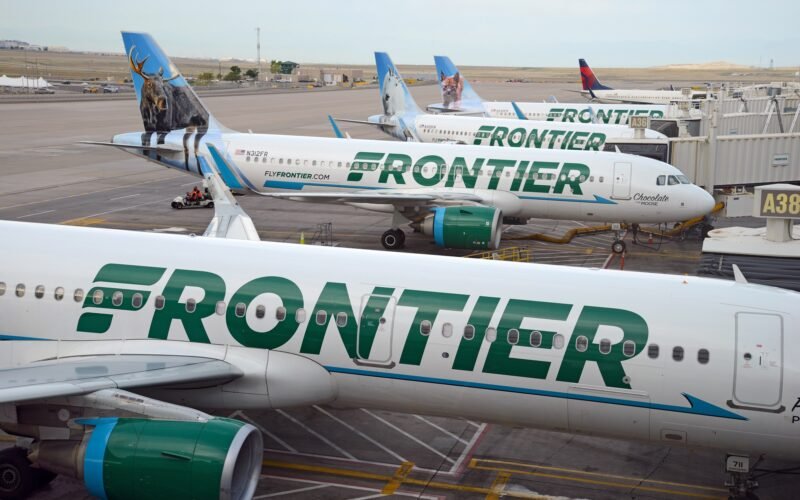
With Spirit Airlines gone, shares of JetBlue Airways and Frontier Airlines have risen, reflecting expectations of market share gains and higher fares. Frontier, Spirit’s closest ultra-low-cost rival, is already benefiting by attracting price-sensitive passengers in former Spirit markets, while JetBlue has expanded its presence at Fort Lauderdale-Hollywood International Airport.
The ULCC and adjacent “budget-plus” segment is now led by Frontier, Allegiant Air, Avelo Airlines, and Breeze Airways. Frontier remains the closest pure ULCC and is expected to capture a significant share of displaced demand. Allegiant continues to operate a hybrid model focused on leisure destinations, while Avelo and Breeze are carving out niches in underserved and secondary markets.
Meanwhile, JetBlue Airways and Southwest Airlines are increasingly competing for value-conscious travelers, further blurring the line between low-cost and full-service carriers. At the same time, American Airlines, Delta Air Lines, and United Airlines have been offering “basic economy” no-frills fares directly matching ULCC pricing strategies. Delta was the first U.S. legacy carrier to introduce Basic Economy, rolling it out in 2012 to compete with ultra‑low‑cost carriers like Spirit and Allegiant. Delta later rebranded the fare as Delta Main Basic in 2025, but the fare type itself dates back to 2012.
Despite its visibility, the ULCC segment remains relatively small. The broader U.S. low-cost carrier market is valued at approximately $52 billion, with ULCCs accounting for roughly 7–8% of domestic capacity. Individual carriers typically hold just 2–4% share each, dwarfed by the dominance of the “Big Four”, American Airlines, Delta Air Lines, United Airlines, and Southwest, which together control about three-quarters of the market. Yet ULCCs play an outsized strategic role by setting the industry’s price floor and stimulating demand among travelers who might otherwise not fly.
That demand is highly specific. ULCCs primarily serve ultra price-sensitive passengers, including first-time flyers, students, and leisure travelers visiting friends and relatives. They also target routes that legacy carriers tend to overlook: smaller cities, point-to-point connections, and off-peak travel periods. This niche, low fares on underserved routes, is where Spirit once excelled and where surviving ULCCs are now refocusing.
The traditional ULCC model is built on simplicity and cost discipline: the lowest base fares in the market, unbundled pricing for ancillary services, high aircraft utilization, and dense seating configurations. However, this model is under increasing strain. Rising fuel prices, higher labor costs, intensifying competition on leisure routes, and growing consumer resistance to “hidden fees” have all eroded margins. The economics that once enabled rapid expansion are no longer as reliable.
Spirit’s failure illustrates these pressures clearly. The airline gradually shifted into more competitive, high-density routes, moving away from its original niche. At the same time, it struggled to absorb fuel cost increases and saw its market share decline to under 4%. Post-pandemic profitability remained weak, exposing structural vulnerabilities in the model. Analysts now widely view the traditional ULCC approach in the U.S. as fundamentally challenged, if not broken in its original form.
In the near term, the gap left by Spirit is being filled by a mix of players. Frontier is expanding capacity to absorb budget travelers, while JetBlue is strengthening its presence in former Spirit hubs. Legacy carriers are also introducing discounted “rescue fares” to capture price-sensitive demand. Over the medium term, Breeze and Avelo are expected to grow selectively in underserved markets, while Allegiant continues to dominate niche leisure routes.
Looking ahead, the ULCC sector is likely to evolve along several key lines. First, consolidation will reduce the number of pure ULCC operators, leaving fewer but stronger players. Second, hybrid models will become more prevalent, blending low fares with improved reliability and optional bundled offerings. Third, success will depend on disciplined network strategy, avoiding direct competition with major airlines and focusing instead on unique city pairs. Finally, despite their modest size, ULCCs will remain critical to the broader ecosystem by keeping fares competitive and expanding the overall travel market.
The U.S. ULCC segment is not disappearing, it is resetting. The era of aggressive, ultra-cheap expansion is giving way to a more measured, strategic approach. Spirit’s exit does not signal the end of low-cost flying in America, but rather the beginning of its next evolution.
Related News:
Sources: AirGuide Business airguide.info, bing.com
