


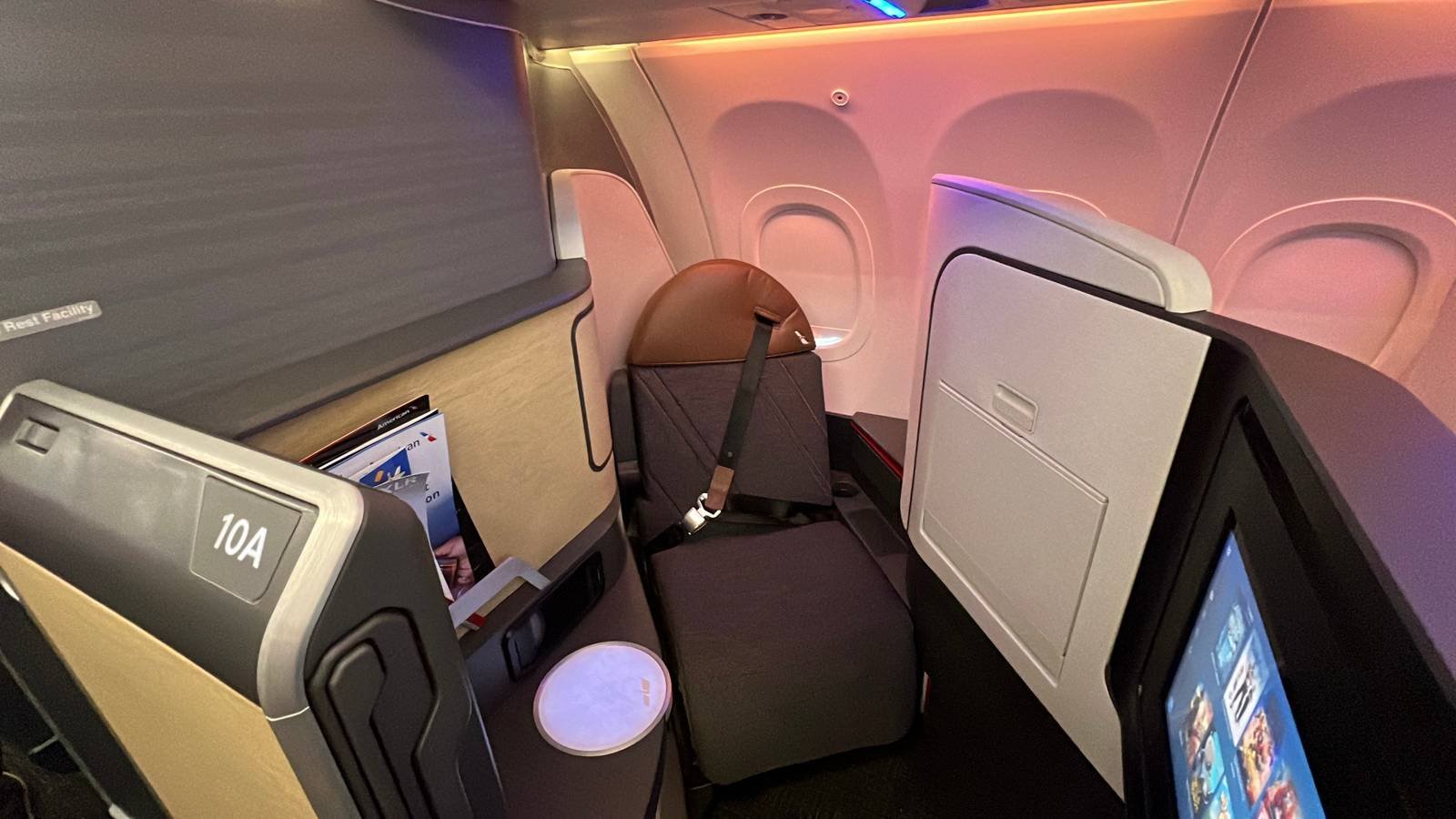
The Airbus A321XLR was introduced with a fanfare and was to represent a new era of flying. The narrowbody aircraft has a transatlantic range and features premium cabins, and was designed to fly on ‘long and thin’ routes such as New York to Edinburgh. The aim is for airlines to expand internationally with the A321XLR, and it is important to their network and product strategy in the long term.
However, a post on social media by a flight attendant, along with comments from other flight attendants also working on the A321XLR, revealed many issues with the design and how it works in reality. This guide will look in more detail at the issues that have been discovered, what the future may hold for the aircraft, and why flight attendants’ concerns about the interior often go ignored by the airlines.
The Issues Uncovered
In relation to the A321XLR, some of the complaints about the aircraft include the cramped galley, the awkward lavatory layout, and the crew rest area, as well as reports of a disruptive service flow. One of the biggest issues is that there is just one small lavatory at the front of the aircraft and three at the rear. This means there is just one lavatory for all of business class, as well as the pilots and crew working in the forward galley, so there are always people waiting in the galley area.
The galley is the standard Airbus galley, which is tiny and not the easiest to work in, and there is very little storage space, making it difficult to manage trash during a long flight. Preparing the carts for service is almost impossible, and the galley’s ergonomics are not good. Flight attendants have also pointed out that the extended oven racks are difficult to manage. The Space Flex galley has been described as impractical compared to the galley on the Boeing 757, which it often replaced.
Crew have reported the smell of fumes in the cabin prior to takeoff. Crew rest is required on long-haul flights, but there is no designated ‘hidden’ crew rest area like those on widebody aircraft. The crew rest area is a row of seats curtained off at the rear of the cabin, which resembles a tent. The seats do not recline, and they back a lavatory. There is less privacy and comfort, especially on flights that are over ten hours.
Simple Flying Quiz
Easy (15s)Medium (10s)Hard (5s)
A Little Background

The Airbus A321XLR entered service in November 2024 with  Iberia, the first airline to operate the aircraft. It started operating on short-haul routes and then moved on to the Madrid to Boston route. American Airlines was the first US carrier to operate the A321XLR in December 2025, launching it on the cross-country route from New York to Los Angeles before moving to the transatlantic route from New York to Edinburgh. Other routes soon followed, including New York to Barcelona and Philadelphia to Amsterdam. It replaced the Boeing 757, which is now retired.
In January 2026,  IndiGo received its first A321XLRs and used them on the Delhi and Mumbai to Athens route.
  Aer Lingus also operates the aircraft on transatlantic routes, such as the Dublin to Nashville route. Qantas uses the A321XLR on domestic and near-international routes. Wizz Air operates the aircraft on long-haul routes between the UK and Saudi Arabia and has significantly scaled back its original order of 47 aircraft, instead opting for the A321neo.
In addition, Air Canada, United Airlines, JetBlue, and Saudia all have the type on order. Airlines have ordered hundreds of the Airbus A321XLR, and it has been described by industry executives as a game-changer, according to One Mile At A Time. The aircraft is the longest narrowbody aircraft produced and has a range of 4,700 nautical miles or 4,500 miles.
Why Some Airlines Are Switching From Widebodies To Narrowbodies On Long-Haul Routes
Single-aisle jets going the distance.
Service Flow In The Cabin

The aircraft has been described as ‘not flight attendant friendly’ and has numerous service flow issues. Because of the lavatory layout, the flight attendants have to constantly move the carts back and forth during service to let passengers through to the lavatories, which slows them down. The aisle is so narrow that flight attendants can barely move, and the inflight entertainment screens have to be put away, which is inconvenient for passengers.
Flight attendants have said they can no longer serve pre-departure welcome drinks in premium classes because boarding is at door 1L, and the aisle is blocked. On widebody aircraft, boarding is from door 2L, therefore filtering business class passengers to the front of the cabin and the pre-service can start without interruption. Bottlenecks occur frequently in the aisles, disrupting service. The economy and premium economy meal trays are smaller, so they have to be stacked, which creates a ‘messy’ service.
The workflow issues are annoying for flight attendants and affect service delivery, especially in premium cabins. The space is hard to work in, resulting in a slower, less polished service overall. Generally, flight attendants take great pride in their work, and working in difficult conditions creates low morale, which can affect labor relations and tensions. It has also been reported on forums that some senior flight attendants have chosen not to work on the A321XLR, leaving it to the junior crew.
The Passenger View

One of the most unusual things about the herringbone business class configuration offered by some airlines is that the seatback is facing the window. This seems odd, as most passengers like to look outside the window, but it is designed to be space-efficient. The seats look cramped and have even been nicknamed ‘coffin class’. Passengers are paying for a business class product for an uncomfortable narrowbody experience on a long-haul flight, according to Aviation World.
One Mile At A Time noted from a passenger’s point of view that the lavatory situation was ‘a bit of a mess’. Boarding was slower than on a widebody aircraft, and there was nowhere to stretch your legs on a long flight. The larger Airspace cabin has larger overhead bins, but they are low and seem to make the aircraft feel ‘tight’. Every movement can be felt more on a narrowbody aircraft, such as turbulence and passengers walking by.
He also commented that the galley was tiny and he felt bad for the crew working in it because of the lack of space and privacy. The service was slower than usual, as sometimes there was one flight attendant working in business class and sometimes two. It was also noted that premium products on narrowbody aircraft were compromised in terms of quality due to space constraints.

What Are The Most Seats That Airlines Can Fit On The Airbus A321XLR?
Qantas will have one of the highest passenger capacities onboard its Airbus A321XLRs.
What The Airlines Say

Is the efficiency of the A321XLR at the cost of the crew working on the aircraft? Although the aircraft is economical and efficient, there needs to be changes in the service, working processes, and retrofitting of aircraft. The interior configuration of the aircraft is determined by the airline and not the manufacturer, although the issues seem to be across the board, regardless of the airline. Some airlines are looking at changes to their future aircraft layouts.
Qantas is reconfiguring its A320XLRs due to complaints regarding passenger comfort and crew workflow bottlenecks. They removed one row of economy seats to make room for an additional lavatory on their fourth aircraft. The previous three aircraft will be retrofitted.
American Airlines has cut its A321XLR order by 20%, instead concentrating on the Airbus A321neo and widebody aircraft. The airline also evaluated cabin processes and tweaked them. United Airlines has pre-empted complaints and arranged a less-dense configuration of 150 seats to minimize some of the issues felt by other carriers.
Some airlines have already changed some elements of service to make things easier for the crew. Airlines rarely test the cabin for service flow or consult with the flight attendants, although manufacturers such as Bombardier do. The airline’s focus tends to be on finances, and a flight attendant’s perspective is not deemed important, although maybe it should be, especially regarding the features of the A321XLR.
In Conclusion

Long-haul flights on a narrowbody aircraft are not ideal for passengers or crew, and it’s not a substitute for a widebody aircraft. Although the idea was originally promising in that airlines can expand their network and use the aircraft on transatlantic or international routes, and is efficient, problems have started to arise with passengers and the flight attendants working on long-haul flights.
Many flight attendants who have worked on the Airbus A321XLR have agreed on most of the issues that were brought up in a post by a veteran flight attendant with American Airlines. These are the same issues across airlines, including the galley size, lack of lavatories, inadequate crew rest areas, and disrupted service flow.
Some airlines have cut their orders of the aircraft due to some of the recurring issues, while others have changed the design on upcoming orders. In the meantime, some airlines will retrofit their older aircraft with an extra lavatory or a less-dense seating configuration, and changes have been made to cabin processes and service flow. Although flight attendants’ warnings about the cabin interior go mostly unheard by airlines, this is one time when, due to passenger and crew complaints about this aircraft, changes have finally been made.
