


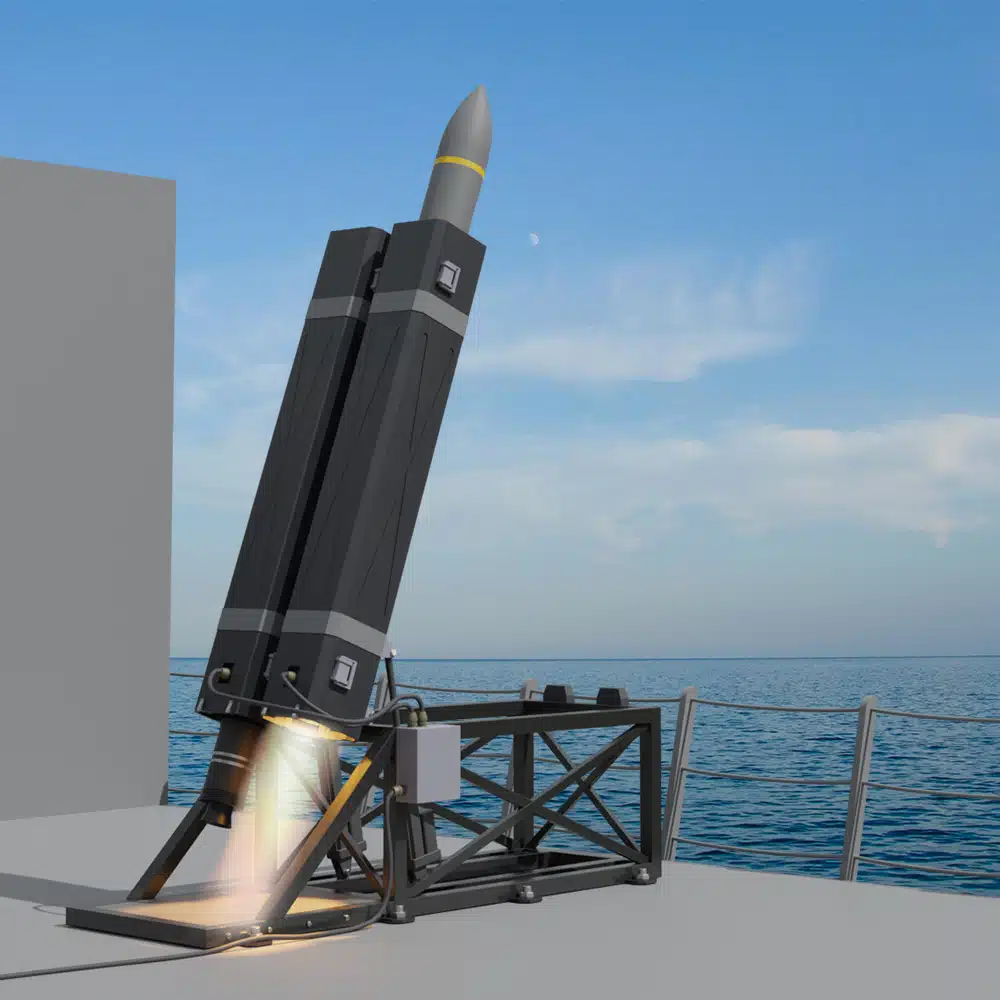
The Pentagon’s order of over 10,000 Low-Cost Containerized Missiles (LCCM) has the potential to expand Washington’s arsenal of anti-ship munitions, with designs from the five awarded defense contractors capable of accommodating or planned to incorporate dedicated maritime-launch and strike variants.
Aside from replenishing stocks exhausted during recent conflicts in the Middle East, the large U.S. order will reinforce long-range precision strike missile stocks that are crucial for Washington’s posture in the Indo-Pacific. The 10,000+ missile infusion can be pivotal in countering China’s numerous warships and ground-based targets during a potential conflict.
While the initial efforts will be led by the U.S. Army Program Acquisition Executive Fires office, the low-cost and deployment nature of the contract also aligns with U.S. Navy interest in containerized missiles. Chief of Naval Operations Adm. Daryl Caudle expressed great interest in proliferating the low-cost, dispersible and ambiguous deployment method across the fleet.
To meet this interest, several U.S. defense firms have unveiled new munitions that can be rapidly built and quickly fielded at a fraction of the cost of legacy systems. Last week’s awardees include CoAspire, Anduril, Leidos and Castelion – firms which have pitched or plan to integrate their long-range strike systems into maritime platforms such as unmanned surface vessels. At least three of the companies plan to invest into sensors and payloads that will allow their missiles to target moving maritime targets.
Alongside LCCMs from Zone 5, each contractor appears to have reached an agreement to begin delivery of 3,000 missiles and their associated launching systems from 2027 to 2029.
Low-Cost Maritime Strike Potential
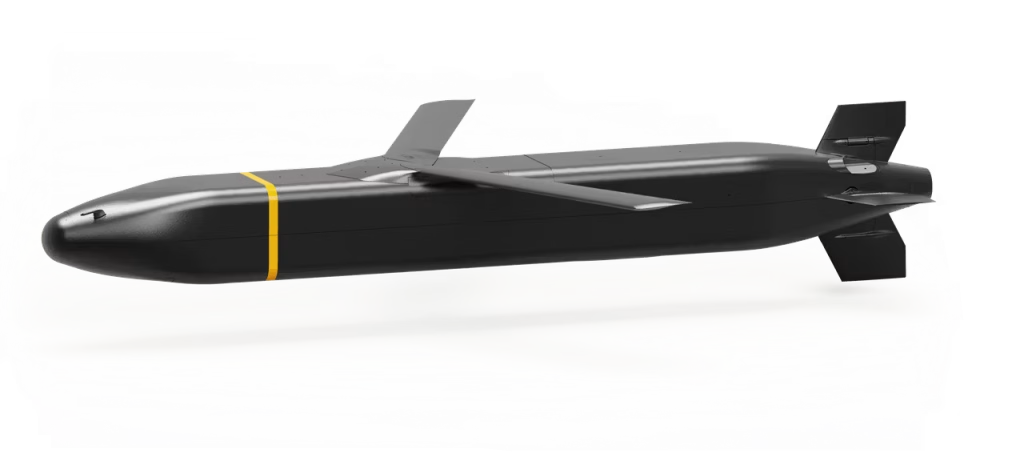
At Sea Air Space 2026, CoAspire President and CEO Doug Denney told Naval News that the company was looking to integrate sensors capable of maritime strike onto the newly revealed Rapidly Adaptable Affordable Cruise Missile Extended-Range (RAACM ER).
GHOST, a variant of this missile, will be CoAspire’s contribution to the LCCM program. A company release and render shows that this will be a version of RAACM ER supporting an attached rocket booster.
Denney also expressed interest in supporting future opportunities with the U.S. Navy, citing Caudle’s comments on containerized munitions.
Anduril will be delivering the most capable variant of its Barracuda autonomous air vehicle. The Surface-Launched Barracuda-500M (SLB-500M) will be launched out of 20-foot ISO containers capable of handling 16 of the 100-pound warhead cruise missiles apiece. With a range of over 500 nautical miles, the company also highlights that the SLB-500M is “effective against a wide range of land and maritime targets.”
Anduril debuted the Barracuda missile in 2025 with a promotional video of the missiles swarming a large fleet. The U.S. Air Force has already designated the air-launched Barracuda as the AGM-189A.
At Sea Air Space 2026, Anduril announced partnerships with Kraken Technology Group, Hyundai Heavy Industries and Edison Chouest Offshore to develop USVs capable of supporting various containerized payloads and missions in support of the U.S. Navy’s unmanned vision. A containerized Barracuda launcher was among the payloads shown to be carried aboard one of these USV proposals.
Leidos will be providing a LCCM based upon its previous work on the AGM-190A, which was originally conceived for the Air Force. According to a release from the contractor, the small cruise missile “could also support maritime platform integration.”
Hypersonic Missile Strike from Carrier Aviation, USVs
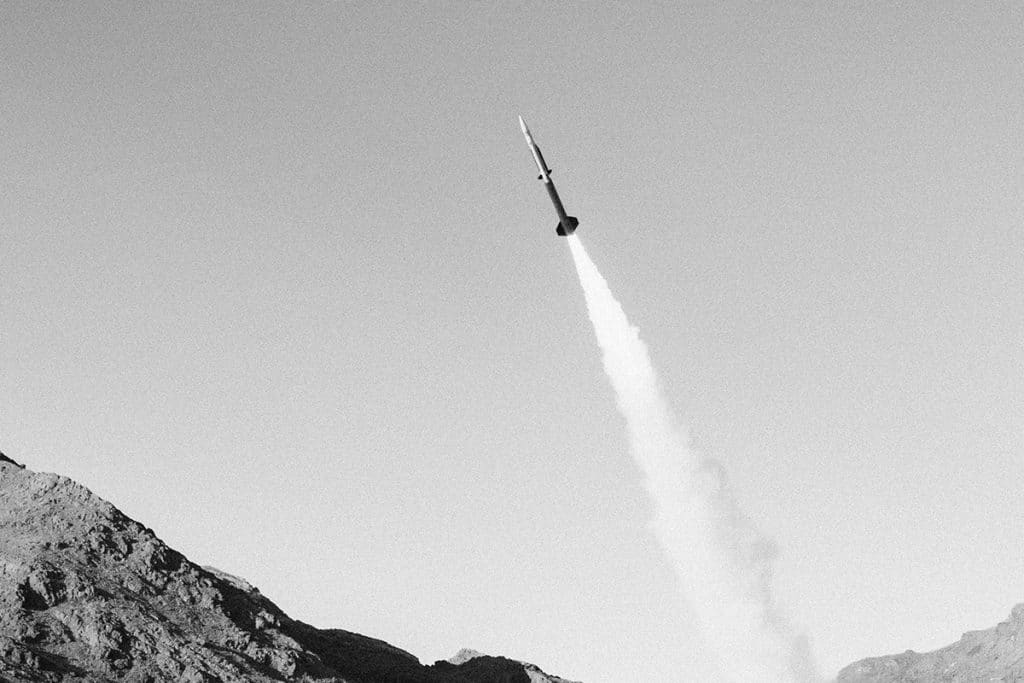
Additionally, the Defense Department is looking to procure up to 500 low-cost Blackbeard hypersonic missiles a year from Castelion through a concurrent initiative. The firm has been recently identified by the U.S. Navy as a supplier of hypersonics through a new initiative. According to the Pentagon release, the firm could be potentially tapped for up to 12,000 hypersonic missiles through a five-year-long program.
The sea service wants to use Blackbeard to debut an aerial hypersonic strike on the workhorse of American naval aviation, the F/A-18E/F Super Hornet. This planned mass introduction of affordable hypersonics comes as the U.S. Navy faces the possibility of a show down a modern Chinese blue water fleet.
Aside from the stealthy AGM-158C Long-Range Anti-Ship Missile, the service’s carrier fighters rely on older Cold War munitions such as the AGM-84 Harpoon to defeat enemy warships. These missiles lack the extended ranges necessary to contend with the People’s Liberation Army Navy’s increasingly sophisticated air defense systems.
Castelion is also pairing its hypersonic capabilities with the sea drone firm Saronic to put containerized Blackbeard launchers on the 180-foot Marauder USV.
