


Researchers from the German Space Agency have tested technology for melting lunar regolith with laser radiation aboard a microgravity research aircraft, evaluating a process that could enable future construction of habitats and infrastructure on the Moon using locally sourced material.
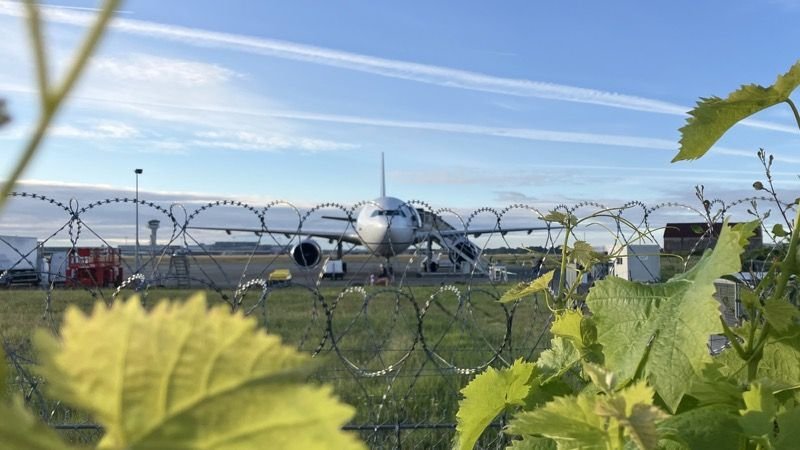
The experiments formed part of the 46th parabolic flight campaign of the German Space Agency at DLR (Deutsches Zentrum für Luft- und Raumfahrt), which ran from May 11-22, 2026. An Airbus A310 Zero-G, operated by French company Novespace, took off at 09:30 on May 19 from Bordeaux-Mérignac Airport for the first of three consecutive flight days.
A total of eight experiments in biology, physics, technology and materials science were conducted on board by German research institutes, universities and colleges.
The lunar construction experiment, developed by the Federal Institute for Materials Research and Testing (BAM), used a system that melts regolith – the loose, fragmented dust and rock on the Moon’s surface – under vacuum conditions through laser radiation across a diameter of approximately 0.4in (10mm). The process could be applied in a method similar to 3D printing, eliminating the need to transport bulk construction materials from Earth, with only the technological equipment shipped to the Moon and solar panels providing the energy required for melting.
Researchers investigated how vacuum and varying gravity levels affect the melting process. They also evaluated whether the process could contaminate the laser optics and render them unusable, a concern given that the Moon’s lack of atmosphere and low gravity allow forces such as pressure from space radiation to trap or blow away dust particles in ways not seen on Earth.
A second experiment from the University of Magdeburg examined cognitive and psychomotor performance under weightlessness, which can directly impair attention, memory and reaction times. Participants received either electrical stimulation of the vagus nerve – one of the major cranial nerves – or a placebo, with performance measured before, during and after the flight.
If the technique proves effective, it could support astronaut performance during space missions through portable, non-invasive systems, said the German Space Agency.
Each flight day lasted approximately four hours, during which 31 parabolas were flown, with each providing approximately 22 seconds of microgravity. A complete campaign delivers approximately 35 minutes of microgravity alternating with periods of normal and nearly double Earth’s gravity.
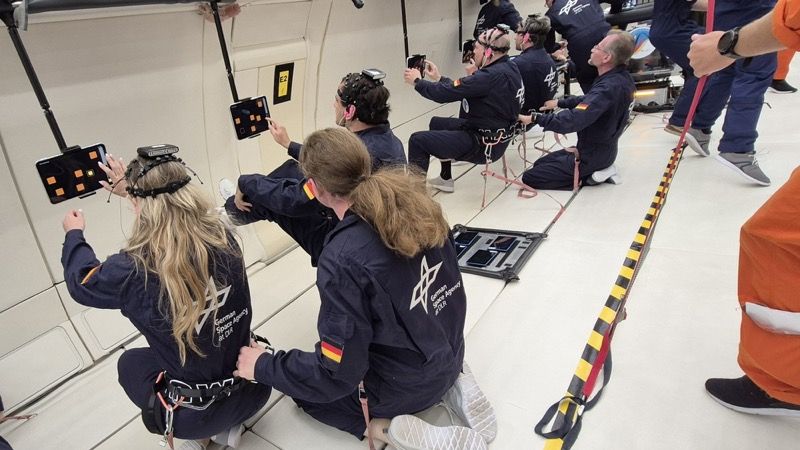
Up to 40 scientists can participate per flight, with around ten experiments conducted on board. The A310 Zero-G is also used by the European Space Agency (ESA) and the French space agency CNES.
