


Israeli 3D printer manufacturer Nano Dimension has agreed to sell its Markforged subsidiary to rival 3D printing company Stratasys in an all-cash deal worth $42.5 million.
With this move, the Israeli manufacturer is shedding one of its cash-burning business units as it works through a restructuring plan. The sale is part of a broader divestiture effort at the Israeli-American additive manufacturing company, not simply an asset swap between competitors.
Nano Dimension disclosed the deal in a company announcement today. The company expects the transaction to close in the second half of 2026, pending regulatory approvals.
“We are pleased to have reached an agreement with Stratasys that we believe positions MarkForged for continued growth and success under its ownership. This transaction represents a deliberate step in advancing Nano Dimension’s three phase strategic plan and accelerating Phase 3 execution,” said David Stehlin, CEO of Nano Dimension.
Cost Reductions and Leverage Shift
The primary financial rationale is cost reduction. Nano Dimension says the sale will cut its annualized cash burn by roughly $15 million, drawn from a mix of direct operating savings and indirect costs that extend beyond Markforged’s own books.
The company is retaining one piece of the Markforged portfolio, the Metal Binder Jetting product line, suggesting the divestiture is selective rather than a wholesale exit from that segment. Meanwhile, Stratasys arrived at this deal with the stronger hand.
After closing a $120 million investment from Fortissimo Capital last year, Stratasys reportedly held $270 million in cash with no outstanding debt. At the time of reporting, management said that capital is intended primarily to support acquisitions. Stratasys has already moved on that front, acquiring Nexa3D’s IP portfolio and remaining hardware assets after the California-based resin printer maker shut down. The Markforged acquisition would be the next move in that sequence.
As of March 31, 2026, the company held $237.8 million in cash, equivalents and short-term deposits with no debt, according to its Q1 2026 earnings release.
Markforged generated approximately $70 million in revenue in 2025, though that figure includes the Metal Binder Jetting product line Nano Dimension is retaining. Still, the $42.5 million price Stratasys is paying for the remainder represents a significant haircut for Nano Dimension, which originally acquired Markforged for $116 million.
That gap is a clear reflection of where the negotiating power sits: one company has $237.8 million in cash and no debt, while the other is selling off assets to stop a $15 million annual cash burn.
For Stratasys, Markforged brings a Continuous Carbon Fiber technology platform and an integrated software suite called The Digital Forge, which combines hardware, materials, and print management tools.
Stratasys CEO Yoav Zeif said the company believes it can “immediately reinvigorate revenue growth” by adding Markforged’s products and software to its existing partner networks, with particular emphasis on aerospace and defense applications.

The Irony of Corporate History
The fact that Stratasys is buying Markforged from Nano Dimension carries its own history. In 2023, Nano Dimension made multiple unsolicited acquisition bids for Stratasys, an effort that eventually stalled. Nano Dimension subsequently spent $179.3 million acquiring Desktop Metal and completed the acquisition of Markforged.
Then, Desktop Metal filed for Chapter 11 bankruptcy in July 2025, months after the acquisition closed, with its foreign subsidiaries sold off to an affiliate of Anzu Partners. Now Nano Dimension is selling Markforged to the company it once tried to buy.
Nano Dimension’s calculus is straightforward. The company has been executing a three-phase plan. Phase 1 focuses on streamlining operations and reducing cash burn through cost management. Phase 2 covers monetizing product lines to simplify the business and strengthen the balance sheet, which is where the Markforged sale sits. Phase 3 involves evaluating strategic alternatives to maximize long-term shareholder value, and Stehlin said the company has “advanced discussions with a focused set of strategic opportunities and potential partners.”
Whether $42.5 million and $15 million in annualized savings are sufficient to extend Nano Dimension’s runway long enough to complete Phase 3 on favorable terms depends on how quickly those discussions progress and on what terms any eventual deal gets structured.
What the Markforged transaction makes clear is that the consolidation cycle in industrial 3D printing is not over; assets are simply moving to whoever currently holds the stronger balance sheet.
3D Printing Industry is inviting speakers for its 2026 Additive Manufacturing Applications (AMA) series, covering Energy, Healthcare, Automotive and Mobility, Aerospace, Space and Defense, and Software. Each online event focuses on real production deployments, qualification, and supply chain integration. Practitioners interested in contributing can complete the call for speakers form here.
To stay up to date with the latest 3D printing news, don’t forget to subscribe to the 3D Printing Industry newsletter or follow us on LinkedIn.
Explore the full Future of 3D Printing and Executive Survey series from 3D Printing Industry, featuring perspectives from CEOs, engineers, and industry leaders on the industrialization of additive manufacturing, 3D printing industry trends 2026, qualification, supply chains, and additive manufacturing industry analysis.
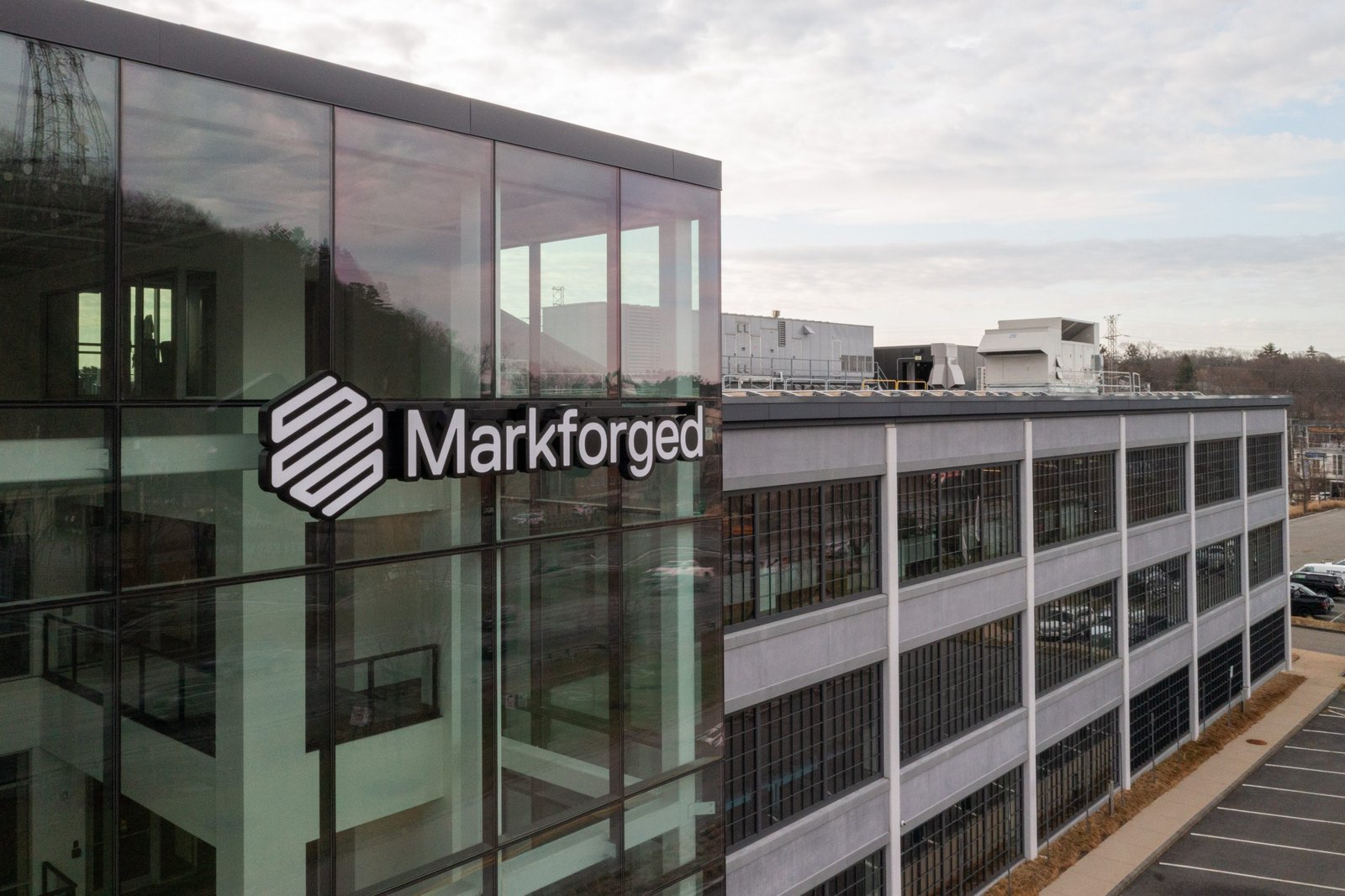
Featured image shows Markforged HQ. Photo via Businesswire.
