


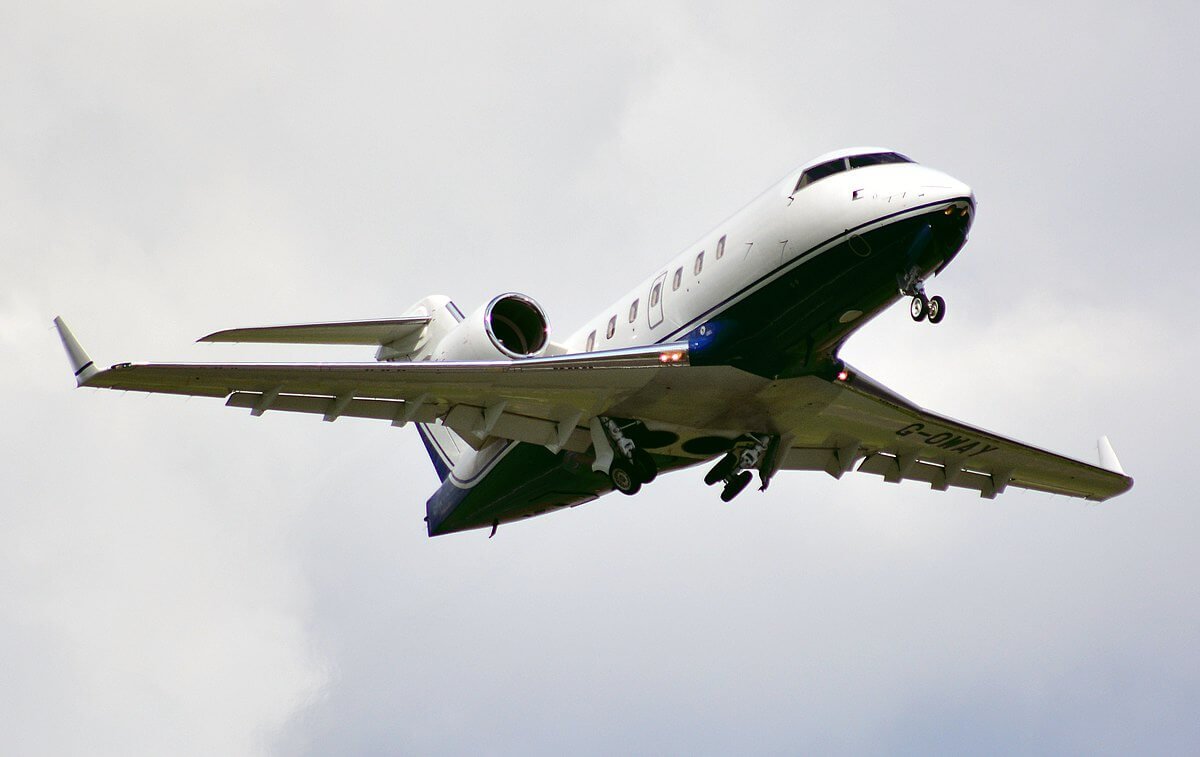
The Federal Aviation Administration (FAA) has proposed a new airworthiness directive for 610 US-registered Bombardier Challenger 600-series aircraft after an in-flight flap malfunction raised concerns about the potential for dangerous loss of handling in the business jet.
The proposed AD, published May 26, 2026, would apply to all Bombardier CL-600-1A11, CL-600-2A12 and CL-600-2B16 aircraft. The models include the Challenger 600, 601, 601-3A, 601-3R and 604 variants.
The FAA said the proposal follows an in-flight event in which a CL-600-2B16 experienced uncommanded and unarrested flap movement from 0 degrees to 45 degrees, accompanied by a FLAPS FAIL caution message. The aircraft returned to its departure airport without further incident.
The flap control system should have stopped the flaps at 3 degrees, according to the FAA. However, a failed retract relay prevented the system from arresting the uncommanded movement.
The FAA said the condition, if not addressed, could result in loss of control of the aircraft.
The proposed AD would require operators to revise the aircraft flight manual to provide crews with procedures to follow in the event of uncommanded, unarrested flap movement. The FAA estimates the action would cost $85 per aircraft, or $51,850 across the affected US fleet.
The FAA said the proposal follows Transport Canada AD CF-2024-39, issued November 29, 2024. Transport Canada is the state of design authority for the aircraft.
The underlying event involved a Challenger 604, D-AAAY, that experienced the flap malfunction during climb after departing Farnborough Airport in the UK on August 10, 2022. The UK Air Accidents Investigation Branch later found a latent failure in the No. 1 flap retract relay had existed for at least 64 previous flights.
According to the AAIB, the failed relay caused the flaps to retract at half their normal speed and prevented the system from arresting an uncommanded flap movement. The fault went undetected before the incident flight.
Transport Canada later issued AD CF-2025-51, effective October 22, 2025, which superseded an earlier 2023 directive and required functional tests of flap extension and retraction, along with life limits for flap extension and retraction relays.
The FAA said comments on the proposed US directive are due by July 10, 2026.
