


From A to B
Evolution of the 206 began almost as soon as the type began to enter service, not only with civilian customers but also with the US Navy as the Sea Ranger, where it was used as the rotary wing primary trainer.
The first development to come along was the 206B, which saw the installation of an Allison (now Rolls-Royce) 250-C20 engine with greater power.
This began production in 1971, followed by the 206B-3 Jet Ranger III, which replaced the -C20 engine with a higher power C20J as well as a larger diameter tail rotor and began flying in 1977.
Two years before that, however, along came the 206L Long Ranger.
As with that other child of the late 1960s, the Boeing 747, which finally found its sweet spot with the -400 series, the Long Ranger arguably has to be thought of as the definitive 206 – not least because with a 42-year production run, the L series outstrips the A and B models in terms of longevity, payload and performance.
Compared with the Jet Rangers, the Long Rangers have a cabin that is 762 mm (30 inches), allowing the installation of two rearward-facing seats in the cabin.
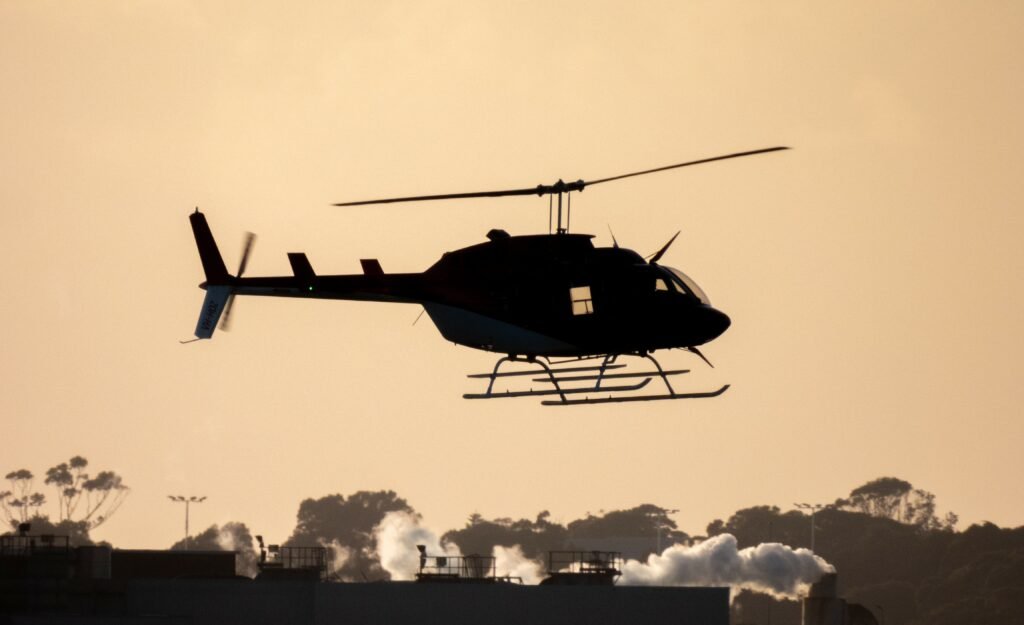
In addition to the longer body, the most obvious change to the external appearance was the addition of winglets to the horizontal stabiliser.
Under the surface, the early models also used the same Allison 250-C20B engine found in later Jet Ranger B-3s, with the result that performance – especially hot and high – was a little lacklustre compared with the Jet Ranger III.
This was something that Bell remedied with the introduction of the L-2 version, which debuted in 1978 with the 500 SHP -28B engine installed.
Later this was further boosted with the -C30P variant found in the L-3 and L-4 variants, which had the potential for up to 650 SHP.
Although the engines had the potential, the main gearboxes’ limits topped out at 435 SHP (495 SHP on the L-4), requiring derating of the power output and thus yielding significant improvements in the hot and high regime.
To get that improved performance in the L-4, the final iteration of the 206 series, not only was the MGB rating increased but there were also modifications to the tail boom, with a net result of a 300 lb increased payload compared with the earlier variants, as well as a sprightlier performance.
Such was the step up in performance in the L-4 that Bell offered kits to owners of L-1s and L-3s that would enable them to upgrade the aircraft to an L-4 specification dubbed the L-1+ and L-3+ respectively.
Both kits included the tail boom upgrade, with the L-1+ boasting a new engine and main gearbox while the L-3+ called for the replacement of the MGB and tail boom.
