


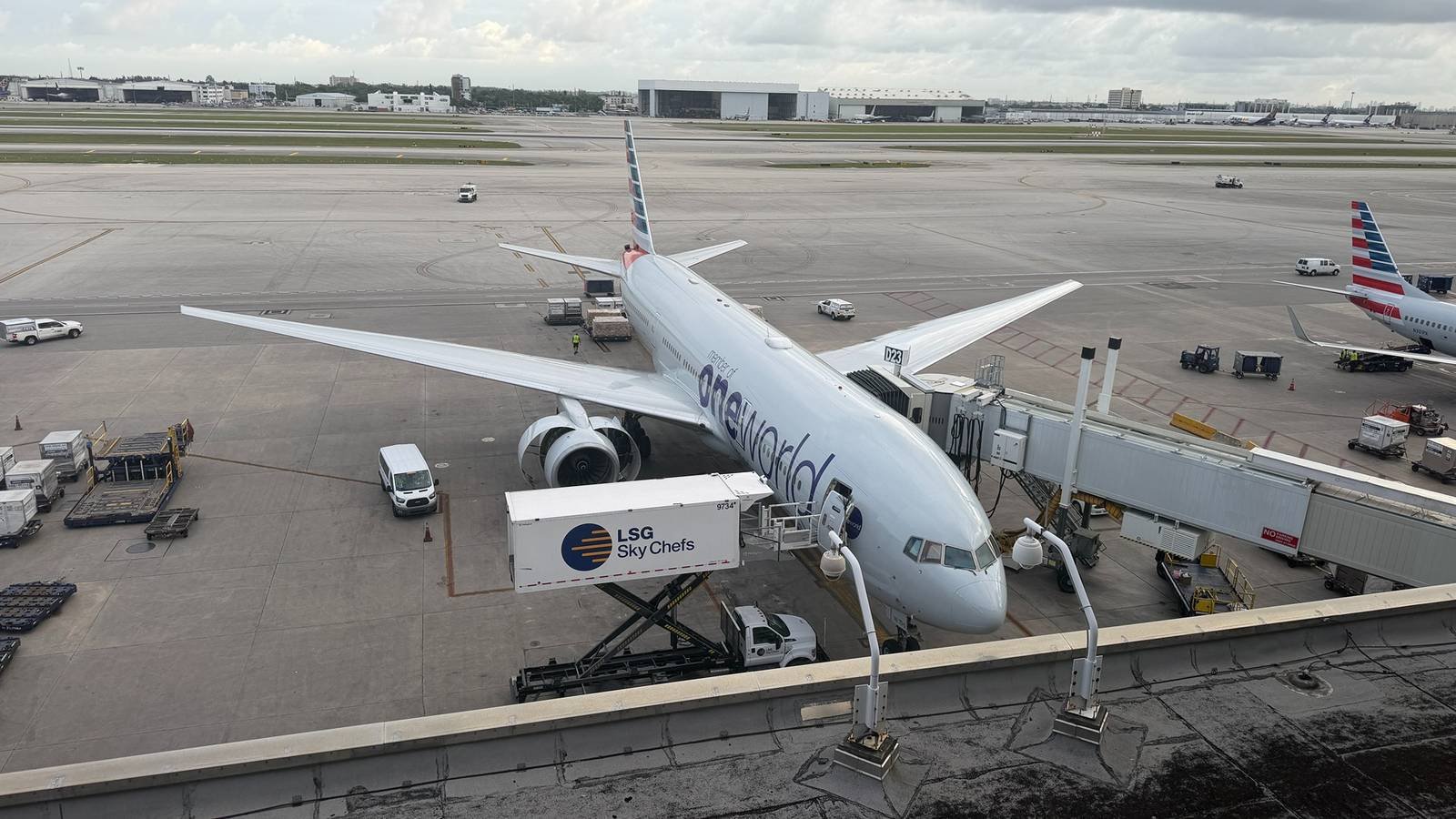
American Airlines CEO Robert Isom announced at the shareholders’ meeting on Wednesday, June 10, that the carrier has fielded requests for proposals to both  Boeing and Airbus as it seeks to replace its Boeing 777-200ERs. The fleet of long-haul jetliners is vital to AA’s international network, but the airframes are now nearing 25 years old.
Isom said that the airline would begin preparation well in advance of the fleet’s sunset, given the current timeline for delivery of new long-haul airliners from both major planemakers. The 47 aging widebody jets will also receive a final round of upgrades before retirement in the 2030s.
Multiple Options

American is considered likely to purchase both the 787 Dreamliner, which is already flying a number of, and the A350, for which it inherited an order from US Airways. That order carried over from the 2013 merger, but it was canceled in 2018 when the 787-8 and 787-9 deliveries began, according to Airline Geeks. The 70 Dreamliners in service may influence the final decision based on operating commonality.
However, AA’s 2024 procurements, divided between Boeing, Airbus, and Embraer, show that it is not afraid of fleet diversification. The 280-seat 787-9 offers the closest match in capacity to the 273-seat 777-200ER, while both the 787-10 and A350-900 would bring a 10% or higher step up.
Both the A350-1000 and 777X are unlikely if American is seeking an airframe with approximately equivalent specifications because they can each carry more than 100 additional seats. The recent Increased Gross Weight upgrade to the new 787s has also improved payload and range, positioning the Dreamliner as a very attractive platform. Isom was quoted as giving this remark to shareholders in coverage by Airline Geeks:
“We’ve been making several long-term investments to improve the business. (…) Given the long lead times associated with widebody deliveries and expected Boeing 777 retirements in the 2030s, now is the right time to define what comes next as we continue to expand and modernize our internationally capable fleet.”
The Appeal Of An All-Dreamliner Flightline

The outgoing 777-200ERs currently fulfill the role that Boeing tailored its Dreamliner lineup to fulfill. The 787-8 and 787-9 can both serve high-density hubs efficiently as well as fly ‘long and thin’ routes with superior profit margins to legacy airframes. This is the same mission set that the aging ‘triple sevens’ have fulfilled for over two decades. More 787-9s or the IGW-upgraded 787-10 with extra range would be able to seamlessly fulfill the same role.
The main benefit of buying more Dreamliners is the overlap in both ground service and flight deck ops. Pilots can cross-rate on the different variants of the 787 relatively easily and cheaply, which then allows them to pilot any one of the three as the needs of the airline require. Similarly, flying three models of the same Boeing widebody series means a streamlined supply chain and simpler staffing burden thanks to overlapping maintenance training.
The planes have been so successful that they have set the record for best-selling widebody of all time, and American still has a backlog for Dreamliners to this day. Aero Time reports that American currently has 19 787-9 aircraft on order, along with options for 28 more. The upcoming batch includes the new ‘premium-heavy’ 787-9P configured aircraft.

What Are The Oldest Active Aircraft At Each Of The ‘Big 3’ US Carriers?
Discover the oldest jets in the largest US airline fleets.
Fleet Diversity Strengthens Airline Operations

It may seem like an easy choice for American to go all-in on the Dreamliner, but history has shown how a fleet with some variety in aircraft types can be a major operational benefit when unexpected challenges arise. The best example is how the global Boeing 737 MAX fleet grounding gutted the narrowbody availability of many carriers that heavily rely on them. In addition to Southwest and Alaska Airlines, which only fly single-aisle jets from the 737 family, American was also impacted on a large scale.
If AA were to acquire around 50 A350-900s, that would split the widebody fleet relatively evenly between next-gen twin-aisles of both major makers. There has been no indication that the 787 fleet may suffer any similarly far-reaching issues like the 737 MAX, but there is always some risk of such a recall or mass grounding unfolding.
For instance, on June 4, a one-year-old Lufthansa Boeing 787-9 suffered a spontaneous nose gear collapse while parked at Frankfurt Airport (FRA), injuring crew and ground staff. While investigators determine if this was a maintenance mishap or a mechanical design flaw, any hint of a wider systemic issue gives the FAA reason to halt new aircraft deliveries.
