


Sound and safety
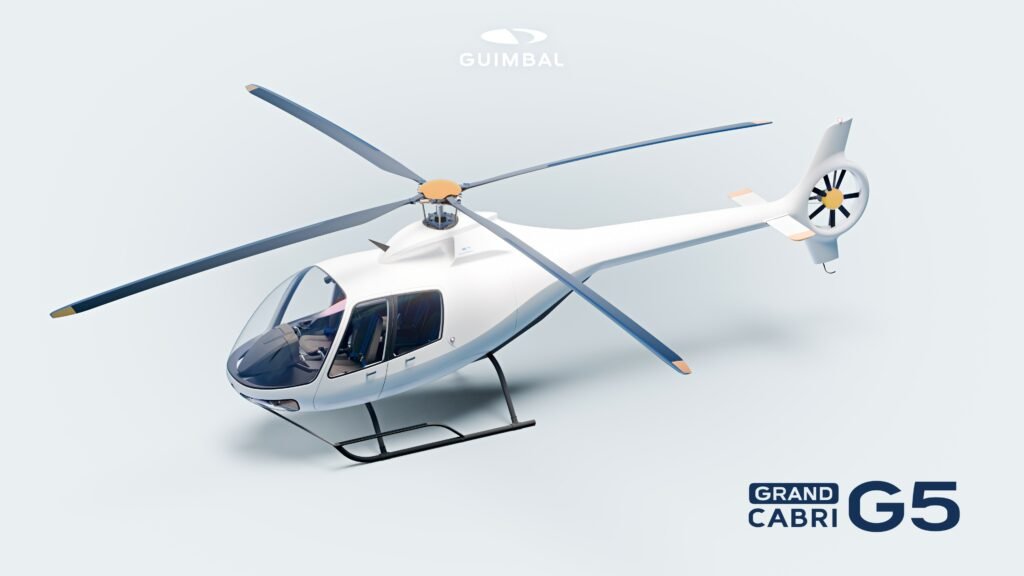
Starting with the main rotor, Guimbal has forsaken the three-blade set-up of both the G2 and the H125/H130 family and instead opted for a four-blade main rotor.
The thinking behind the switch to four blades was a multifaceted one.
“There is a proverb in the helicopter business the more blades you have less the vibration and noise,” says Guimbal. “It’s also a saying that the more blades, the more cost – so we have concentrated on making blades that are strong with a high aspect ratio to balance as much as possible the blade count versus cost equation.
“Since we’ve made around 1,300 blades for the G2 in-house, we are confident we have the technology to make the quietest helicopter ever.”
In addition, Guimbal says the design choice will deliver a better ride in turbulence.
As part of the quest to build the “quietest helicopter ever”, Guimbal will also retain the Fenestron to provide anti-torque control.
He says: “I am a fan of the Fenestron and have been since I was working on the designs when I was at Airbus. I believe in it as a concept and we get excellent results with it today.”
Another element retained from the G2 is the crash-resistant fuselage structure.
Because of when it came along, entering commercial service in 2008, the G2 was the first piston helicopter to have a full crashworthy structure, together with a crashworthy fuel system and crashworthy seats.
After 400 helicopters delivered and hundreds of thousands of flight hours by the G2, the design of the airframe, seats and fuel system has saved lives.
Guimbal says: “It depends on the statistics, but with only three bad accidents in 0.7 million flight hours we are less than half the average rate per million hours – so we are staying with the composite structure. Nobody like paying for a crashworthy composite structure, but everybody is happy to have it have it when they need it!”
As already noted, next to safety noise is the biggest priority for Guimbal.
“We were trying to maximise the cabin interior volume, to try to make it bigger on the inside than the outside and at the same time reduce the impact of noise – so we have a compact engine installation, a compact gearbox installation.”
