


WASHINGTON — Private equity firm EQT is acquiring Exolaunch, a company that has handled the rideshare launches of hundreds of satellites, to help it meet growing launch demand.
The companies announced June 18 that EQT would buy Exolaunch from its founder, Dmitriy Sternharz, for an undisclosed sum. The deal is expected to close in the fourth quarter of 2026.
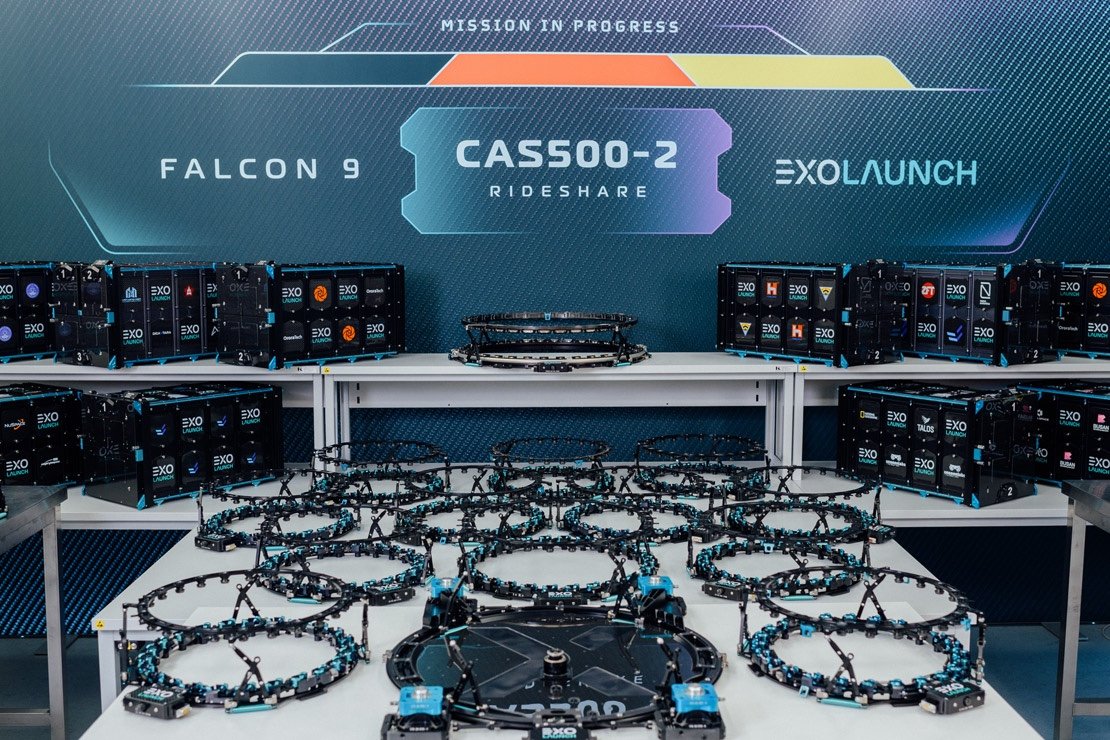
Berlin-based Exolaunch is best known for arranging launches of satellites as rideshare payloads. That has included more than 790 satellites on 47 missions, including every Transporter and Bandwagon dedicated rideshare launch by SpaceX. Exolaunch has also developed a series of satellite deployment systems.
“EQT is excited to partner with Exolaunch, which marks EQT Private Equity’s first investment in the space sector,” Nils Ketter, partner and head of industrial technology at EQT Private Equity, said in a statement. “We look forward to supporting Exolaunch’s management as it works with customers and partners to expand access to space.”
Robert Sproles, chief executive of Exolaunch, said in an interview that the company decided to sell to get the resources it needed to meet growing demand from customers seeking launch services.
“We realized that we have some scaling plans that we want to implement, but we need some firepower behind that,” he said. “This was an opportunity to take that next step, to enter the next phase of the company where we have the backing of EQT to help us grow and scale at the speed and the pace that the industry is demanding.”
He said EQT was “philosophically aligned” with Exolaunch, making it the preferred choice over alternatives such as raising funding from venture capital firms. He added there are no planned changes to the management team or staff of Exolaunch.
With EQT’s backing, Exolaunch will look to acquire additional launch capacity. “We are in such a launch-constrained moment in the industry. The demand for launch is outstripping access to orbit,” he said.
A big factor in that demand is the rise of smallsat constellations that are not large enough for dedicated launches but are larger than what current rideshare capacity can handle. “As soon as you start introducing even one or two players that need consistently 24 or 36 vehicles on a launch, you overwhelm that rideshare capacity instantly,” he said.
Exolaunch has already taken steps along those lines, announcing May 26 that it had acquired two Falcon 9 launches it will use for its own dedicated rideshare missions in 2027 and 2028. Sproles said the company was talking with other launch providers about similar missions.
“You will see a continued shift from Exolaunch where we are not a passive participant in other people’s manifests or passively seeing what the market can provide, but instead we are actively pulling this capacity from different providers,” he said. “It really will be about how we can create capacity that our customers need to get them to space in the timeframes that are useful to them.”
That shift comes amid industry concerns about the long-term future of SpaceX’s rideshare program. At last month’s SmallSat Europe conference, industry officials speculated that SpaceX could either shift from Falcon 9 to Starship for rideshare missions or end rideshare missions entirely in the next few years.
“SpaceX has been very transparent about its desire for Starship to be the future of the company,” Sproles said, but added that even if SpaceX continued its current Falcon 9 rideshare programs, it would not be sufficient to meet demand. “For any scenario that we play out here, we have the need for other vehicles and other options for new customers. So, that’s exactly what we’re building.”
“One of the things that I tell launch providers every time I meet with them is that every kilogram of upmass you can make available will be sold,” he added. “It will be many years before this demand is saturated, so every vehicle you can bring to market, every way that you can increase your cadence, that will be sold.”
