


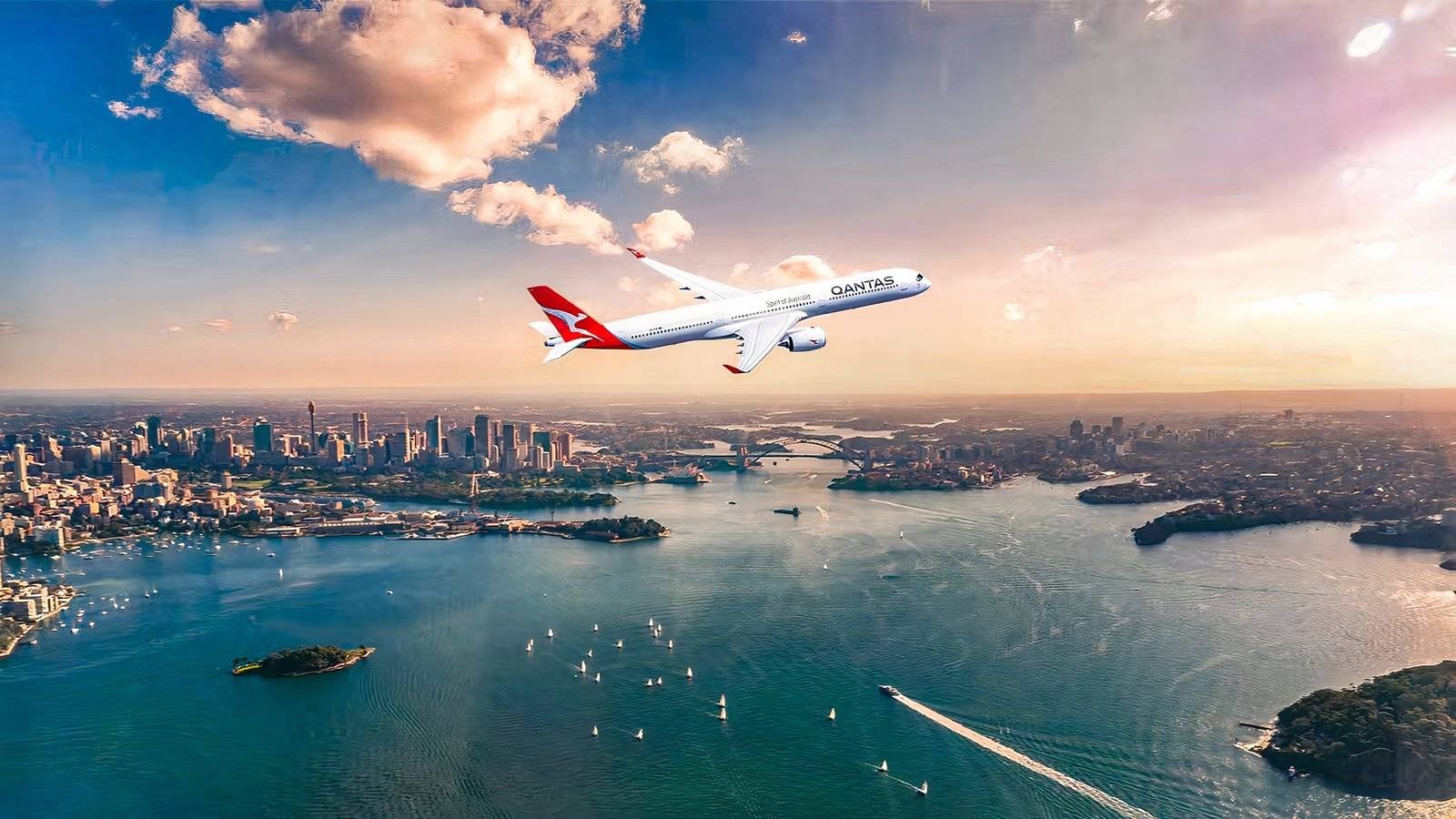
Australia‘s flag carrier is undertaking one of the largest fleet renewal programs in modern commercial aviation, a transformation that goes far beyond replacing aging aircraft. As new jets begin arriving and long-awaited projects move closer to reality, Qantas is reshaping the way it will connect Australia with the rest of the world for decades to come.
This article examines the four major pillars of Qantas’ fleet renewal strategy, including Project Sunrise, Project Winton, and Project Fysh, as well as the airline’s emerging plans for additional widebody acquisitions. It explores the aircraft being introduced, the routes and capabilities they will unlock, the financial and operational challenges involved, and how these investments could transform Qantas’ network, profitability, and competitive position through the 2030s and beyond.
Four Projects, One Airline: The Architecture Of The Renewal
To understand what Qantas is doing requires separating the individual projects and understanding what each is solving. Project Winton addresses the domestic and short-haul international narrowbody fleet: 48 Airbus A321XLRs and 29 Airbus A220-300s replacing the Boeing 737-800s and Boeing 717s that have served Qantas and Qantaslink for decades. Project Sunrise is for 12 Airbus A350-1000ULRs configured with an additional 5,283 gallons (20,000 L) rear center fuel tank to fly nonstop from Australia’s east coast to London and New York, routes that no commercial aircraft in history has operated on a scheduled basis.
Project Fysh, announced in August 2023 and named after Qantas co-founder Sir Hudson Fysh, adds 12 standard Airbus A350-1000s and 12 Boeing 787-10s to replace the aging Airbus A330 fleet and ultimately the Airbus A380s. And the fourth, as-yet-unnamed project is beginning to take shape: according to a Bloomberg report in late May 2026, Qantas is actively studying an order for up to 20 additional widebody jets, either A350s or 787s, to accelerate the A380 retirement timeline.
The financial performance enabling this investment is real. According to the Qantas Newsroom, the Group reported A$1.456 billion in underlying profit before tax for the first half of FY2026 (six months ended December 31, 2025), a 5% increase year-over-year, while simultaneously investing A$1.8 billion in net capital expenditure — roughly matching operating cash flow with fleet investment in a single half-year period. Capital expenditure for the full FY2026 is expected to land between A$4.1 and A$4.3 billion, rising to A$5.1–5.4 billion in FY2027 as delivery rates accelerate. That scale of capital allocation is a carrier structurally rebuilding its competitive position over a decade.
The fuel efficiency case underpins the economics. New aircraft entering the fleet, such as A221XLRs, A220s, A350s, or 787-10s burn 20% to 30% less fuel per seat compared to the aircraft they replace. According to financial analysis from Ainvest, this translates to an estimated A$150–200 million in additional annual earnings by 2027, while simultaneously reducing the airline’s carbon intensity per passenger kilometer — a metric that matters increasingly for corporate travel contracts and CORSIA compliance. Qantas has committed to a 2% sustainable aviation fuel blend by 2026 and secured access to up to 500 million liters of SAF annually from 2028 through partnerships with both Airbus and Boeing on US-based SAF projects.
Project Sunrise: The World’s Longest Flights Are Now A Matter Of Months

Of all the projects in the fleet renewal program, Project Sunrise is simultaneously the most technically ambitious and the most commercially significant. The A350-1000ULR that Airbus is building for Qantas is not a standard widebody with extra fuel.
It is a purpose-modified aircraft with fuel tanks in the wings, center, and a specially installed 5,283-gallon (20,000-liter) rear center section, giving it the ability to fly for up to 22 hours without refueling — long enough to connect Sydney Kingsford Smith Airport (SYD) directly to London Heathrow Airport (LHR) on a 10,594-mile (17,054-km) sector, or Sydney to John F. Kennedy International Airport (JFK) across the Pacific. At 236.9 feet (72.25 meters) in length and powered by Rolls-Royce Trent XWB-97 engines, the aircraft is longer than the A330s it will eventually help replace and wider in operational scope than anything Qantas currently flies.
The most significant recent development is that the program is to be deployed soon. As Simple Flying has reported, the first A350-1000ULR (manufacturer serial number 707, carrying test registration F-WZNK) has completed its maiden flight in Toulouse and is now in the paint shop applying its Qantas livery, with flight testing scheduled to resume within weeks.
First delivery has been moved to April 2027, four months later than the previously planned late-2026 window, due to Airbus supply chain pressures, per a Bloomberg report from May 25, 2026. However, Qantas has confirmed the delay will not derail long-term plans, with subsequent deliveries timed to compress the gap.
The cabin designed for Project Sunrise reflects the extraordinary nature of a 20-hour flight. Developed in partnership with the University of Sydney’s Charles Perkins Centre, the A350-1000ULR cabin features a dedicated Wellbeing Zone — a mid-cabin space for movement, stretching, and premium refreshments during the flight — alongside first class suites, business class flatbeds, premium economy, and economy seating in one of the lowest-density configurations ever placed on an A350. Qantas has stated that more than 40% of the cabin will be dedicated to premium seating.
As detailed on Simple Flying, the economics of ultra-long-haul nonstop flying demand exactly this kind of premium-heavy cabin density: the fuel cost and per-hour operating economics of a 20-hour sector leave little room for profitability unless yield per seat is substantially higher than a standard long-haul flight. Qantas has projected that a fully operational Project Sunrise network will add approximately A$400 million per year to the Group’s underlying earnings.
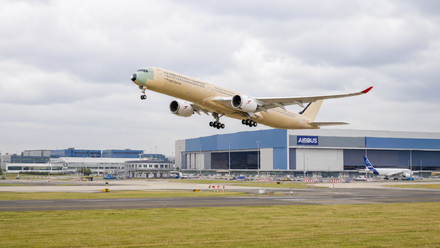
Project Sunrise Nears Reality As Qantas’ First Airbus A350-1000ULR Makes Maiden Flight
Airbus’ A350-1000ULR begins testing as Project Sunrise moves closer to reality.
Project Winton: How The A321XLR Is Already Rewriting The Domestic Map

While Project Sunrise attracts major attention, Project Winton, the narrowbody replacement program, is the part of the fleet renewal that most Australians will encounter first. Qantas ordered 48 A321XLRs and 29 Airbus A220-300s in a program that began deliveries in 2023 (A220s) and mid-2025 (A321XLRs). The A321XLR’s entry into service in September 2025 made Qantas the first airline in Asia-Pacific to operate the type.
The numbers behind the A321XLR upgrade are substantial. The aircraft measures approximately 146 feet (44.5 meters) in length and accommodates up to 200 passengers, in an initial configuration with recliner business seats, with a range of 4,700 nautical miles (8,700 km), approximately 1,620 nautical miles (3,000 km) farther than the 737-800. That extra range opens non-stop domestic routes from eastern states to Darwin and Broome directly, and pushes international capability to short-haul Southeast Asian destinations that previously required a widebody or a technical stop.
As of May 2026, four A321XLRs were in Qantas service, operating initially on Sydney–Melbourne and Sydney–Perth routes, with progressive route expansion planned as additional aircraft arrive. A further 16 of the 48 on order will feature lie-flat business seats from 2028, enabling the aircraft to serve transcontinental domestic and short international routes with a genuinely premium product.
The A220-300, meanwhile, is solving a different part of the network puzzle through QantasLink. With 29 on order to replace the Bombardier Q400 turboprops and older narrowbodies on thinner regional routes, the A220 brings jet-level efficiency and comfort to sectors that previously relied on turboprop economics. According to Ainvest, each A220 replacement generates approximately A$9 million in annual EBITDA improvement through a combination of better fuel performance, new route opportunities, and redistribution of other aircraft previously deployed on those sectors. When those efficiency gains are multiplied across 29 aircraft over a decade, the A220 program’s contribution to the fleet renewal’s financial case is considerably more significant than its headlines suggest.
Catch what other flight trackers miss
Emergency squawks, holds, NOTAMs — live signals, no signup.
Open tracker
Catch what other flight trackers miss
Emergency squawks, holds, NOTAMs — live signals, no signup.
Open tracker
Project Fysh: The Widebody Swap And A Window On What Comes After The A380

Project Fysh, named after the co-founder of Qantas in 1920, addresses the international widebody fleet in the segment between the ultra-long-haul A350-1000ULRs and the aircraft Qantas already operates. The August 2023 announcement confirmed 12 standard A350-1000s and 12 Boeing 787-10s, arriving from fiscal year 2028, to progressively replace the 24 A330s whose average age will be approximately 21 years when the first replacements arrive, precisely in line with Qantas’ stated replacement philosophy. Both types will be powered by General Electric GEnx engines, giving Qantas a common engine family across the 787 fleet it already operates (14 787-9s, all GEnx-powered).
The A350-1000 brings a substantially larger aircraft than the A330 it replaces. At 236 feet, 9 inches (72.25 meters) long, it offers significantly more premium cabin space and range than any Qantas A330 configuration, with a range capability well above the routes it will initially fly. The 787-10, at 224 feet (68.28 meters), is approximately 16 feet (5 meters) longer than the 787-9s Qantas already operates, offering a higher-capacity complement to the A350 on routes that do not need the full range of the Rolls-Royce-powered widebody. The combination gives Qantas a two-variant widebody replacement fleet that covers the full range of sub-Project-Sunrise international sectors with modern airframes carrying current-generation cabin products.
A380 retirement is the context hanging over Project Fysh’s later phases. Qantas currently operates 9 A380-800s, the oldest of which are approaching 17 years in service, and the airline’s purchase rights negotiated in August 2023 give it the flexibility to replace those aircraft with A350s from around FY2032. As Simple Flying has detailed in its analysis of the A380 replacement decision, the airline is currently weighing a near-term order for up to 20 additional widebodies that would help accelerate this process — a contest shaping up as a rematch between the A350-1000 and the 787-10, both of which already appear in Project Fysh’s order book. The decision is expected to be announced within months, potentially adding another layer to what is already the most comprehensive fleet transformation in Australian aviation history.

Qantas Airbus A380s: What To Expect Inside
From the unparalleled luxury of first class to the thoughtful details in economy, every aspect is crafted with comfort and service in mind.
The Delivery Problem: Why Timelines Keep Moving And What It Means For Qantas

The biggest practical risk to Qantas’ fleet renewal ambitions is one it shares with every major airline: the global aerospace supply chain is producing aircraft more slowly than the demand for them. The four-month delay to the first A350-1000ULR, pushed from late 2026 to April 2027, is the most visible recent example, but it is part of a pattern. The original Project Sunrise timeline, announced in 2022, anticipated first deliveries beginning in calendar year 2025. That slipped to 2026, then to late 2026, and now to April 2027. According to the aviation news reporting on the Bloomberg disclosure, the largest single cause of the most recent delay was the certification of the modified fuel system. Specifically, getting European aviation regulators to sign off on the additional 20,000-liter rear center tank that is central to the aircraft’s range performance.
The four months lost on the first aircraft do not represent a permanent schedule disruption. According to Qantas’ own guidance, the subsequent four aircraft in the Project Sunrise order are expected to follow in rapid succession after the first delivery, with the airline targeting an operational network by the second half of 2027. The practical constraint is that Qantas needs at least three airframes to launch a single scheduled route sustainably, meaning commercial Project Sunrise flights will realistically begin no earlier than mid-to-late 2027. Pilot training is already underway at a new A350 simulator in Sydney, and first route announcements are stated to be imminent, suggesting Qantas’ planning is well advanced regardless of the delivery timeline.
The delay problem also has a financial dimension. Qantas is spending A$4.1–4.3 billion in capital expenditure in FY2026 and A$5.1–5.4 billion in FY2027, primarily on aircraft deliveries. Each month a high-value aircraft like the A350-1000ULR is delayed, the airline absorbs depreciation on aging aircraft it expected to have replaced, continues paying to maintain a fleet it intended to retire, and defers the revenue upside from premium Project Sunrise fares.
According to Qantas’ own projection, a fully operational Sunrise network adds A$400 million per year in underlying EBIT — every six months of delay costs the airline approximately A$200 million in foregone earnings on that estimate alone. Managing the delivery ramp carefully while maintaining the financial discipline of the fleet renewal is the central operational challenge facing Vanessa Hudson’s leadership team through 2027.
What Comes Next: The Airline Qantas Is Building Toward 2030 And Beyond

The next few years will be unlike anything Qantas has experienced in its modern history. By the end of the decade, the airline expects to be operating Airbus A220s, A321XLRs, A350-1000ULRs, A350-1000s, Boeing 787-10s, and 787-9s simultaneously, while gradually retiring several of the aircraft types that defined its network for the past two decades. Managing that transition will require new training pipelines, maintenance capabilities, and operational procedures across multiple fleets at the same time.
One of the most important decisions still ahead concerns the future of the Airbus A380. The superjumbo remains a valuable asset on Qantas’ highest-demand routes, but its long-term replacement will shape the airline’s international network throughout the 2030s. Whether Qantas expands its Airbus A350 commitment, adds more Boeing widebodies, or pursues a mixed solution, the choice will determine how the carrier balances capacity, efficiency, and premium revenue in a rapidly changing market.
The aircraft entering the fleet can fly farther than their predecessors, serve new city pairs, operate more efficiently, and support route structures that were previously uneconomical or impossible. Project Sunrise alone will allow Qantas to bypass traditional hub airports and connect Australia directly with major global cities in ways that were once considered unrealistic.
The decisions being implemented today will influence where Qantas flies, how it competes, and what passengers can expect from the carrier well into the 2040s. For an airline that has spent more than a century connecting Australia to the world, this may prove to be one of the most consequential transformations in its history.
