


Aviation activity across the Middle East is seeing a strong recovery following the disruption caused by the conflict between Israel, Iran and the USA. However, new analysis from IBA shows that operational performance remains below pre-conflict norms as airlines continue to contend with longer routings and evolving fleet utilisation patterns.
Major Gulf hubs have moved from acute disruption towards sustained recovery over the past three months, with flight activity increasing significantly as airspace restrictions ease and confidence returns across the region.
The data shows a strong rebound in activity across the region’s key hubs. Abu Dhabi increased from 174 daily flights in March, to 462 in June, while Doha rose from just 42 daily flights, to 570 over the same period.
Dubai recovered from 499 daily flights in March, to 844 in June. While activity has not yet returned to pre-conflict levels, the trend demonstrates a clear restoration of capacity across the region.
Analysis also found that aircraft storage levels have fallen significantly as operators steadily return fleets to service after the initial disruption.
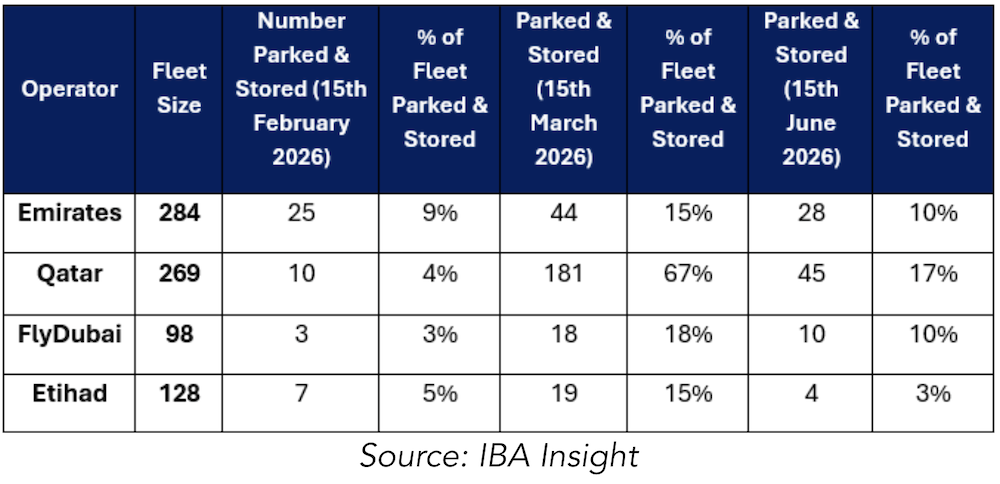
Following the outbreak of conflict, the number of parked aircraft increased sharply across the major Gulf carriers as schedules were adjusted and services paused. By June, however, operators had returned substantial portions of their fleets to active service.
Qatar Airways reduced its parked aircraft from a peak of 181 in March, to 45 in June, while Emirates reduced its parked fleet from 44 to 28 aircraft. Etihad and Flydubai also reported significant reductions in inactive aircraft.
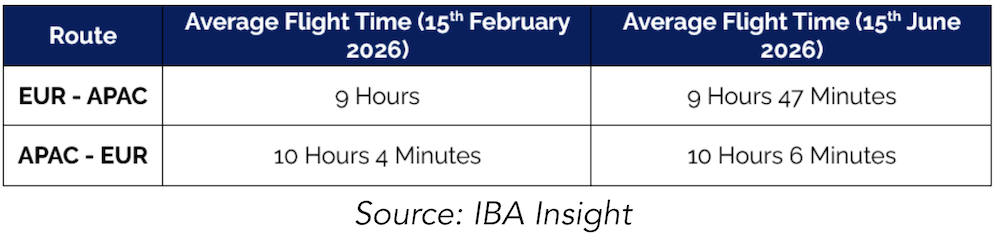
However, average flight times between Europe and Asia increased from nine hours in February, to nine hours and 47 minutes in June, reflecting the continued use of longer routings around constrained airspace. While capacity has largely been restored, the persistence of extended block times highlights the ongoing operational impact of the conflict.
Overall, while the market has clearly moved out of crisis mode, the effects of the disruption remain visible across fleet deployment, routing, and utilisation patterns. Airlines and lessors continue to operate in an environment that is stabilising, but is not yet fully aligned with pre-conflict norms.
To read IBA’s analysis in full, click here
