


Another year has come and gone and for the eVTOL community the prize of service entry and commercial success is one that appears to be as remote today as it was four or five years ago. Gideon Ewers takes another look at the state of play for the sector and tries to find some crumbs of hope.
Can we get serious now? Over the last several years we have published a sort of runners and riders “top 10 most likely” examination of the eVTOL market. During that time, two of the big-name players have gone, although one – Volocopter – seems to be in some sort of suspended animation since it was acquired by Wanfeng and rolled into Diamond Aircraft.
Airbus has suspended development of its CityAirbus NextGen programme, and it seems Textron has likewise suspended its Nexus project in all but name. It also appears that Hyundai has decided to pause development, despite completing the first tethered flight of its technology demonstrator in the spring.
In fact, our monitoring struggles to come up with a list of 10 to consider. It may be pointed out, and reasonably so, that we haven’t included developers from China in this examination.
After all, EHang, with its EH216-S, was the first to gain a type certification for an eVTOL. But the reality is that, like other aircraft developed in the country, CAAC certification means little on the international stage.
In any case, we have decided to dispense with our ranking system and instead review what has happened to our shopping basket of eVTOL developers over the past 12 months.
While the interest in the markets seems to be on the wane, with shares in the majority of the publicly traded companies down by between 10% and 35% compared with this time last year, Joby and Horizon have bucked that trend with significant gains year on year.
Some developers have managed to raise eye-watering sums of money from investors and, then in the case of certain players spent it with all the abandon of a sailor on a run ashore after a long cruise.
Critically, though, while some progress has been made – and we’ll come to that later – it falls short of the stellar progress promised by the IPO prospectuses and the seemingly endless breathlessly worded press releases produced with grinding regularity ever since.
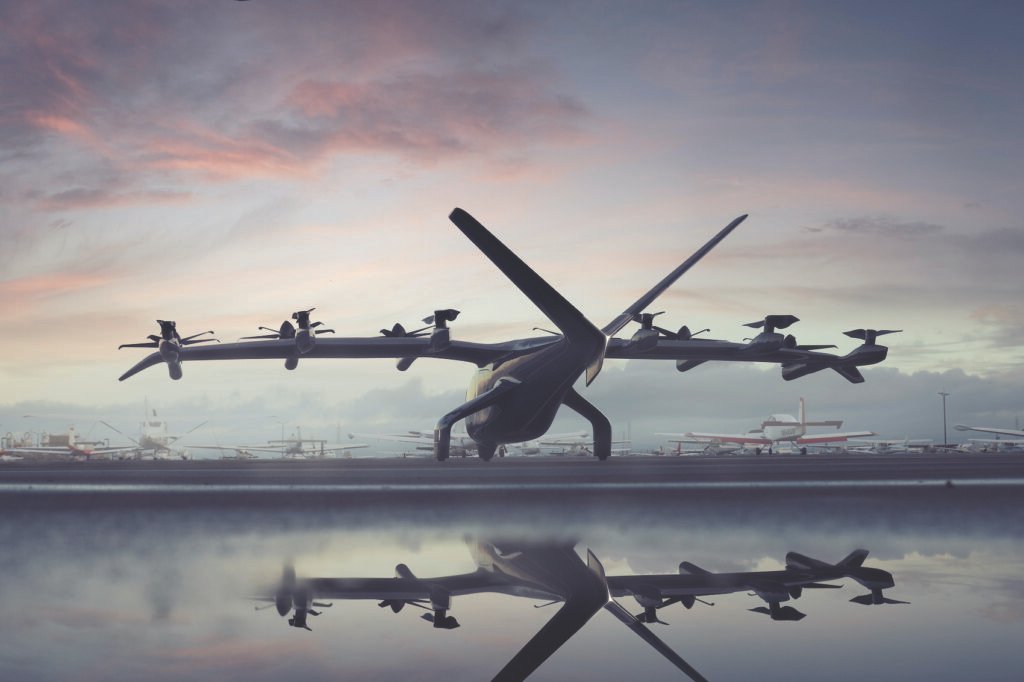
Archer is yet to fly a fully capable prototype. Image: Archer Aviation
Indeed, during the course of the year, one firm of analysts produced a comparison of flight hours per press release which made for some interesting and amusing reading.
Also having an impact for the US-based players is the initiative from the US Department of Transportation that was published in December.
While the document speaks of advanced air mobility (AAM), there is much in the meat of the plan’s 34 pages that discusses the long overdue air traffic system rather than eVTOL-specific questions.
Furthermore, the plan is divided into a series of phases, with even the shortest having a completion of deadline of 2028-2032, while others look to the middle of the next decade and some stretch into the end of the 2030s or even 2040.
Also noticeable is how much of the plan’s initiatives will require either legislation or funding to implement, which inevitably will mean delays in completion. And for the new entrants, time is not on their side.
The question is, will 2026 be the year that the four horsemen of the eVTOL apocalypse – Daniel Bernoulli, Isaac Newton, Alessandro Volta and critically Adam Smith – exact their toll on the sector?
I say Adam Smith because while it is terribly hard to fight physics, the rules of cash are equally demanding.
The Oxford English Dictionary defines financial solvency as the possession of assets in excess of liabilities, meaning the ability to pay all one’s debts or liabilities.
By that definition, based on the data contained in the Q3 2025 results, most of the players in the space are, as things stand, insolvent – with liabilities outstripping assets by tens if not hundreds of millions of dollars.
Clearly, with any start-up business, there is a period where this is going to be the case, and investors with considerable skin in the game will be reluctant to pull the plug on an asset.
In aviation, that is not without precedent, of course. Much of the airline industry is financially moribund, though operating profits are trumpeted when they happen.
In any case, for the publicly traded, we include a “lights out” date – an estimate of when the company will exhaust its reserves, assuming no new investment and spend continuing at the current rate (based on Q3 2025 results data).
