


The rule sets an allowable noise standard that should allow for supersonic flight when in the “mach cut-off” regime.
The Federal Aviation Administration has proposed repealing the USA’s long-standing ban on civilian overland supersonic flight and adopting new “noise-based” standards it says could allow a new era of supersonic air travel.
The FAA “is taking a pivotal step toward enabling civil supersonic flights over the continental United States”, the agency said on 30 June, the day it released the proposed rule. “Thanks to massive innovations in supersonic technology, it will be possible to safely operate these innovative aircraft without a sonic boom.”
Several companies in recent years have sought to develop supersonic commercial or business aircraft. Some have failed, and the technical challenges and cost of bringing such an aircraft through certification remain formidable.
Overland supersonic civilian flight in the USA has been banned by the FAA since 1973. The agency implemented the ban to protect the public from sonic booms.
The FAA says it “has determined the general ban on civil supersonic flight is outdated and no longer appropriate due to advancements in technology, flight techniques that prevent sonic booms from reaching the surface, and increased interest in civil supersonic flight.”
The FAA’s 63-page newly proposed rule applies only to “en route” operations. The agency plans to propose separate regulations later this year specifying noise standards for supersonic aircraft during take-off and landing.
“Key to the scope of this rule is how a sonic boom is created and the characteristics of sonic booms,” the rule says, adding that booms result from shockwaves coming off an aircraft’s nose and tail.
As drafted, the proposal would prohibit a supersonic aircraft from generating a “sonic boom overpressure at the surface” exceeding 0.11lb/sq ft.
Some next-generation supersonic aircraft may be able to meet that standard using a phenomenon called “Mach cut-off”, which occurs when factors like atmospheric conditions and an aircraft’s altitude and speed “work in combination to ensure the sonic boom bends and refracts back into the atmosphere, significantly reducing its ground-level impact”.
When flying in mach cut-off, aircraft “may produce low-level noise on the ground” known as “evanescent waves”, the FAA says. “These waves were measured and described by NASA as low “rumbling” noise at the level of background street noise.”
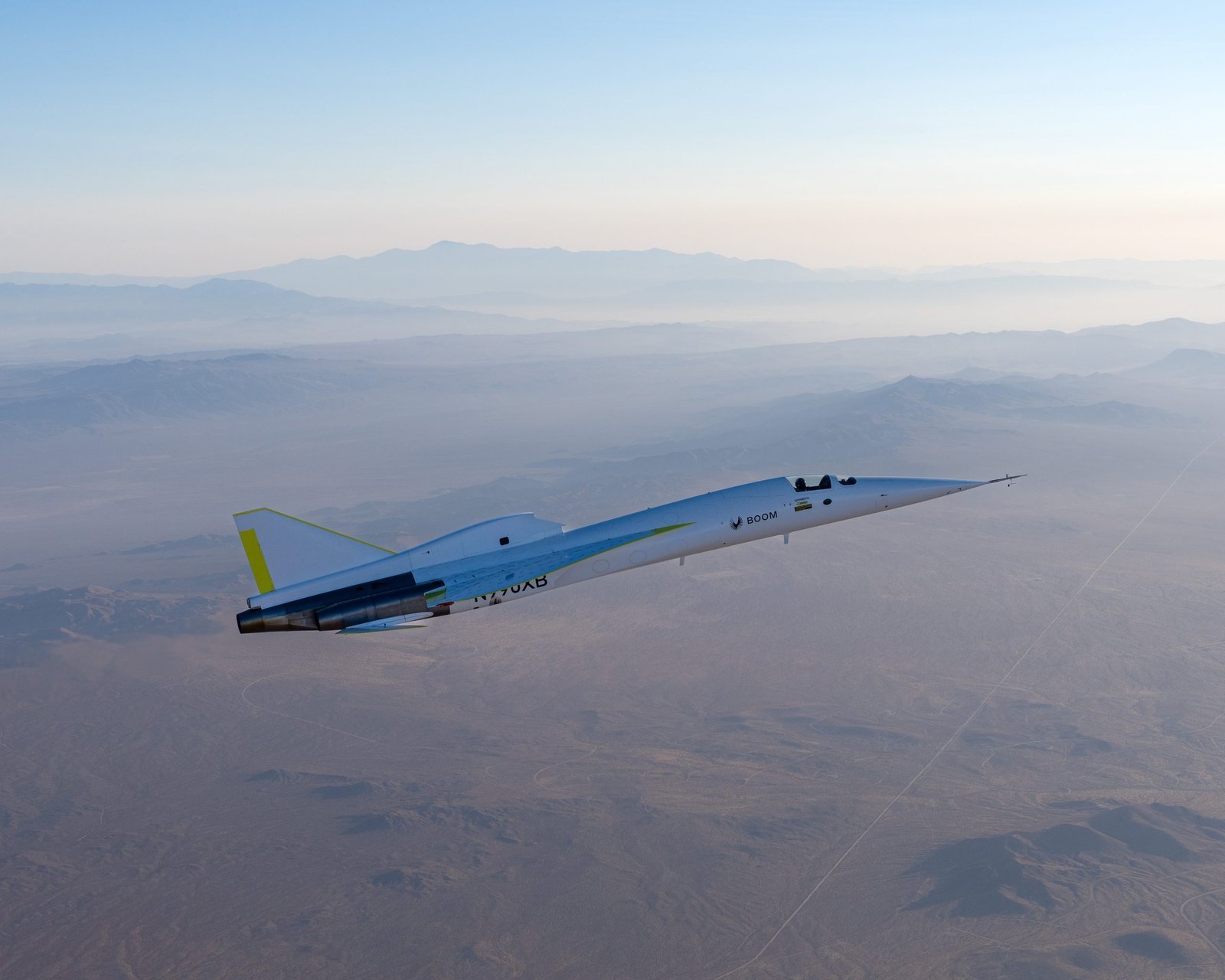
US firm Boom Supersonic, which has been developing a supersonic airliner, demonstrated mach cut-off in February 2025, the FAA says. That company last year was testing its XB-1 supersonic demonstrator.
“When operational, next-gen supersonic planes will drastically reduce travel times, enabling faster movement of people and goods,” the FAA adds. “These efforts are intended to help support the development of the supersonic industry, give regulatory certainty to aircraft manufacturers and other stakeholders and provide the benefits of supersonic flight to the public.”
The FAA will accept public comments about its proposal for 45 days. President Donald Trump, in a June 2025 executive order, had directed the FAA to write the proposed rule.
Subscribe to gain access to all news
Already have a subscription? Log in.
Choose your subscription
Considering a corporate subscription? Contact us to find out more.
