


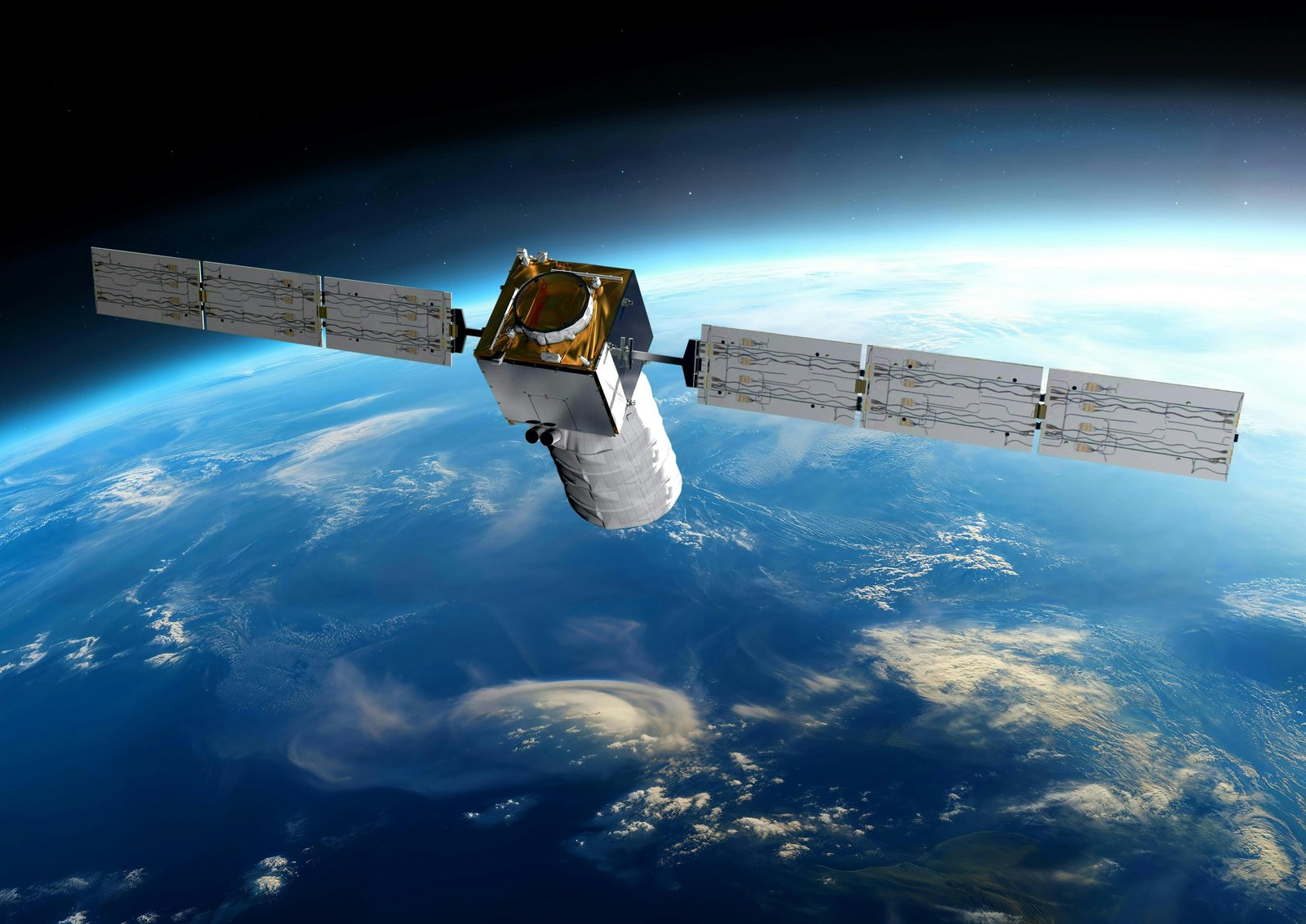
WASHINGTON — The European Space Agency has selected Airbus Defence and Space to start work on the successor to a wind-monitoring satellite.
ESA announced July 2 it authorized Airbus to begin work on the Aeolus-2 satellite, funding the initial phases of the satellite’s development. The contract for that initial work is worth 51 million euros ($58.3 million), according to an Airbus spokesperson.
Aeolus-2 is the successor to Aeolus, a satellite launched in 2018 to demonstrate the ability of a lidar instrument to collect global wind profiles. The spacecraft operated for nearly five years before reentering in 2023.
In 2022, based on the success of Aeolus, ESA member states approved a follow-on mission then scheduled to launch at the end of the decade and use two satellites. ESA now says it is targeting a 2034 launch for Aeolus-2 and has discussed only a single satellite.
Aeolus-2 will fly an updated version of the lidar instrument based on both the one flown on the original Aeolus mission and versions on EarthCARE, an ESA Earth science mission launched in 2024. The lidar for the original Aeolus was a challenge to develop, but its performance exceeded expectations.
The instrument will collect wind profile data from the surface to an altitude of 30 kilometers every hundredth of a second, with full global coverage every seven days. Aeolus-2 will carry an additional instrument to measure atmospheric aerosols.
“Building on the lidar heritage of both Aeolus and EarthCARE, Aeolus-2 will carry two lasers, each twice as powerful as Aeolus’s, with an upgraded and more robust instrument design capable of reliably delivering the high-quality wind data that operational meteorological services require,” said Ben Boyes, project manager for Aeolus-2 at ESA, in a statement.
ESA will work with Eumetsat, the European weather satellite agency, on Aeolus-2. Eumetsat plans to use Aeolus-2 as an operational mission, incorporating its data into forecast models.
“This next-generation mission will ensure that global wind observations become a permanent component of the weather forecasting infrastructure, helping societies around the world prepare for increasingly complex weather and climate-related challenges,” Boyes said.
Airbus, which was also the prime contractor for the original Aeolus, will build Aeolus-2 at its facilities in the United Kingdom. “Aeolus-2 will deliver real benefits for people across the U.K., from more accurate weather forecasts that protect lives and communities, to the highly skilled jobs that come from being a key partner in Europe’s most ambitious space science programs,” said Liz Lloyd, the U.K. space minister, in a statement.
