


Welcome to Taste Test, where every week our critic Jonah Flicker explores the most buzzworthy and interesting whiskeys in the world. Check back each Sunday for his latest whiskey review.
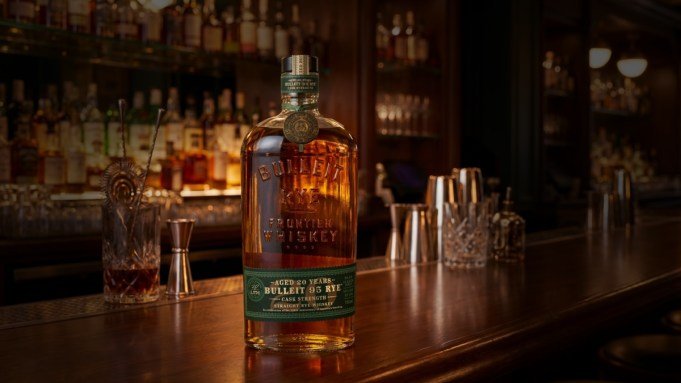
A 20-year-old rye from Bulleit sounds pretty good on paper—whiskey made at MGP from the classic mashbill of 95 percent rye grain and five percent malted barley, aged for two decades, released by one of the brands that helped make American rye whiskey popular again. So why not bottle it at cask strength as well, even if that means edging dangerously close to a hazmat level of alcohol? Well, I can think of a few reasons.
If you are even a casual whiskey drinker or have ordered a cocktail at a bar over the past decade, the odds are that you’re familiar with Bulleit. This Diageo-owned brand is easily recognizable for its old-timey bottles that look like they would fit comfortably in an Old West saloon. The whiskey inside is generally good, if not always remarkable—the bourbon is made from a high-rye mashbill that provides a bit of spice (the source has changed over the years, although the brand does now have its own distillery); and the rye is that aforementioned 95/5 recipe from MGP, arguably America’s leading rye whiskey distillery. Over the years, Bulleit has expanded its lineup of “Frontier Whiskey,” as it calls it, releasing cask-strength and age-statement expressions along with a not-so-great American single malt and a much more interesting Mesquite Smoked Malt.
This new 20-year-old rye now stands as the oldest and strongest whiskey to date from the brand. Let’s consider each of those factors separately. I certainly don’t encourage age statement chasing, because when it comes to American whiskey you never know if it’s actually going to be any good after two decades in oak, sweating through hot summers and seizing up during frigid winters. Twenty years is an age statement you’re more likely to find on a bottle of Canadian rye, but that’s usually an entirely different animal. As it turns out, this American rye is still pretty tasty after 20 years in oak, retaining its spice and fruit notes even with a solid amount of tannic oak that has crept into the mix. But then there’s that proof.
That’s cask strength of 137 proof or 68.5 percent ABV, to be exact. Hazmat whiskey starts at 140 proof, so that’s pretty damn close. I understand not wanting to dilute a well-aged whiskey by proofing it down. In fact, that’s often a complaint that many drinkers have when they are trying something old and expensive (which this is): why mess with something this old that will cause it to lose some of its flavor? But dilution is also an art and a skill, something that can enhance a whiskey instead of hindering it. Surely there are a whole lot of people who want to drink this whiskey at 137 proof, but personally I would have preferred it with a little less burn. You can still taste the flavors I mentioned before—vanilla, black pepper, dried fruit, fig, and baked apple—I just think this would actually be a more enjoyable sipping experience if it came in below 130 proof. But hey, that’s the subjective nature of whiskey.
Bulleit 20-Year-Old Rye Whiskey won’t be an easy bottle to find. Just 1,776 bottles were released (yes, this was a tie-in to America’s 250th birthday) at the distillery and select cities around the country, each with a price tag of $300. If you’re looking for a truly intense, high-proof, ultra-aged rye whiskey experience, this is the bottle for you. But if you’re just looking for something to make your next Manhattan with, stick to the 90-proof original.
Score: 86
- 100 Worth trading your first born for
- 95 – 99 In the Pantheon: A trophy for the cabinet
- 90 – 94 Great: An excited nod from friends when you pour them a dram
- 85 – 89 Very Good: Delicious enough to buy, but not quite special enough to chase on the secondary market
- 80 – 84 Good: More of your everyday drinker, solid and reliable
- Below 80 It’s Alright: Honestly, we probably won’t waste your time and ours with this
Authors

Jonah Flicker

