


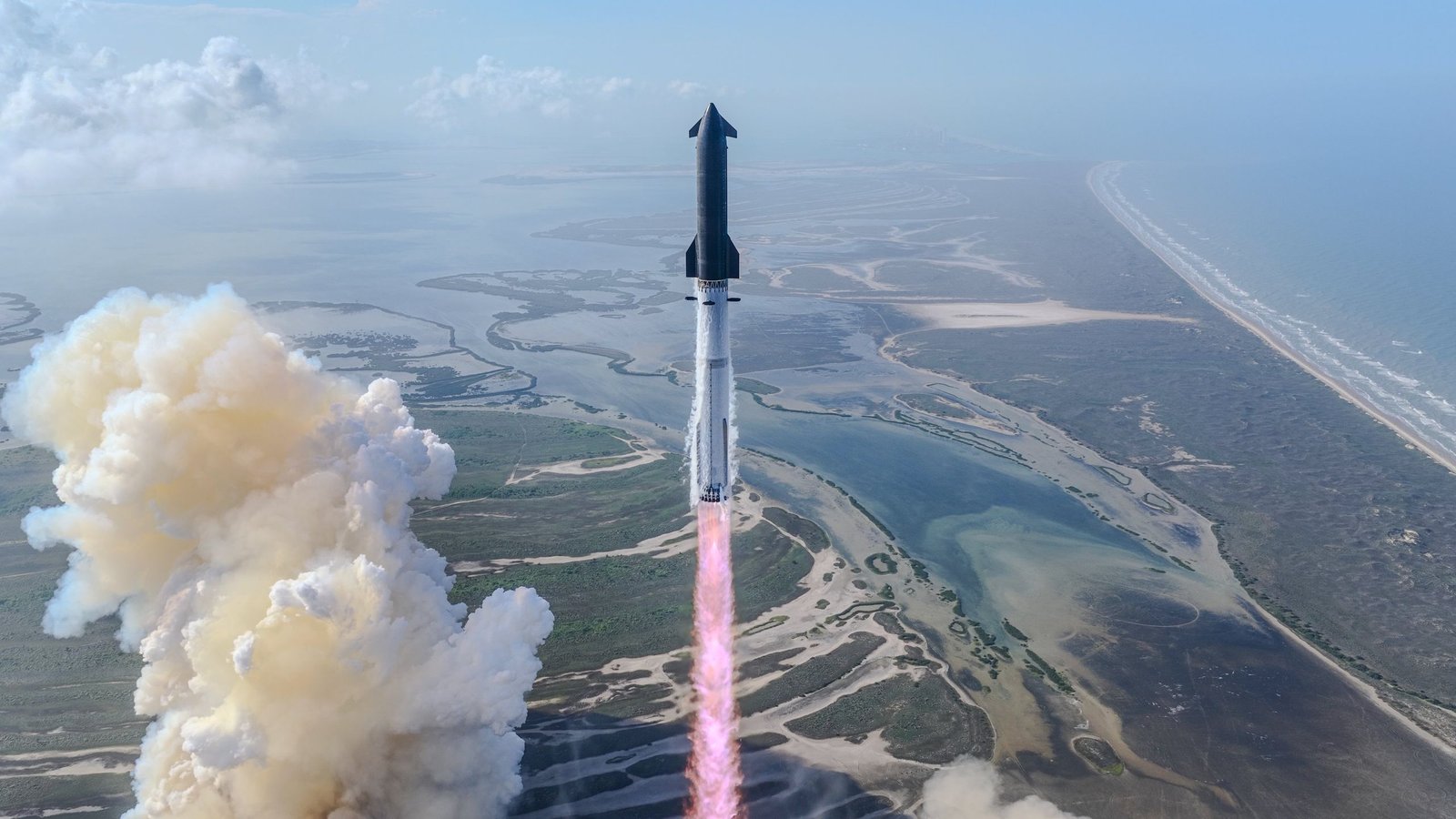
SpaceX’s next Starship test flight aims to achieve a major milestone by deploying 20 upgraded Starlink satellites, marking the first Starlink Version 3s to deploy in space..
Liftoff for the spacecraft’s upcoming 13th test flight is scheduled for Wednesday, July 16, at 6:45 p.m. EDT (2245 GMT) from the company’s Starbase facility in South Texas. You can watch the launch live on Space.com, courtesy of SpaceX, beginning 30 minutes before liftoff. Follow our Starship live blog for more mission updates.
The mission follows a nearly two-month pause after Flight 12 ended with the loss of the Super Heavy booster during its return to the Gulf after stage separation. After reviewing the anomaly and SpaceX’s corrective actions, the Federal Aviation Administration cleared the company to resume Starship launches.
“The upcoming flight will aim to complete similar objectives targeted on the previous flight test, which debuted the Starship and Super Heavy V3 vehicles, while also carrying next-generation Starlink V3 satellites for the first time,” SpaceX officials said in a statement announcing the test flight.
As with previous flights, Flight 13’s primary goal is to gather engineering data while testing upgrades to the world’s most powerful rocket. Here’s what to watch for:
The mission will begin with all 33 Raptor 3 engines igniting on the Super Heavy booster, generating up to 18 million pounds (about 8,200 metric tons) of thrust at liftoff. About 2.5 minutes later, the booster will separate from the Starship upper stage and begin its return toward the Gulf of Mexico for a controlled splashdown rather than a launch tower catch. SpaceX is continuing to refine its booster recovery procedures following Flight 12’s landing burn failure.
One of Flight 13’s biggest milestones will come after stage separation, when Starship is expected to deploy 20 Starlink V3 satellites for the first time. The satellites are designed to test Starship’s payload deployment capabilities and will intentionally reenter Earth’s atmosphere after completing the demonstration rather than remain in orbit.
The flight will also continue testing SpaceX’s upgraded Starship vehicle, including improvements to its propulsion system, avionics and overall performance. Engineers will closely monitor the rocket throughout ascent to evaluate how the latest design performs under flight conditions.
After completing its satellite deployment, Starship will continue along a suborbital trajectory before reentering Earth’s atmosphere over the Indian Ocean. The spacecraft’s descent will provide additional data on its heat shield, flight controls and guidance systems before ending with a planned splashdown roughly an hour after launch.
While Flight 13 remains another developmental mission, it represents an important step toward making Starship an operational launch vehicle. Successfully deploying Starlink satellites would demonstrate the rocket’s ability to begin carrying real payloads while continuing to advance SpaceX’s goal of building a fully reusable system for missions to Earth orbit, the moon and eventually Mars.
