


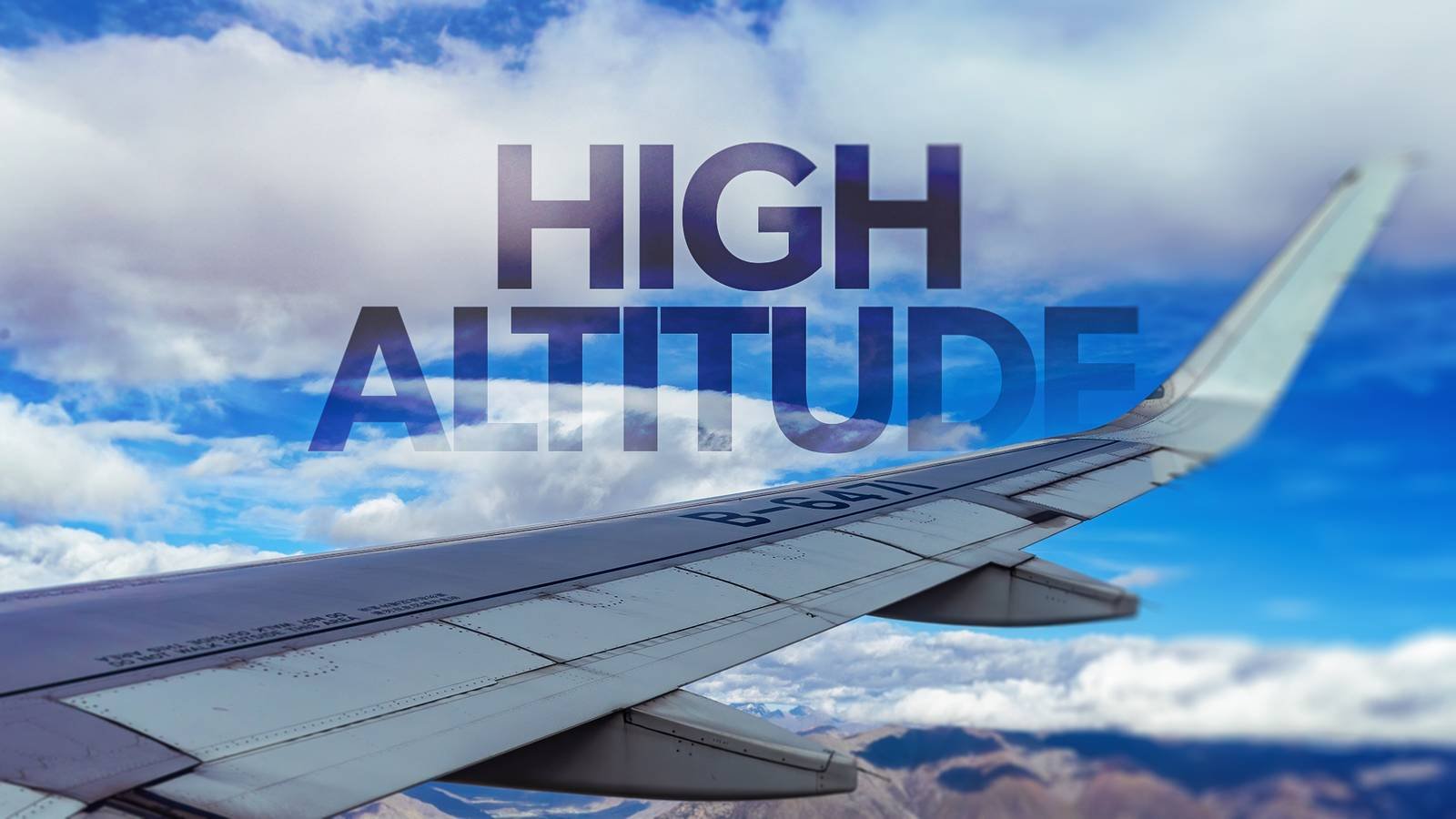
In June, I finally flew into Tibet’s Lhasa Gonggar International Airport (LXA) in China and flew out in July. This was the third remarkable Himalayan airport I flew through this year, having flown through Bhutan’s Paro International Airport – PBH (read my review) and Pakistan’s northern Skardu International Airport (KDU) during the spring. Skardu is particularly remarkable for being in the region where three of the world’s most significant mountain ranges (the Himalayas, the Hindu Kush, and the Karakoram) converge.
But of these, Lhasa is the highest airport, and while it is not the world’s highest airport (others in Tibet are higher), it is one of the world’s highest larger airports. Skardu and Paro limit airport operations to daylight hours, with most flights ending by mid-afternoon due to the challenging environment. This doesn’t apply to Lhasa, as it can operate flights at night, as pilots are not required to have daylight views of the mountains and follow Visual Flight Rules (VFR).
Flying From Kunming To Lhasa
As Lhasa is located at an altitude of more than 11,700 feet (3,650 meters) above sea level, only specific aircraft can fly into it. Widebody aircraft operations exist, but are limited (e.g., Airbus A330s), and it is a popular destination for shortened aircraft like the Boeing 737-700 (no MAX equivalent) and the A319. Other aircraft, like the Airbus A320, also operate there under specific weight regimes and restrictions.
I flew with China Eastern on a Boeing 737-700 from Kunming in China’s Yunnan province. While I have flown hundreds of times and never missed a flight, this was the first flight I missed. I arrived at the airport on time for the early morning flight, but I got confused as the airline had sent me a notice a few weeks earlier that the flight had been rescheduled to depart an hour earlier. I had forgotten, and my printout showed the old flight time.
Fortunately, China Eastern operates multiple flights to Lhasa from Kunming, and I was rebooked onto the afternoon flight free of charge. While I was thankful, it meant I lost my window seat. The flight was nearly fully booked. It was a sunny day, and the second half of the flight afforded breathtaking views of the Tibetan Plateau.
Tibet Is A Giant Plateau

Lhasa is a high airport, even higher than Leadville-Lake County Airport in Colorado, which is located at an elevation of 9,934 feet (3,028 meters). But it is also on a plateau. Bhutan’s Paro Airport is located in the lesser mountains of the Himalayas, requiring flights to weave through mountain valleys and make seemingly hairpin 180-degree turns. These mountains rise to around 18,000 feet (5,500 meters).
Skardu is even more dramatic, with mountain peaks immediately around the airport rising above 18,000 feet (5,500 meters) and above 26,000 feet (7,800 meters) a little further away (e.g., Masherbrum, Nanga Parbat). There are mountains around Lhasa, but they are not as dramatic as measured from the plateau floor. Due to the thinner air, the airport runway is 13,123 feet (4,000 meters) long.
Tibet’s Lhasa Gonggar International Airport (per ICAO, etc.) | |
|---|---|
Elevation | 11,710 feet (3,570 meters) |
Runway length | 13,123 feet (4,000 meters) |
International routes | Kathmandu, Singapore (limited) |
Number of passengers | Over 6 million annually |
Primary routes | Chengdu–Shuangliu, Chengdu–Tianfu |
Coming into land, the Boeing 737-700 flew down a valley and circled a mountain range before coming into land. While breathtaking, it was not quite as dramatic as flying into Skardu and Paro. Forgetting the altitude, the degree to which the aircraft negotiated mountains felt somewhat similar to flying into Kyrgyzstan’s Osh International Airport. Taking off, the aircraft flew straight with no significant mountain ridges to clear and without having to make turns like in Skardu and Paro.
Lhasa Is Well Connected Domestically

Lhasa is a comparatively busy airport serving over six million passengers annually and functioning as a hub for Tibet. Almost all of these flights are to domestic destinations within China. The primary connections for Lhasa are to Chengdu Shuangliu (CTU) with around 20 flights daily from four airlines and to Chengdu Tianfu (TFU) with around 13 flights daily from six airlines.
It is also well-connected with Chongqing in the neighboring Sichuan province and to Beijing (three flights a day), Kunming with around five flights a day from three airlines, and to Beijing Capital (PEK) with three flights daily by two airlines. Lhasa does have limited international flights to Kathmandu in Nepal. These flights currently operate around three times a week. Lhasa also has limited international flights to Singapore, by the low-cost Chinese airline West Air.
Separately, Kathmandu Tribhuvan International Airport is another interesting Himalayan airport I flew out of a couple of years back (read my review). One of the most memorable features of the airport was not the mountains, but having to go through security a final time on the airport tarmac after taking the shuttle bus from the departure gate to the airplane. The security check is set up between the shuttle bus and the aircraft stairs.
Restrictions On Photos In Lhasa

One of the more disappointing aspects of flying into Lhasa is that taking photos is not permitted during landing, taxiing, and take-off, although it appears ok to take photos during approach and ascent. The restriction was announced on the aircraft by the pilots repeatedly. This is largely a security measure as Lhasa Airport is a dual-use military and civilian airfield with the PLAAF also based there. I didn’t notice any military aircraft while I was there.
In 2024, CNA reported, “China’s anti-spy agency has urged plane passengers to keep window shades down during take-off or landing at military-civilian airports, warning of potential national security risks if this is not followed.” However, during my landing and take-off, all window shades were up.
All foreign visitors to Tibet are required to have a letter of invitation and a tour guide. This is understood to be due to both internal political concerns with sensitivity around Tibetans and external security concerns over its troubled border with India. India and China periodically clash over the border with fatal results. China takes security seriously, and there are many border restrictions, and the letter of invitation is checked regularly by police and other officials. Separately, I haven’t noticed as many restrictions in India when visiting some border regions, although restrictions do exist.
Lhasa Airport Terminal

Lhasa Airport felt like many other modern Chinese airports, although somewhat smaller than others I have flown through. As with anywhere in Mainland China, visitors are advised to purchase international roaming for China before visiting, as this allows visitors to bypass the Chinese firewall; even VPNs are permitted to connect. It is often a little tricky to connect to airport WiFi, and even then, most familiar apps and websites are blocked. On local networks, WhatsApp generally works to send messages but not files, links, and photos.
As the airport was built on suitable flat ground for aircraft operations, the airport is located around an hour’s drive from the city. Perhaps the most notable aspect of landing in Lhasa is the thin air. At 11,710 feet (3,570 meters), this is an altitude well within the area where many people will experience altitude sickness. Many Chinese visitors carry oxygen. Personally, I never needed to use oxygen, even at Everest Base Camp at 17,000 feet (5,200 meters). For me, the air was fine while I was at rest, but it quickly became noticeable while moving around.
Walking quickly in the terminal left me breathing heavily. I also found that standing up quickly ( particularly at the Everest Base Camp) caused dizziness. The air was fine for walking around slowly, but running or walking uphill is challenging before acclimatization. Putting this in aircraft terms, at Lhasa’s altitude, the thinner air requires aircraft to accelerate to around 17% higher true airspeed to generate the same amount of lift as at sea level.
Tibet’s Upcoming COMAC C919-600

Lastly, it is worth talking about the aircraft variant China is developing specifically for Tibet. The previous generation Boeing 737-700 is no longer in production, and Airbus is no longer marketing its Airbus A319neo. Instead, China is developing its own shortened COMAC C919-600 variant specifically for the Tibetan Plateau. It is even called the “Plateau” (高原型) variant.
COMAC and Tibet Airlines (Xizang Airlines) announced the variant around 2023, with the airline placing an order for 40 aircraft. It is to be optimized for high-altitude “hot and high” operation. The first prototype rolls out in January 2026, with ground/taxi tests and high-speed braking runs beginning around June 2026. The first flights are targeted for 2027, with entry into service slated for 2028 or 2029. It has six frame bays removed from the standard C919 model and will likely have a typical seating capacity of 140 to 160 passengers.
The COMAC C919-600 is expected to be a direct competitor with the Airbus A319neo. Tibet Airlines was renamed Xizang Airlines in early 2026, using the Chinese name for Tibet; the native Tibetan name is Bod (བོད་). The airline currently has a fleet of 27 A319ceos, 15 A319neos, six A320ceos, and five A330ceos in service. The A319neo’s sales were considered disappointing. Notably, only China-based airlines (Tibet Airlines, China Southern, Air China) purchased them for use on the Tibetan Plateau, with the remaining orders being for private and business jets.
