


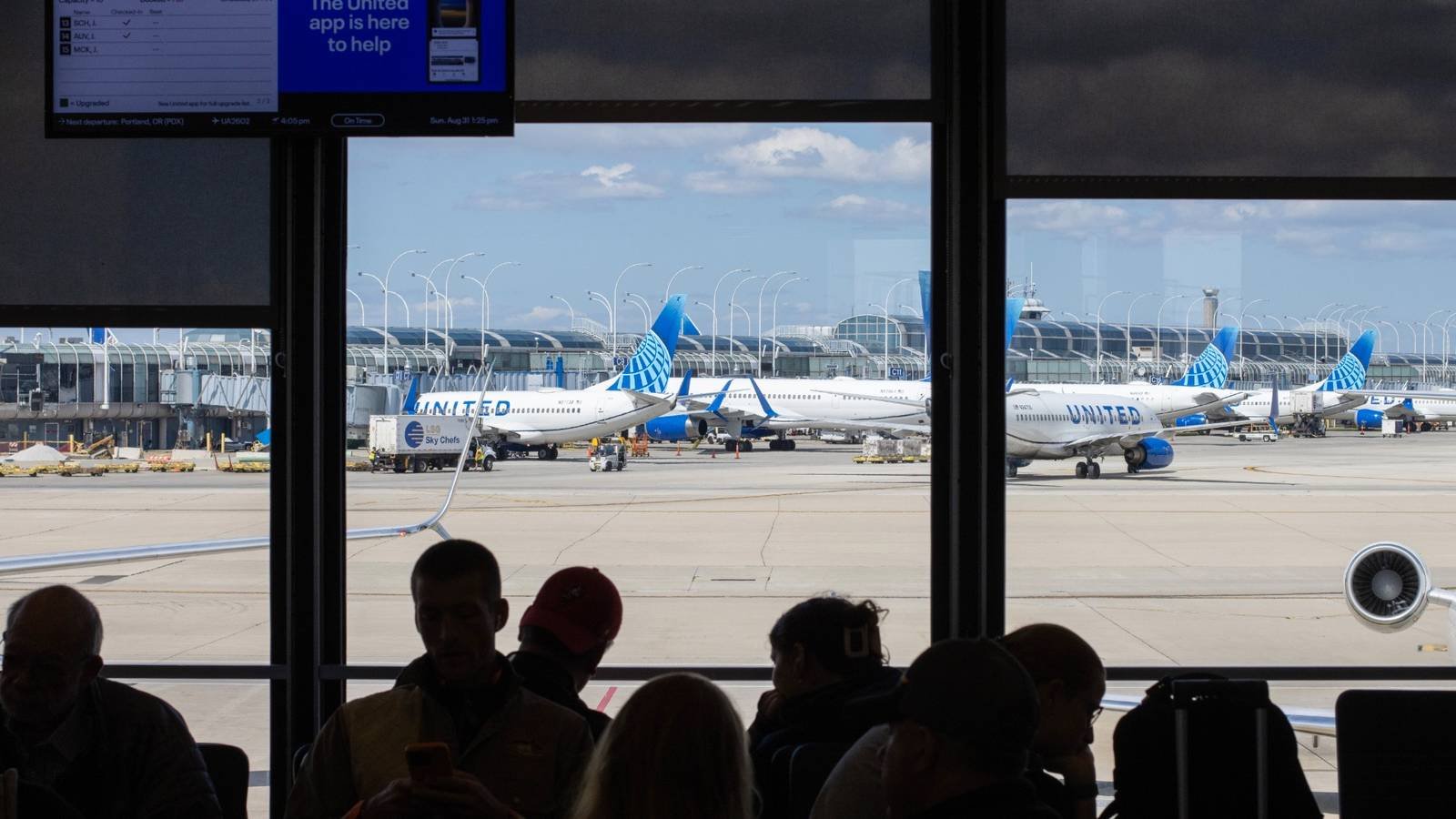
As a result of flight capacity limitations being imposed by the Federal Aviation Administration on operations at Chicago O’Hare International Airport (ORD),  United Airlines will be delaying the start of 10 new routes to Regional Midwest airports, as well as one to Guadalajara, Mexico. My State Line reported that O’Hare will be restricted to 2,700 landings and takeoffs per day under the FAA’s ruling.
The FAA’s initial restriction cut 10% of daily flight operations, as announced in April. The decision was made in the interest of reducing the volume of delayed flights. Per the updated order from July 10, the end date of the cap has been extended by one year, with the expiration changed from October 2026 to October 2027.
Bottlenecked By Airfield Improvements At O’Hare

The official order from the FAA states that the cap has been instituted due to construction projects and adjustments to the airfield infrastructure expected to continue through the summer of 2027. The agency’s assessment has found that ongoing improvements under the O’Hare 21 modernization program would result in significant delays and operational disruptions if the order were rescinded this fall.
The scope of ORD 21, also referred to as ORDNext, includes construction of the new 19-gate Concourse D, renovation of Terminal 3, foundation work for the new O’Hare Global Terminal, and improvements across the airfield itself. Interference from construction activities in the terminal area can bottleneck passenger movements while upgrades and repairs to the taxiways require closures, leaving fewer available to airplanes during ground movements.
After the FAA released its first order to cap ORD flights in April, United CEO Scott Kirby responded, saying that the airline may add capacity at a different airport instead of O’Hare. United’s summer schedule for this year is still 11% higher than last year because its fleet has been ‘upgauged’ to larger planes on the same routes. According to NBC 5 Chicago, even with the FAA limits, United is expecting 13% more passengers this summer.
United Skips Small Airfields To Fill Bigger Jets

The broader trend of upgauging to larger airliners throughout the industry is a contributing factor to reduced service at regional airfields like the ones being cut by United’s ORD operations this summer. Ishrion Aviation posted a list of 10 Midwestern regional airfields that are being cut by United. Aeroroutes revealed that Guadalajara was also intended to receive new service but is also being dropped.
Below is the full list of 11 airports being cut by United:
Airport Name (Code) |
|---|
Guadalajara International Airport (GDL) |
University of Illinois Willard Airport (CMI) |
Kalamazoo/Battle Creek International Airport (AZO) |
Capital Region International Airport (LAN) |
La Crosse Regional Airport (LSE) |
Central Illinois Regional Airport (BMI) |
Tri-Cities Airport (TRI) |
Erie International Airport (ERI) |
Rochester International Airport (RST) |
Marquette Sawyer Regional Airport (MQT) |
Central Wisconsin Airport (CWA) |
Flying a 50-seat regional jet uses up the same valuable slot as flying a 180-seat Boeing 737. To maximize the passenger capacity of fewer landing and takeoff slots, larger narrowbodies are being substituted for smaller single-aisle jets and regional ‘puddle jumpers.’ Although some regional airports have the facilities to accommodate these planes, they do not have the demand to fill them up with customers.
This creates another issue for the FAA, which also seeks to ensure that underserved communities can have access to reliable air service that connects them with larger hubs. This is not only important to the citizens of the US, for whom the FAA is ultimately responsible as a federal agency, but also in sustaining these small airfields as businesses. Losing service to a large hub cuts off regionals from the ‘hub and spoke’ network, which can decimate their economic lifeline.
Increasing Flight Scarcity At Underserved Airports

While the FAA implemented these cuts under Secretary Sean Duffy to prevent crushing delays and safeguard safety, the agency may have to course-correct if the negative impact snowballs. They could dictate that a specific slot allocation, potentially setting aside a block of the daily flights at O’Hare, must be strictly reserved for regional jets incoming from underserved, small-market communities.
Although that scenario is purely speculative, under Administrator Bryan Bedford, the agency has increasingly prioritized overall airspace efficiency over sheer flight volume. Following the liquidation of Spirit Airlines, Bedford publicly noted that if competing carriers could not efficiently absorb Spirit’s former slots at LaGuardia Airport, the FAA would prefer to retire those slots permanently.
Bedford explicitly pushed for Spirit’s coveted LaGuardia Airport slots to be absorbed by another low-cost carrier, stating his priority was to protect affordable airfare for regular Americans. Under this pro-consumer mandate, the FAA’s ultimate goal at O’Hare is to force airlines to optimize their schedules around the public interest rather than protect the bottom line of legacy carriers. If the isolation of these eleven regional markets continues to snowball, the FAA may be forced to step in.
