



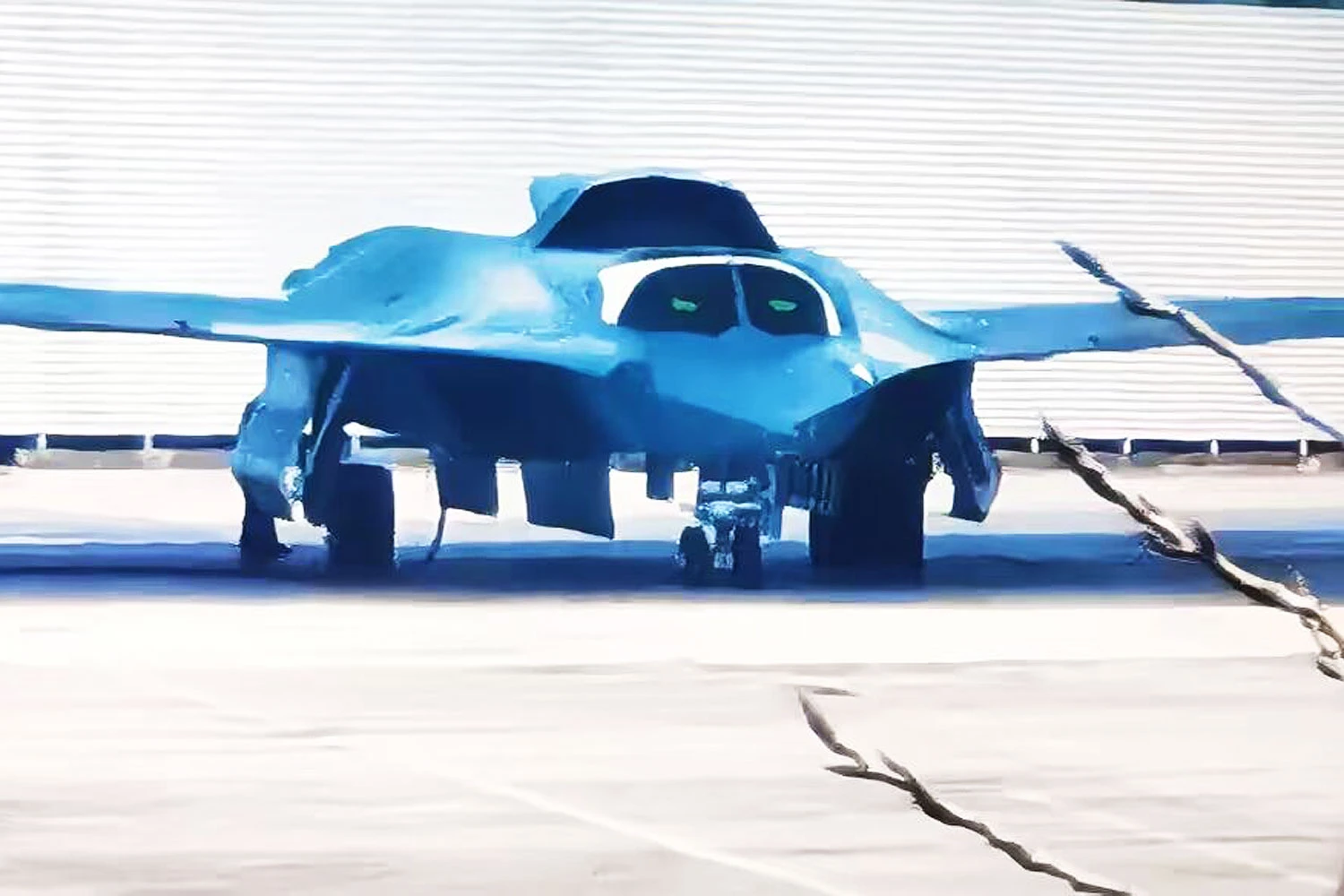
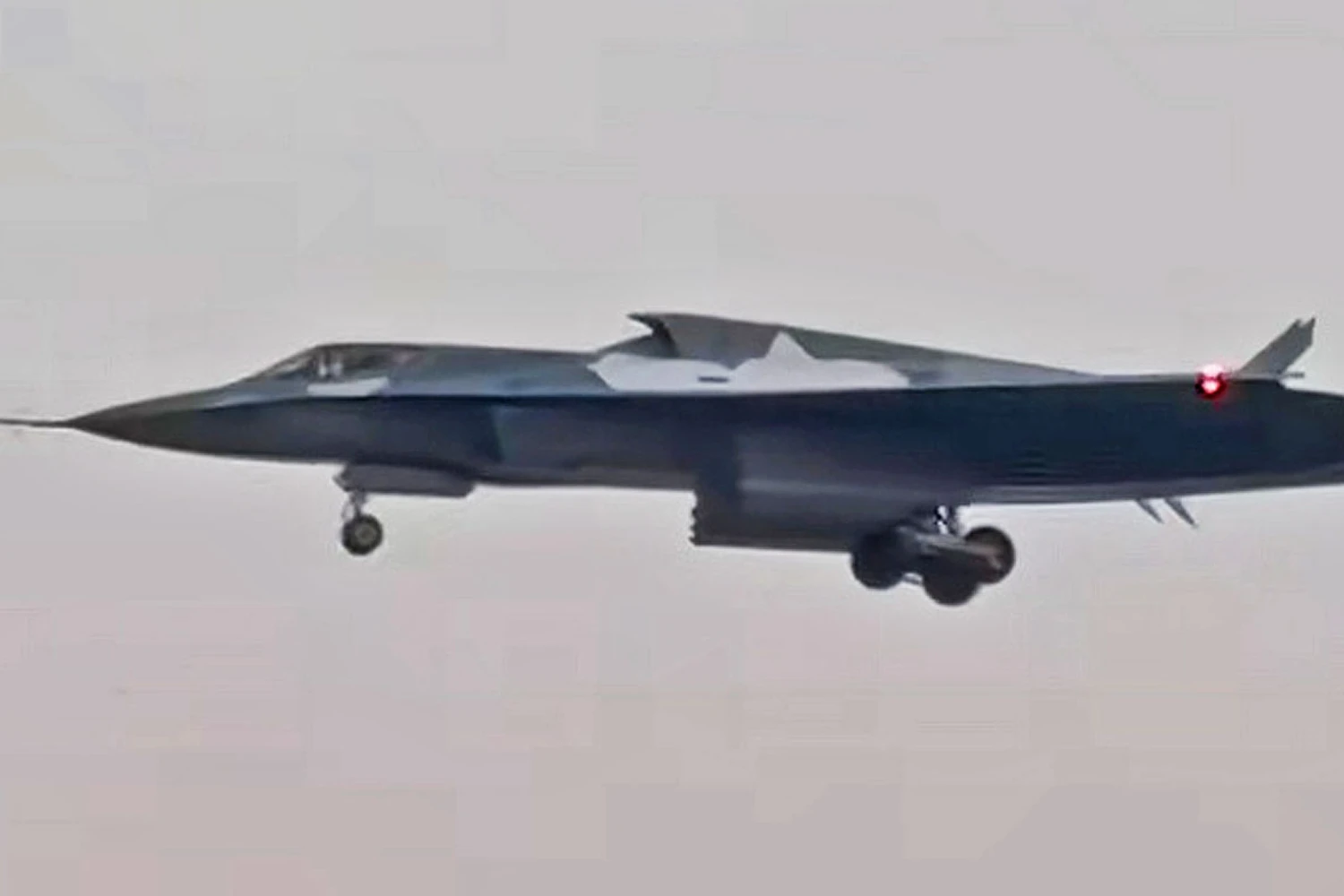
New videos and images shared on Chinese social media appear to show another prototype of China’s unofficially designated J-36 next-generation combat aircraft, offering fresh clues about the development of the country’s largest known stealth fighter program.
The footage, which surfaced online on July 23, has been identified by Chinese military observers as showing a fifth distinct flying prototype developed by Chengdu Aircraft Corporation. Chinese authorities have not acknowledged the aircraft or confirmed the authenticity of the images.
Follow Air Data News: WhatsApp | Instagram | LinkedIn | Twitter | Facebook
The latest airframe appears to combine diverterless supersonic intakes (DSI), first introduced on later prototypes, with recessed engine exhausts resembling those seen on the original aircraft that emerged late in 2024.
The apparent combination suggests engineers are still evaluating different propulsion and stealth configurations rather than converging on a final design.
Continuing flight-test campaign
Since the aircraft’s first appearance, successive prototypes have displayed visible changes around the air intakes, landing gear and engine section, indicating an active flight-test campaign rather than incremental production.
The most notable change in the latest aircraft appears to be the exhaust arrangement.
Previous prototypes were widely believed to feature flatter exhaust nozzles that could improve maneuverability through thrust vectoring. The newest aircraft instead seems to use recessed exhausts integrated deeper into the rear fuselage, a configuration generally associated with reducing infrared and radar signatures from the rear aspect.
The available imagery is insufficient to determine whether the design represents a return to an earlier solution or an updated system that retains a similar external appearance.
Likewise, the DSI intakes appear unchanged from more recent prototypes. This design eliminates conventional splitter plates, simplifying the inlet while reducing radar reflections.
Taken together, the changes suggest Chengdu Aircraft may be combining features previously tested on separate prototypes to evaluate different design combinations before selecting a production-standard configuration.
Production claims remain unverified
Some Chinese social media accounts have claimed the latest aircraft is the first low-rate initial production (LRIP) example of the J-36.
There is no official evidence supporting those claims.
Major external design changes between prototypes typically indicate that flight testing remains focused on validating different engineering solutions. Although manufacturing preparations could begin before development concludes, there has been no confirmation that the aircraft has entered production or been transferred to a People’s Liberation Army Air Force evaluation unit.
Long-range role
Although little is officially known about the aircraft, analysts believe the J-36 is intended for missions extending well beyond traditional fighter operations.
Its large tailless configuration, three-engine layout and substantial internal volume suggest a platform capable of carrying significant internal fuel and weapons while accommodating advanced sensors and electronic warfare systems.
Rather than concentrating solely on air-to-air combat, the aircraft could be optimized to engage high-value support assets such as aerial refueling tankers, airborne early warning aircraft and command-and-control platforms at long range, complicating air operations across the Indo-Pacific.
