


This story is from an installment of The Oeno Files, our weekly insider newsletter to the world of fine wine. Sign up here.
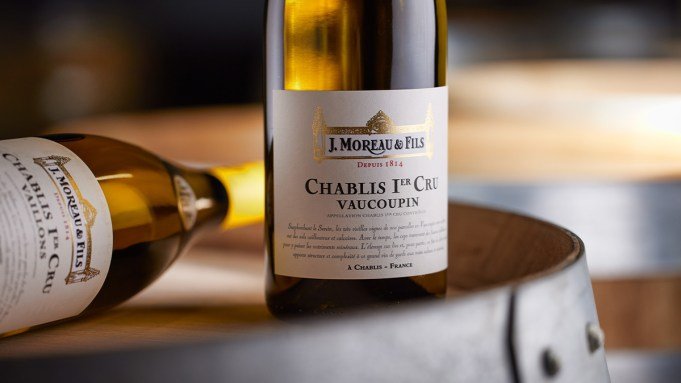
“I don’t like Chardonnay, but I love Chablis,” is a sentence that Lucie Depuydt, head winemaker at J. Moreau & Fils, has heard spoken many times. “I think that most people don’t link Chablis with Chardonnay,” she adds, which is true outside of France, whose residents mainly still drink wine based on appellation rather than grape variety. As Laura Anne Algieri, assistant general manager at Oceano Kitchen in Lake Worth Beach, Fla., points out, “Since French wines are usually labeled by region instead of grape variety, the link between the two is not clear.”
Algieri says Chablis typically features high acidity, strong mineral character, and is un-oaked or lightly oaked, but many of her clients are more familiar with Chardonnay having a rounder, buttery style driven by vanilla from heavy oak aging. “Guests sometimes have a surprised reaction when I explain that Chablis is in fact Chardonnay,” she explains. The northernmost region in Burgundy, Chablis is home not just to the world’s most popular white grape but to what is widely considered among the finest Chardonnay on the planet. Chardonnay lovers are in luck when it comes to Chablis, because it truly offers something for everyone, from accessible Petit Chablis through village-level Chablis, Premier Cru, and Grand Cru. While Petit Chablis is made from the youngest vines and is almost always fermented and aged in steel, as we move up the pyramid through more specific vineyard designations and longer aging, the style moves to lush and complex.
“Chablis is Chardonnay with a unique personality because of its soils,” says Didier Séguier, director of Domaine William Fèvre. “Chardonnay is simply the vehicle through which the terroir expresses itself.” While the region’s Kimmeridgian limestone soils separate Chablis from Chardonnay grown elsewhere, what truly sets Chablis apart is the incredible diversity of its terroirs. Chablis has 40 Premier Crus and seven Grand Crus, 47 distinct terroirs, each producing its own unique style. Séguier believes those who enjoy richer, more sun-driven wines will prefer Grand Cru Vaudésir or Premier Cru Vaillons, while Premier Cru Montmains, Grand Cru Valmur, or Premier Cru Les Lys will appeal more to wine lovers who prefer cooler, fresher styles.
To really transmit the terroir to the glass, Depuydt believes in long ageing on lees, which she says gives the yeast time to restore to the wine everything it has consumed during fermentation. For her basic Chablis, she ages the wine in stainless-steel tank with a frequent stirring of the lees for 10 to 12 months. She does not vary her technique for the premier cru and grand cru wines, of which 30 to 40 percent of the cuvée is aged in oak barrels, including about 30 percent new oak, for 14 to 18 months. However, for her grand cru wines she selects oak from the best French forests such as Tronçais and Bertranges, which offer extremely fine grain, resulting in a smoother texture.
Chardonnay grapes
Serge Chapuis
At William Fèvre, Séguier does not employ any new oak at all, preferring to source barrels from the Côte d’Or after they have already been used for one, two, or three vintages. Replacing roughly 10 percent of his barrel stock annually and keeping barrels in service for about eight years, his average barrel age is approximately five years. “The purpose of the barrel isn’t to impart oak flavors,” he says. “It’s to encourage gentle oxygen exchange through micro-oxygenation, which actually enhances the expression of the terroir.” Aging only 30 percent of his wine in barrel while the remainder stays in stainless-steel tanks on the lees, Séguier lets the soil express itself in the glass.
Chicago-based steakhouse Maple & Ash offers 10 different pours from Domaine William Fèvre, including six grand crus and four premier crus. Amy Mundwiler, national director of wine for Maple Hospitality Group, explains Petit Chablis is your easy drinking, fresh everyday wine, and as you move into AOC Chablis, you’re still getting an easy drinking, fresh wine but with a little more “to think about.” She refers to the grand cru and premier cru wines as “thought provoking,” with “layered aromas and flavors that change as the wine develops in the glass.” Moving beyond the traditional oysters or seafood often paired with Chablis, she says, “I’d enjoy a Grand Cru Chablis with an aged rib eye any day of the week.” Offering other suggestions such as chicken Caesar salad or Thanksgiving dinner with all the trimmings, she asks, “Are there better more exact pairings? Maybe, but when you have a wine this versatile that’s clean, fresh, and high in acid, it just makes sense.”
At Oceano Kitchen, Algieri serves J Moreau & Fils 2023 Gloire de Chablis, a village-level pour. While she might recommend foie gras, aged cheese, or a veal dish alongside a grand cru, she prefers to keep things simpler with this type of bottle, so she suggests goat cheese, grilled or roasted fish, or mussels in a lemon and garlic butter sauce. “The body of the wine will pair well with creamy sauces or cheese, and the wine’s acidity will balance out the richness,” she says. While there is a broad range of styles across the 364 wineries in the region, the differences among the wines can mainly be attributed to vineyard exposure and terroir. The sunniest vineyard sites in Chablis have historically been classified as premier and grand crus. “These warmer exposures produce wines that are richer, more concentrated, deeper, more powerful, and capable of longer aging,” Séguier says. While its soils and location make Chablis a true one-of-a-kind, it offers wine lovers a myriad opportunities to explore wine from the world’s premier Chardonnay region.
Do you want access to rare and outstanding reds from Napa Valley? Join the Robb Report 672 Wine Club today.
Authors

Mike DeSimone and Jeff Jenssen

