


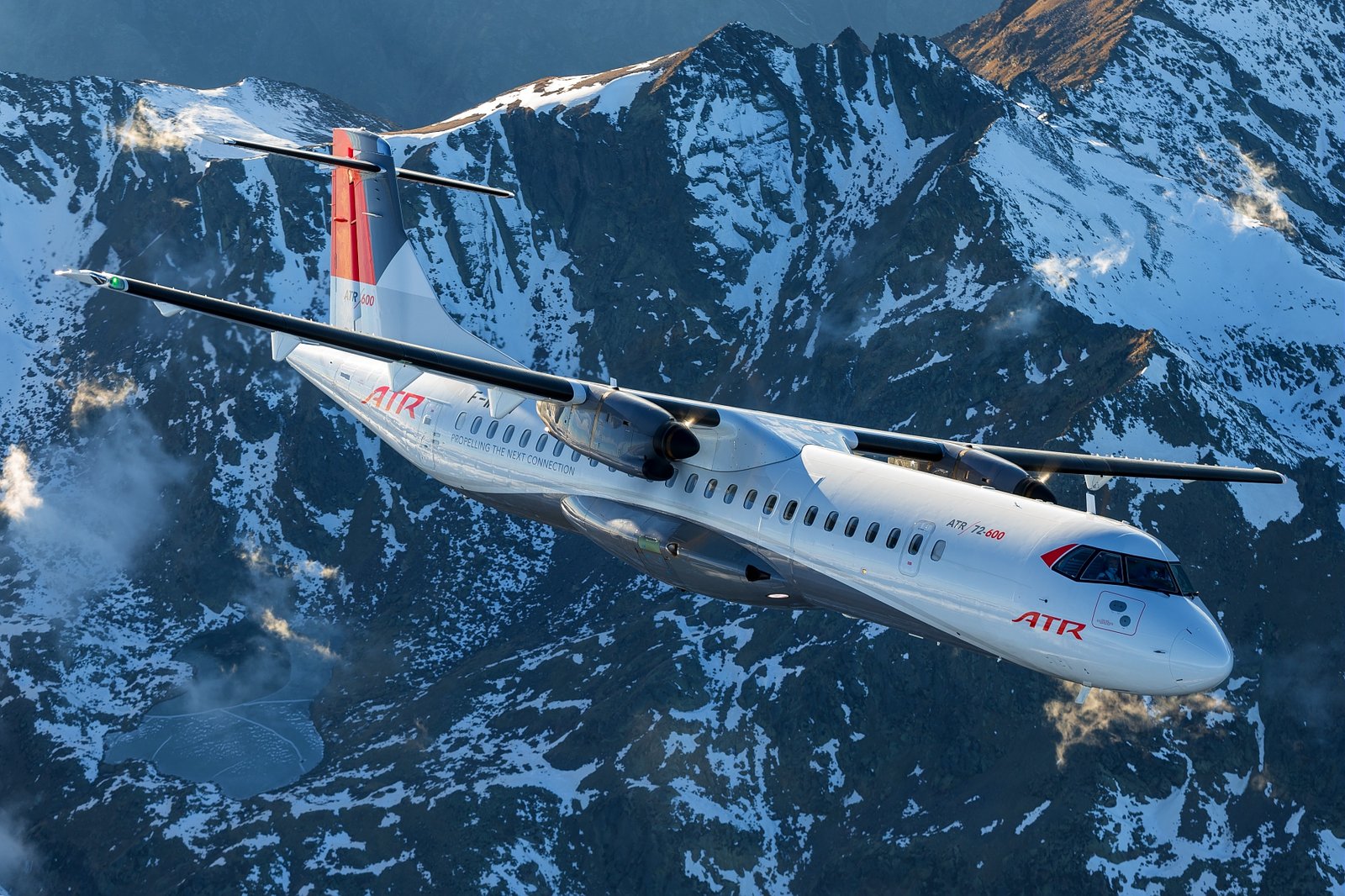
Regional turboprop manufacturer has seen orders outstrip deliveries for past three years.
ATR’s sales chief believes the growing presence of lessors in its backlog is offering a commercial advantage given the otherwise long lead times for new orders.
Alexis Vidal, senior vice-president, commercial at the regional turboprop manufacturer, says that in addition to the 14 direct orders received in the first half, there have been the same number of new lease placements.
“We have been seeing quite a lot of interest from airlines to lease new airplanes to access capacity of brand-new ATRs with a shorter time to market.”
As orders have outstripped deliveries for three consecutive years, ATR has seen its backlog grow and “the time to market is getting longer”, he says, with the airframer unable to raise output quickly enough to match demand.
“But our approach to take orders from lessors that are able to deploy capacity actually within the next six to 12 months is proving interesting because with that we can capture further opportunities,” he says.
As a result, delivery slots are out until 2028 for the 48-seat ATR 42-600 and until 2029 for the larger and more popular ATR 72-600.
To combat the relatively long lead time for a directly ordered aircraft, ATR is trying “to combine that with lease placement”, says Vidal.
“That’s very much what I believe in, working with airlines on fleet planning, which then can be fulfilled by a mix of direct order and lease placement, as opposed to simply buying planes.”
Currently, around 25-30% of the airframer’s firm order backlog is with lessors, he says.
“What we try to do in a given year is to basically have 25% of the capacity allocated or purchased by speculative lessors.”
But that figure can double in some years with lessors also involved in sale-and-leaseback financing, he notes.
“That’s quite healthy, I think, and that proves that we have a market which can finance our orders with reputable lessors coming into play.”
In other years, however, as was the case in 2025, there were no new orders from lessors at all, part of an effort to ensure a balanced backlog and avoid over-exposure to any one sector, he says.
In fact, just three lessors – Abelo, Avation and DAE – hold “speculative” orders with ATR.
“I think we’ve been partnering with our lessors in a very appropriate way.
“We’ve been gaining new markets with that. We’ve been placing aircraft with new operators, and that’s what we look at when we partner with lessors.”
Meanwhile, included in the 14 orders received so far this year is a commitment from an undisclosed customer for an ATR 42-600 in a new corporate shuttle layout, part of the airframer’s Highline portfolio of premium cabin solutions.
Based around the X-Space table – a quick-change solution that converts a standard dual economy seat into a single premium seat – ATR has been able to turn the otherwise 46-seat twin-turboprop into a 34- or 23-seater, depending on the exact configuration.
“We are now developing the corporate shuttle, which requires a much more versatile product, where you can switch from kind of standard density to lower density configurations,” he says.
Air Cambodia is the launch customer for the X-Space table on the ATR 72-600, albeit using it for just two rows on each aircraft; deliveries are due to begin next year.
Vidal spoke to FlightGlobal at the recent Farnborough air show.
Subscribe to gain access to all news
Already have a subscription? Log in.
Choose your subscription
Considering a corporate subscription? Contact us to find out more.
