


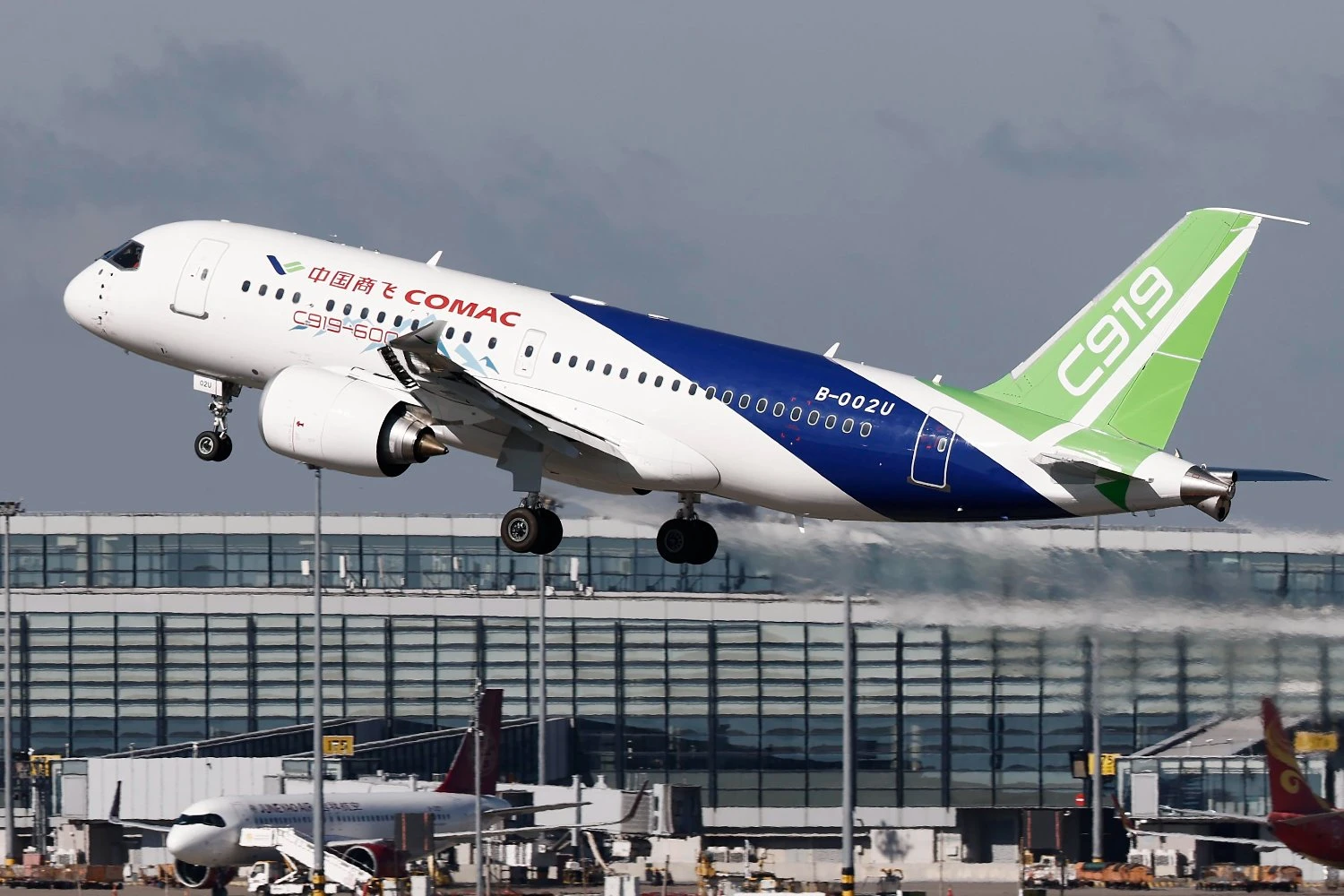
The C919-600, COMAC’s high-altitude C919 completed its maiden flight on July 29, becoming the second member of the manufacturer’s planned C919 family to begin flight testing.
The prototype, registered B-002U, took off from Shanghai Pudong International Airport on July 29 and remained airborne for 1 hour and 59 minutes, completing all planned test items, according to the Chinese manufacturer.
COMAC said the flight represents an important step in the development of the C919 family. The company did not indicate when it expects the new variant to receive certification.
The aircraft has been optimized for operations from airports at high elevations, particularly those on the Tibetan Plateau. Compared with the baseline C919, the aircraft features a shortened fuselage and enhanced system functions to improve performance in thin-air conditions.
The variant accommodates approximately 140 passengers, compared with the standard C919’s typical capacity of around 164 seats. COMAC is developing the aircraft in partnership with Xizang Airlines, formerly Tibet Airlines, which signed an order for 40 aircraft and will become the launch customer.
The first prototype rolled out in January 2026 and has since completed ground testing, including taxi and high-speed braking trials, before its maiden flight.
Stretched version
The C919-600 is one of two derivatives under development for the C919 family. COMAC is also developing a stretched version with capacity for about 210 passengers, intended to compete in segments currently served by the Airbus A320neo family and Boeing 737 MAX.
Although the C919 program has become one of China’s highest-profile aerospace projects, COMAC continues to face challenges increasing production. The aircraft relies on numerous Western-built systems and components, including engines, avionics and other equipment supplied by companies in the United States and Europe.
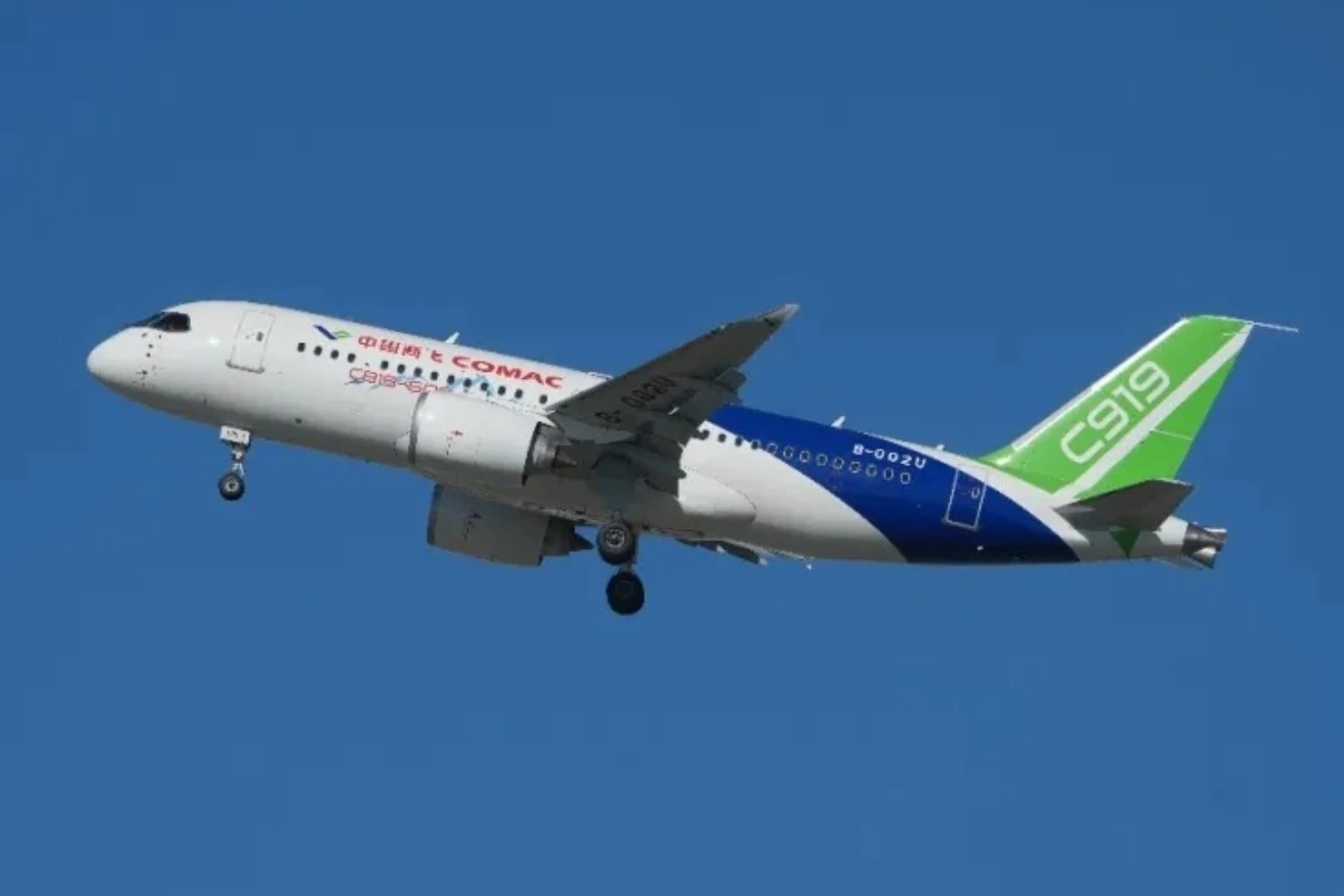
Unlike Russia’s commercial aircraft industry, which has been heavily affected by international sanctions, China continues to source many of these systems from Western suppliers. However, changing trade policies and export restrictions between Beijing and Washington have created uncertainty in the supply chain, limiting COMAC’s ability to accelerate output.
The slower production pace has delayed deliveries and complicated the expansion plans of Chinese airlines that intend to add the C919 as an alternative to the Airbus A320neo and Boeing 737 MAX families.
