


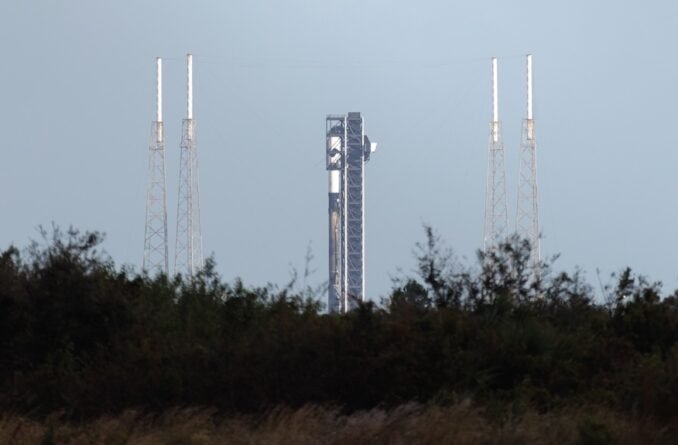
Update Aug. 20, 11:58 a.m. EDT (1558 UTC): SpaceX scrubbed the mission.
An abort called in the last 30 seconds of its countdown on Thursday halted SpaceX from launching its 75th batch of Starlink satellites of the year. SpaceX didn’t provide a reason for the scrub prior to ending is broadcast.
When it launches, Starlink 10-39 mission will add another 29 broadband internet satellites to the company’s low Earth orbit megaconstellation.
Liftoff from Space Launch Complex 40 at Cape Canaveral Space Force Station was scheduled at 11:38 a.m. EDT (1538 UTC). A new date and launch dime
If SpaceX decides to try launching on Friday, Aug. 21, the 45th Weather Squadron forecast an 80 percent chance for favorable weather during the opening of the window. It deteriorates down to 40 percent as the window progresses.
“The main concern at the beginning of the primary window will be violations associated with locally developing showers and storms along the sea breeze,” launch weather officers wrote on Wednesday. “However, coverage during this period should be isolated and thus will maintain a lower [probability of violating weather constraints] at the start of the window with this forecast update.
“Later in the window, model guidance is in good agreement simulating showers and storms tracking east across Florida along the west coast sea breeze. However, guidance diverges on the timing of their arrival at the Spaceport.”
SpaceX will launch the mission using the Falcon 9 first-stage booster B1078. This will be its 30th flight, making it the sixth booster to reach this milestone.
Nearly 8.5 minutes after liftoff, B1078 will make a landing on the droneship, A Shortfall of Gravitas, positioned in the Atlantic Ocean off the coast of South Carolina. If successful, this will be the 164th landing on this vessel and the 652nd Falcon booster landing for SpaceX to date.
