


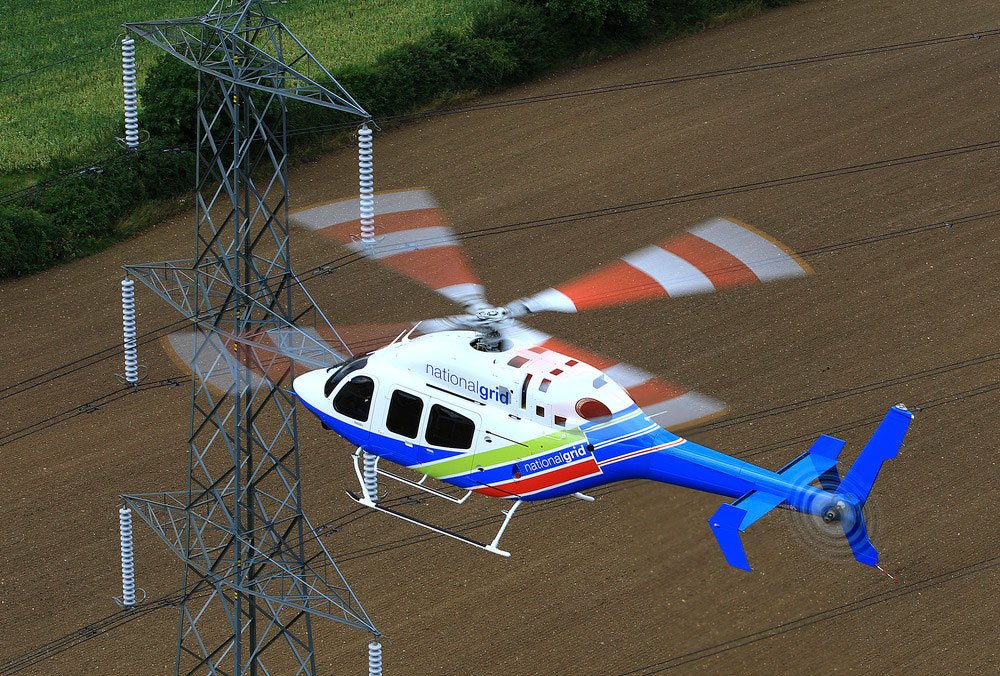
So-called “idle cruise regime” involves a twin-engined helicopter running solely one powerplant during cruise.
More detail has emerged about Pratt & Whitney Canada’s (P&WC) in-development PW220A turboshaft, with a regulatory document revealing that the helicopter engine will have an unique “idle cruise regime” (ICR) for the purpose of saving fuel.
That regime will involve one of a twin-engined helicopter’s two turboshafts providing 100% of power during cruise flight, with the other engine running at idle power, says a 25 August Federal Aviation Administration (FAA) regulatory filing.
“Operation will include an ICR where the power from one engine will be reduced to a low idle condition while the other engine will provide 100% of the required power to the aircraft during cruise flight,” the filing says.
P&WC has been working through the PW220A’s certification for several years, having filed an initial certification application with the FAA in November 2021. FlightGlobal reported on the engine’s development late last year.
Few details about the powerplant are known outside those found in regulatory documents, which describe it as a “new centreline turboshaft engine designed for a transport category, twin-engine helicopter.”
P&WC declines to comment about the project. It is unclear which helicopter the engine might power, although it has been rumoured as an option for the AW139 MkII being quietly developed by Leonardo Helicopters.
The FAA’s 25 August filing says existing airworthiness standards neither define ICR nor apply to its operation and the unique engine ratings it necessitates. For that reason, the FAA’s filing proposes special airworthiness conditions against which the regulator intends to evaluate the system.
“The prime objective of ICR is to reduce total fuel consumption and increase the operating range of the helicopter,” the FAA says. “The fundamental concept of ICR stems from the fact that one engine is thermodynamically more efficient at providing a given total power than two engines sharing the load equally.”
The FAA’s filing defines “ICR mode of operation” as when one of a twin-engined helicopter’s turboshafts “is providing 100% of the required power to the rotorcraft for cruise flight, and the other engine is in Rated ICR standby power”.
The FAA will require the PW220A be capable of spooling up from standby power to 95% of take-off power in no more than 5s.
Safran Helicopter Engines is developing a similar system it calls “Eco Mode”, which will be tested aboard the Aneto-1X-powered Airbus Helicopters Racer.
Since November 2024 the US regulator has released a handful of PW220A-related filings, including those discussing regulatory exemptions and other special conditions.
Though P&WC has repeatedly declined to discuss the engine, those documents reveal some details but do not disclose a horsepower rating.
“The engine architecture is a split compression system that incorporates the latest-generation design methodology of a high-pressure-ratio compressor, providing significant improvements in specific fuel consumption and power,” a 2024 filing says.
The engine has a two-stage uncooled power turbine driving a low-pressure compressor and the rotor, and a single-stage cooled high-pressure turbine driving a two-stage compressor system, it adds.
In a November 2025 exemption request to the FAA, P&WC said the PW220A will be more efficient than other turboshafts and “ensure continued sales of one of the best-selling helicopters in its category”.
P&WC now produces its popular 500-700shp PW200 turboshaft, which powers various twin-engined helicopters, including the Airbus Helicopters H135, Bell 427 and 429, Leonardo AW109 and MD Helicopters MD900 Explorer.
The post FAA reveals fuel-saving feature of P&WC’s in-development PW220A turboshaft first appeared on FlightGlobal.
