


A hand-carry can look like the simplest product in time-critical logistics. But there are many operational checks behind an AOG shipment, from baggage feasibility and passenger-flight routing to customs, connections and final delivery.
An onboard courier shipment looks simple from the outside: a courier accompanies an urgent part on a passenger flight, as cabin or checked baggage where permitted, and hands it over at the other end.
I spent around six years doing that work, much of it out of Manila in the Philippines and other parts of Asia, before moving into management, and the flight itself was usually the easy part. Most of the decisions that shape the job are made earlier, during planning.
An AOG situation leaves little room to design anything. The part becomes available at short notice, often somewhere inconvenient. Origin and destination are fixed by where the component is and where the aircraft is stuck. The plan has to be built from what exists that day: the real release time, the flights actually operating, the paperwork in hand.
Before the courier is booked
A few facts need to be established rather than assumed. The first is when the part will genuinely be ready for collection, with its paperwork. “Ready” and “ready with export documents” are not always the same thing.
Exact dimensions and weight come next, measured rather than taken from a part number. Those figures decide whether the piece fits within the baggage rules of the airlines on the itinerary, and whether it travels in the cabin or in the hold. Some aircraft components fall under dangerous goods provisions, and some cannot fly as passenger baggage at all; that has to be known before an OBC is confirmed, not discovered at check-in.
Someone also has to reach the origin in time for the flights that work, and quite often the flight options are being compared while the courier is still travelling to the collection point.
Timing around the airport matters as well. Depending on the airport and the airline, passenger check-in can still be open after cargo acceptance for the same flight has closed, which is one reason hand carry comes up for parts released late in the day. It is not universal, and deadlines still have to be checked against the actual itinerary.
Customs belongs at this stage too. An international hand-carry still goes through export and import formalities, and a fast flight does not help if the shipment cannot proceed after arrival.
Choosing the passenger itinerary
The flight with the earliest scheduled arrival is not automatically the right one, and this is where hand-carry planning differs most from a quick flight search.
A connection has to work for a person moving with a shipment, not just in a booking system. One thing I learned quickly as a courier is that a connection that looks comfortable on screen feels very different when a checked bag has to be collected and rechecked partway through the journey. Terminal changes take time. Immigration takes time. If two airlines are involved, their baggage requirements can differ, and a piece that was fine on the first sector may be refused on the second.
The courier is part of the calculation too. Visas, transit permissions and immigration rules apply to the person as much as to the part, and a routing that is open for one courier can be closed for another.
There is also recovery to think about. A large hub usually offers more rebooking options if something fails, though it can take longer to move through. A smaller airport may be quicker on the ground but leaves fewer alternatives. Even the distance from the arrival airport to the aircraft belongs in the comparison.
What happens when the plan changes
Flights get cancelled, connections get missed, checked baggage gets delayed. Hand carry does not remove the normal risks of passenger aviation, and it would be wrong to pretend otherwise.
What changes is the response. The courier is on that itinerary and an operations team is following the trip, so a failed connection becomes a rebooking decision rather than a search for a missing shipment. Alternative routings can be considered while the courier is still moving, and the receiving side can be warned early enough to adjust. The risk stays; handling it becomes more straightforward.
From the airport to the maintenance facility
The scheduled arrival time is not the end of the job. After landing there may still be a bag to recover, customs to clear where required, a handover to whoever is authorised to receive the part at that hour, and the drive to the maintenance facility or the aircraft itself. Each stage takes real time and can be planned in advance or left to chance. The delivery estimate has to cover all of it, not just the flight.
Onboard courier is not the right answer for every AOG shipment, and an honest assessment will sometimes say so. Where it does fit, the jobs I remember going smoothly were the ones where the courier, the baggage, the routing, the documents and the arrival plan had been settled before departure.
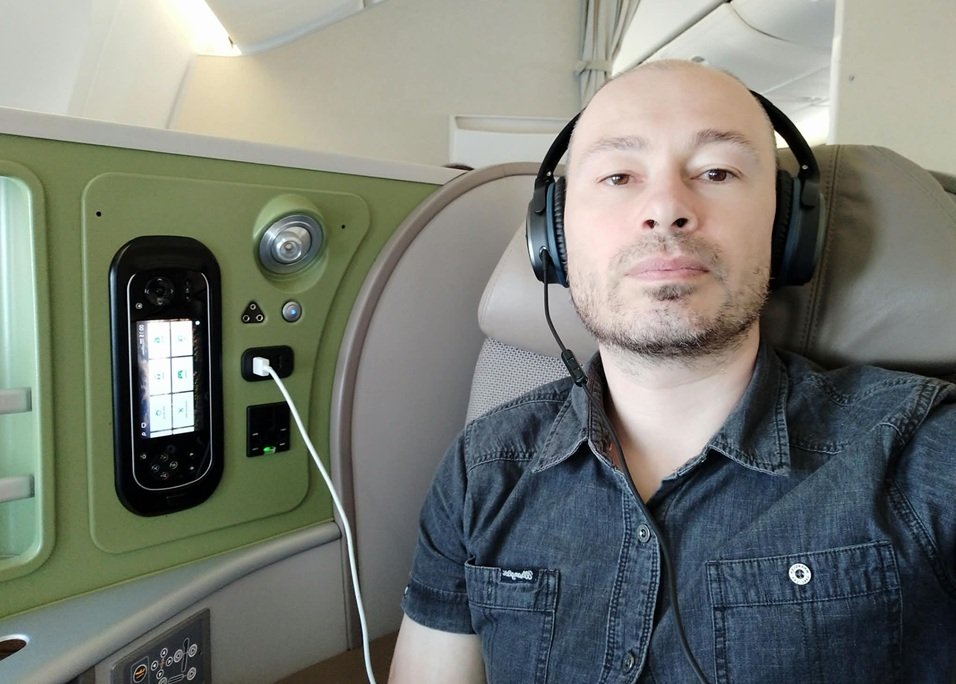
Viktar Toparau is director at Nova OBC, an international onboard courier company founded in 2022. Before moving into management, he spent around six years working personally as an onboard courier, operating from Manila and across Asia and accompanying time-critical hand-carry shipments to Europe, the US and other destinations worldwide.
