


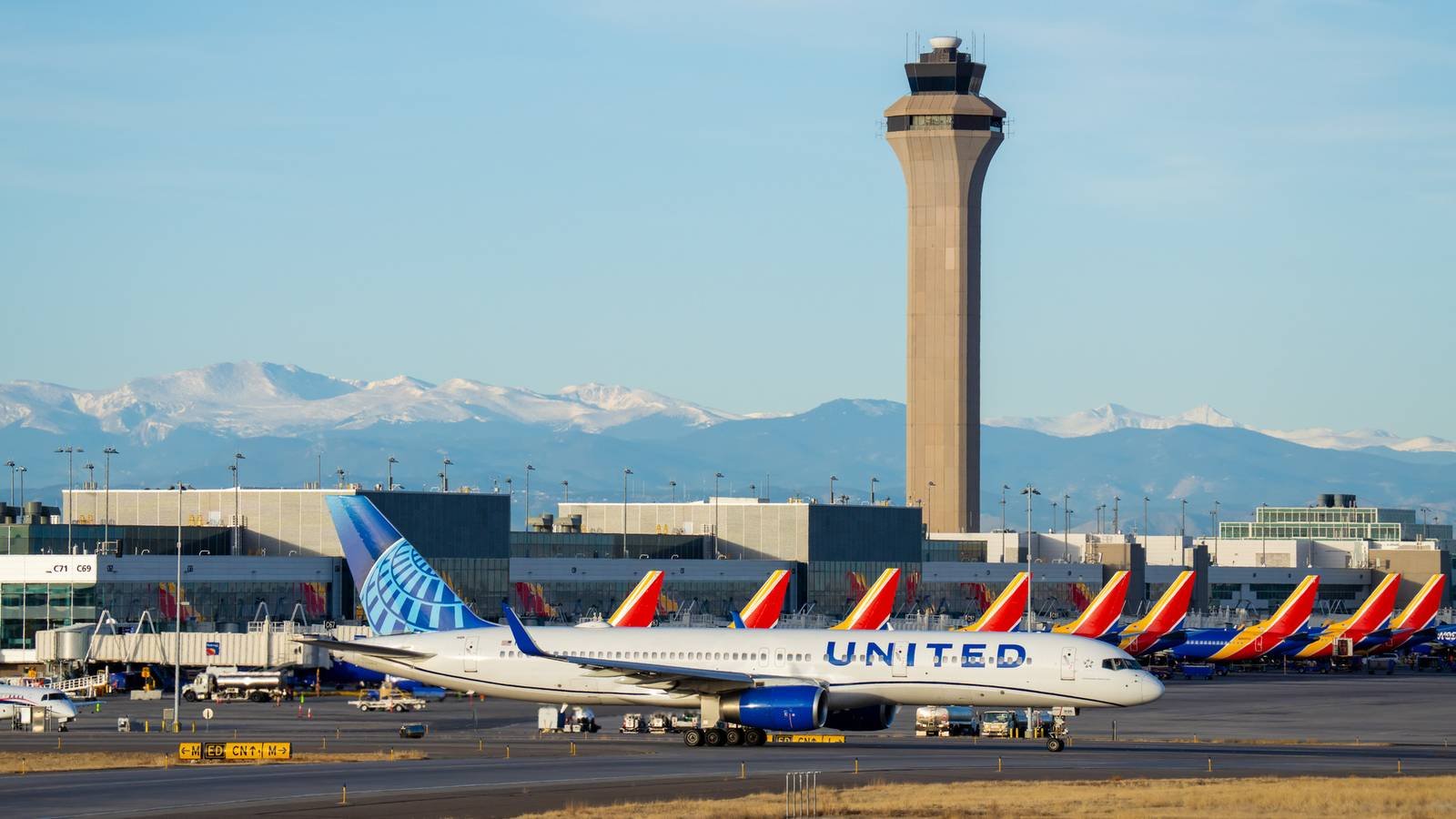
Air Traffic Controllers have received only part of a 3.8% pay increase Congress funded for 2026, and two Illinois senators are now demanding that the Federal Aviation Administration (FAA) release the remainder. Public Law 119-86, signed on April 30, appropriated $140 million for the increase; controllers have so far received the 1% government-wide civilian raise, leaving another 2.8% unresolved more than four months later.
CBS News reports that the impasse over the additional raise had already become a growing point of contention within the controller workforce. But the dispute is not simply about whether the money exists. The same law gives FAA Administrator Bryan Bedford “sole discretion” to implement the adjustment once he determines that improvements in scheduling, staffing utilization or other operational efficiencies have been achieved.
That distinction has left the FAA and its critics arguing over whether controllers are waiting for an already-authorized raise or for conditions attached to it to be satisfied. As Simple Flying reported last month, this all comes as the workforce remains about 3,000 controllers short, and current and former controllers warn that ongoing staffing problems are hemorrhaging morale, complicating recruitment, and leaving the nation’s air traffic system dangerously vulnerable.
Senators Say Controllers Have Waited Long Enough
Sens. Tammy Duckworth and Dick Durbin, both from Illinois, urged Bedford on September 4 to make that determination immediately. Their letter (full text available here) argues that using the outstanding 2.8% as leverage for greater workforce utilization is counterproductive when controllers have already spent years covering shortages with mandatory overtime.
The senators argue that the nationwide controller shortage has been building for years, with individual facilities sometimes having very little spare staffing to absorb illness, weather or other disruption. They sum up the current situation by saying:
“Holding air traffic controllers’ remaining 2.8 percent pay increase hostage … is petty, disrespectful and counterproductive.”
The senators also rely on the FAA’s own Workforce Plan to support their argument. It says mandatory overtime reached levels in fiscal 2023 through 2025 that far exceeded what the agency considers reasonable, warning that chronic overtime causes fatigue and burnout and ultimately damages retention. Thin staffing has already produced highly visible operational problems, including at  Newark Liberty International Airport (EWR), where controller shortages became a major part of the airport’s disruption last year.
There is another tension in the compensation argument. The FAA raised starting salaries for Academy students by nearly 30% and introduced incentives for Academy completion and retention, while its workforce plan says nearly 400 retirement-eligible controllers were retained through a new bonus structure. The FAA hired 2,028 trainees in fiscal 2025 and plans thousands more hires, but training and certification mean applicants do not quickly become fully certified controllers; pay itself also varies substantially by facility, experience and location.
Illinois Shows The Pressure — But The FAA Says The Raise Was Conditional

Duckworth and Durbin pointed to their home state of Illinois as a concrete example of the pressure being felt across the system. Across Chicago O’Hare Tower, Chicago TRACON, Midway Tower and Chicago Center, the FAA’s latest facility tables show 433 Certified Professional Controllers (CPCs) against combined 2026 staffing targets of 500 — a difference of 67, or 14%. The widest CPC gap is at  Chicago O’Hare International Airport (ORD), which, as one of the world’s busiest airports, is alarmingly short-staffed with a 31% shortfall.
Illinois ATC Facility | 2026 Staffing Target | CPCs On Staff | CPC Shortfall | % CPC Below Target | Controllers In Training* |
|---|---|---|---|---|---|
Chicago O’Hare Tower | 88 | 61 | 27 | 31% | 9 |
Chicago TRACON | 100 | 76 | 24 | 24% | 42 |
Chicago Midway Tower | 22 | 19 | 3 | 14% | 8 |
Chicago Center | 290 | 277 | 13 | 5% | 89 |
Total | 500 | 433 | 67 | 14% | 148 |
*CPC-IT and developmental controllers.
Those figures need qualification. The four facilities also had 148 CPC-IT and developmental controllers, and the FAA says position-qualified trainees can contribute operationally before reaching full certification. Its new CPC-Equivalent Workforce methodology was specifically created to recognize those contributions, meaning the 13.4% figure is a comparison of fully certified controllers with the targets rather than a complete measure of available operational capacity. However, training remains a significant bottleneck because progressing a new hire all the way to certification can take years.
That caveat leads directly to the FAA’s counterargument. Public Law 119-86 says the adjustment is implemented only to the extent Bedford determines that improvements in scheduling, staffing utilization or other efficiencies have been achieved, and expressly leaves that determination to his “sole discretion.” If he makes it, the law says the 3.8% adjustment becomes effective from the first pay period beginning after January 1, 2026. FAA spokesperson Hanna Walden responded to the senators by pointing out that the contingency was their own doing:
“It is Congress, not the FAA, that made the pay increase contingent on the FAA Administrator determining that improvements in workforce scheduling, staffing utilization, or other operational efficiencies have been achieved.”
Bedford’s workforce plan provides the operational argument behind that stance. The average controller time “on position” was 4.01 hours per eight-hour shift in fiscal 2025, and the FAA believes modern scheduling and optimization tools could increase that to more than five hours — enough, in its analysis, to meet current staffing targets through greater effective availability. The agency wants to review watch schedules and facility operating hours to better match staffing with traffic demand, although the same plan simultaneously acknowledges that sustained overtime is damaging and unsustainable.
Air Traffic Controllers Say Time On Position Does Not Tell The Whole Story

The National Air Traffic Controllers Association (NACTA) has stopped short of rejecting further discussions with the FAA. Instead, it told CBS News that it remains engaged with the agency while continuing to push for the additional compensation. Controllers have also faced repeated uncertainty over pay during recent government funding disputes and shutdowns, adding another dimension to the broader recruitment and retention challenge. In a statement, NACTA said:
“We continue to advocate for meaningful improvements for controllers, including the pay parity wage increase passed by Congress.”
Controllers also challenge what “time on position” actually measures. Current and former controllers told the Washington Examiner that an eight-hour shift can include a variety of important activities, such as recurrent training, weather and procedural reviews, instruction of trainees and post-training debriefs, as well as recuperative breaks after periods requiring intense concentration. Those duties are particularly significant when training more controllers is itself one of the biggest obstacles to rebuilding the workforce.
Some controllers concede that inefficient schedules may exist, but question why their raise should depend on management changes the FAA can already make. Hanan Wiseman, a Boston Consolidated TRACON facility representative, argued that decisions over facility hours, scheduling and work assignments ultimately belong to the agency: “We do not manage scheduling. We do not assign the work.” Other controllers have similarly acknowledged that FAA management generally has authority to change facility operating hours, even where resulting working-condition changes may require consultation with NATCA.
The three sides therefore agree on more than the rhetoric suggests: staffing remains strained, overtime has become excessive and scheduling tools need modernization. Duckworth and Durbin argue that withholding compensation risks making retention worse; the FAA says Congress expressly attached conditions and Bedford wants measurable efficiency gains; controllers say raw on-position time understates the work required to keep the system safe and train replacements. The unresolved question is what Bedford will regard as sufficient progress to release the remaining 2.8% pay increases.
