



Autonomous defense technology company Quantum Cyber has completed the purchase and physical installation of all 80 units of its 3D printing drone production farm at its roughly 50,000-square-foot manufacturing facility in Bridgeport, Connecticut.
The printing farm is designed to serve as Quantum Cyber’s primary autonomous drone manufacturing line at Bridgeport, producing structural airframe components, enclosures, and 3D printed subassemblies for the company’s planned lineup of attritable one-way attack drones, interceptors, surveillance platforms, VTOL systems, and its long-range PHANTOM-950. With the 3D printers now installed, the company says it has moved from disclosed intent to physical operating capacity, a step it frames as central to its broader shift from a technology development and IP licensing platform toward a vertically integrated domestic defense manufacturer.
In-House Filament Supply Backs the Build-Out
The installation follows two earlier milestones: completion of the company’s first mini-interceptor airframe at Bridgeport on July 27, 2026, and the June 11 launch of its Advanced Filament Manufacturing Division.
That division is intended to supply the printing farm in-house, producing both standard PETG filament and Formula A, Quantum Cyber’s patent-pending EMP-hardened composite filament. According to the company, this arrangement is meant to cut external supply chain dependency, protect its proprietary material formulations, and support production scaling as customer demand grows.
David Lazar, Chief Executive Officer of Quantum Cyber, tied the milestone to a sequence of recent moves. “Purchasing and installing 80 printers moves the drone production line from a plan to a physical asset on our factory floor,” he said. Lazar highlighted all three milestones and added that with the company’s Head of Sales now in place, the next step is to “convert installed capacity into contracted volume.”
Additionally, the week of August 29, 2026, Quantum Cyber hosted representatives from institutional investment firms, investment banks, and current and former senior U.S. military officers at its Bridgeport facility. The company confirmed that no investment, financing, procurement, or other agreements were entered into in connection with the visits, though it gave no assurance that such agreements would not follow.
A Familiar Bet on Print Farms for Defense Drones
Quantum Cyber’s 80-printer installation reflects a strategy gaining traction across the defense drone sector: building large-scale, in-house 3D printing capacity rather than relying on external suppliers to meet fast-scaling production demand.
The approach echoes what’s already playing out on the front lines. Wild Hornets runs an expanding farm of Bambu Lab 3D printers to produce up to 100 of its Sting interceptor drones per day, using rows of FDM 3D printers to meet surging wartime demand for low-cost, disposable airframes.
Elsewhere, Firestorm Labs raised $47 million to expand its xCell deployable microfactory, enabling modular drone airframes to be 3D printed at the point of need, and went on to secure a $100 million U.S. Air Force contract built on that same in-house production model.
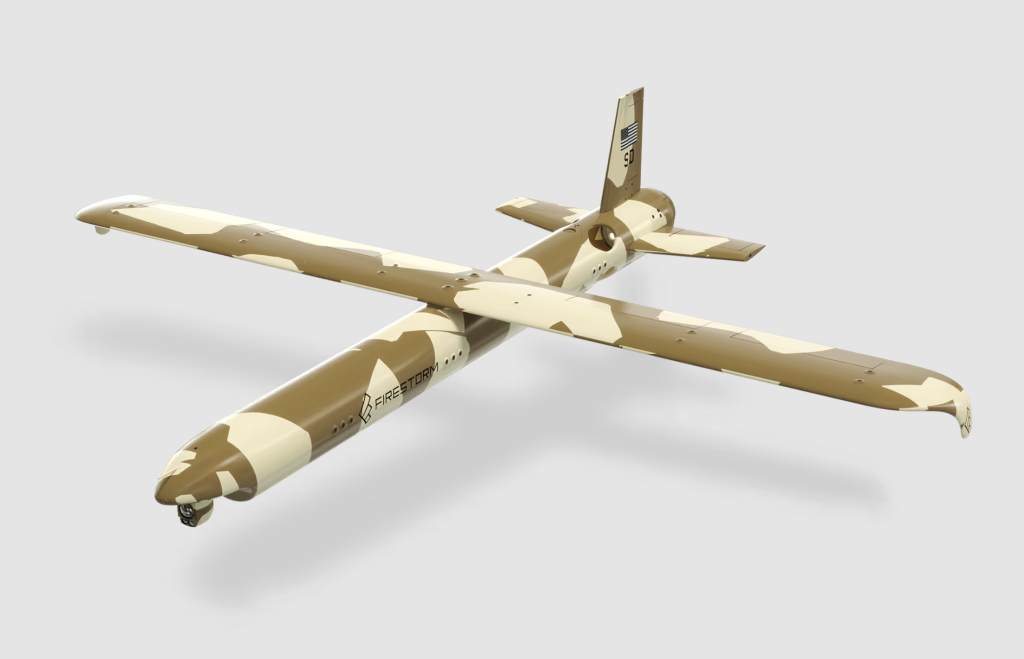
Across these efforts, the signal is consistent: for drone manufacturers, owning the 3D printers, and increasingly the materials feeding them, is becoming the fastest route from prototype to volume production.
3D Printing Industry is inviting speakers for its 2026 Additive Manufacturing Applications (AMA) series, covering Energy, Healthcare, Automotive and Mobility, Aerospace, Space and Defense, and Software. Each online event focuses on real production deployments, qualification, and supply chain integration. Practitioners interested in contributing can complete the call for speakers form here.
To stay up to date with the latest 3D printing news, don’t forget to subscribe to the 3D Printing Industry newsletter or follow us on LinkedIn.
Explore the full Future of 3D Printing and Executive Survey series from 3D Printing Industry, featuring perspectives from CEOs, engineers, and industry leaders on the industrialization of additive manufacturing, 3D printing industry trends 2026, qualification, supply chains, and additive manufacturing industry analysis.
Featured image shows Quantum Cyber Conference. Photo via Quantum Cyber.
