


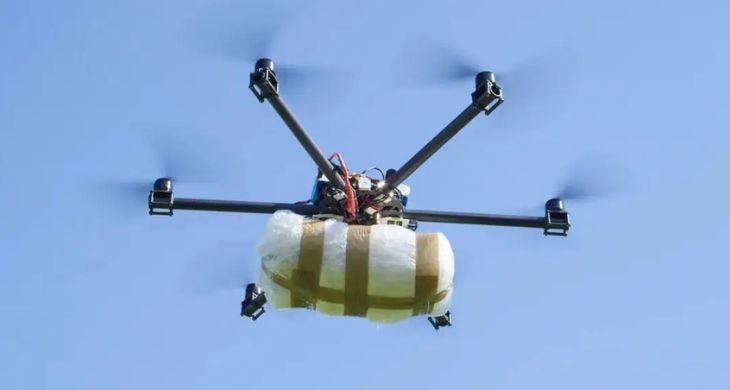
The Union Française de l’Hélicoptère/French Helicopter Association (UFH) has joined with the the Syndicat National des Exploitants d’Hélicoptères/Commercial Helicopter Operator’s Association in once again voicing their growing concerns about unregulated UAV traffic. Notably the associations are troubled by an apparent lack of concern the European Commission has shown for increasing numbers of rogue operators flying drones larger than 250g.
They point to the contradiction that while the Commission has acknowledged the risk to flight safety in its action plan published in February it has done little to present a Europe wide solution that with either remove or mitigate the threat preferring to delegate the task to national authorities.
UFH and SNEH argue that the safe blending of autonomous and remotely piloted aircraft is a complex challenge that demands a consistent approach across European airspace and the current strategy and leaving it to memeber states to regulate which its says leads to a ‘disjointed approach’ with the Commission unable to define effective procedures based on technical solutions, the Commission is limiting itself to establishing the framework for coordinating drone-integrated air traffic, while leaving it to each Member State to determine how to comply. Even so, it is not the responsibly operated UAVs that present the problem but rather those disregarding the statutes.
To give a picture of the scale of the problem the UFH & SNEH point to ICAO estimates which show that globally at least 25% of UAVs weighing more than 250g are operated in a manner that is not compliant with regulations. UFH suspects that in industrialised nations the figure is rather higher pointing to the FAA presentation at VERTICON earlier this year which said that around 60% of UAVs >250g are non-compliant. EASA has not released similar data for Europe something which the two associations say is unsurprising given the lack of coordination between national authorities.
The expectation though is that the situation in Europe is no better than in the United States pointing to the increase in rule violations in France is even higher than in the US. Indeed, the frequency of illegal drone flights dropping contraband into a prison outside Strasbourg has meant that night HEMS operations into the city’s nearby Hautepierre Hospital have had to be abandoned. Which UFH and SNEL argue is going to have an impact on positive outcomes for critically injured or ill patients.
The fear is that like so many cases in the past regulators and governments will remain idle in their response until an event sufficiently shocking or tragic finally galvanises them into action.
Image:Tyto Robotics
