


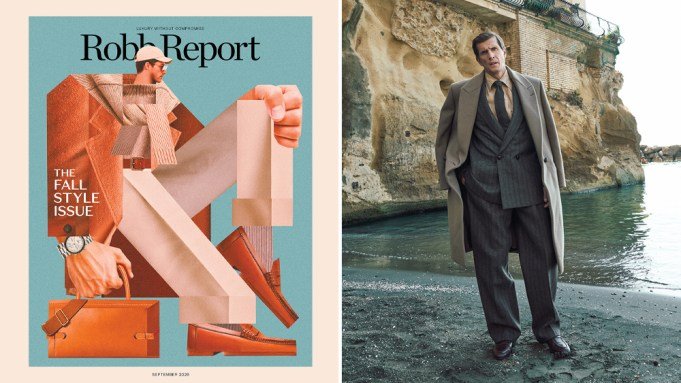
“You’ve been wearing more suits lately,” a colleague said to me a couple of years ago. He seemed both impressed and puzzled.
He wasn’t wrong. Until then, on most days in the office, I had dressed in what could generously be referred to as middle-aged skater: plaid overskirt, white tee, relaxed trousers, and sneakers. On repeat. To be clear, I still sometimes do. But I had started reaching for suits more often.
I told him it was simply another uniform. You put it on and don’t have to spend much time wondering what goes with what. It was convenient and partly true. It wasn’t the whole truth.
Perhaps I had reached the age when men start looking to tailoring for a little assistance. But putting on a suit also felt like a small, private act of rebellion—mostly against my own habits. After years of going casual by reflex, gussying up felt deliberate.
Maybe that’s my California roots showing. Where I grew up, a clean T-shirt counted as formalwear, and board shorts obeyed neither season not occasion. So I had a quiet aha moment while reading “Measure of a Nation,” Eric Twardzik’s feature on the rise of American tailoring. Ryan Devens, founder of San Francisco’s Tailors’ Keep, call the suit “a rebellious garment.”
I know what he means. In the land of the endless casual Friday, a suit can seem almost subversive. It’s no longer office furniture. It can be swaggering, louche, theatrical—or simply an excuse to wear a very good jacket on an otherwise unremarkable Tuesday.
It’s also why American tailoring feels especially interesting right now. Men who have no professional reason to own a suit are buying them anyway. It has become part of the stylish guy’s vocabulary, and the options crafted right here in the U.S. of A. have never been better.
The makers in our story don’t share a house style. J. Mueser blends Neapolitan softness with techniques from around the world and a sensibility that could only have come from downtown New York. Haitch takes a more architectural approach, with longer jackets and strong, square shoulders. Angel Ramos channels Southern Italian ease and Golden Age Hollywood bravado. Richfresh, meanwhile, applies the language of bespoke to color-blocked tracksuits made from scuba fabric.
American menswear has never been precious about where its ideas come from. Neither are these tailors. They do not agree on what an American suit should look like—which may be the most American thing about them.
Of course, the freedom to dress up on your own terms isn’t uniquely American. Our fall fashion portfolio takes us to Naples, where the relaxed silhouette has been refined for generations. The clothes have an easy elegance without looking careless, and the Neapolitan influence now shapes wardrobes worldwide.
Elsewhere, the jacket gives up top billing altogether. We highlight sweaters that refuse to play backup. Designers from Louis Vuitton to Kiton to Canali are blowing up Fair Isle, Nordic, and other traditional patterns with bold graphics and color. The result is knitwear built to steal the show.
Enjoy the issue.
Authors

John Vorwald

