


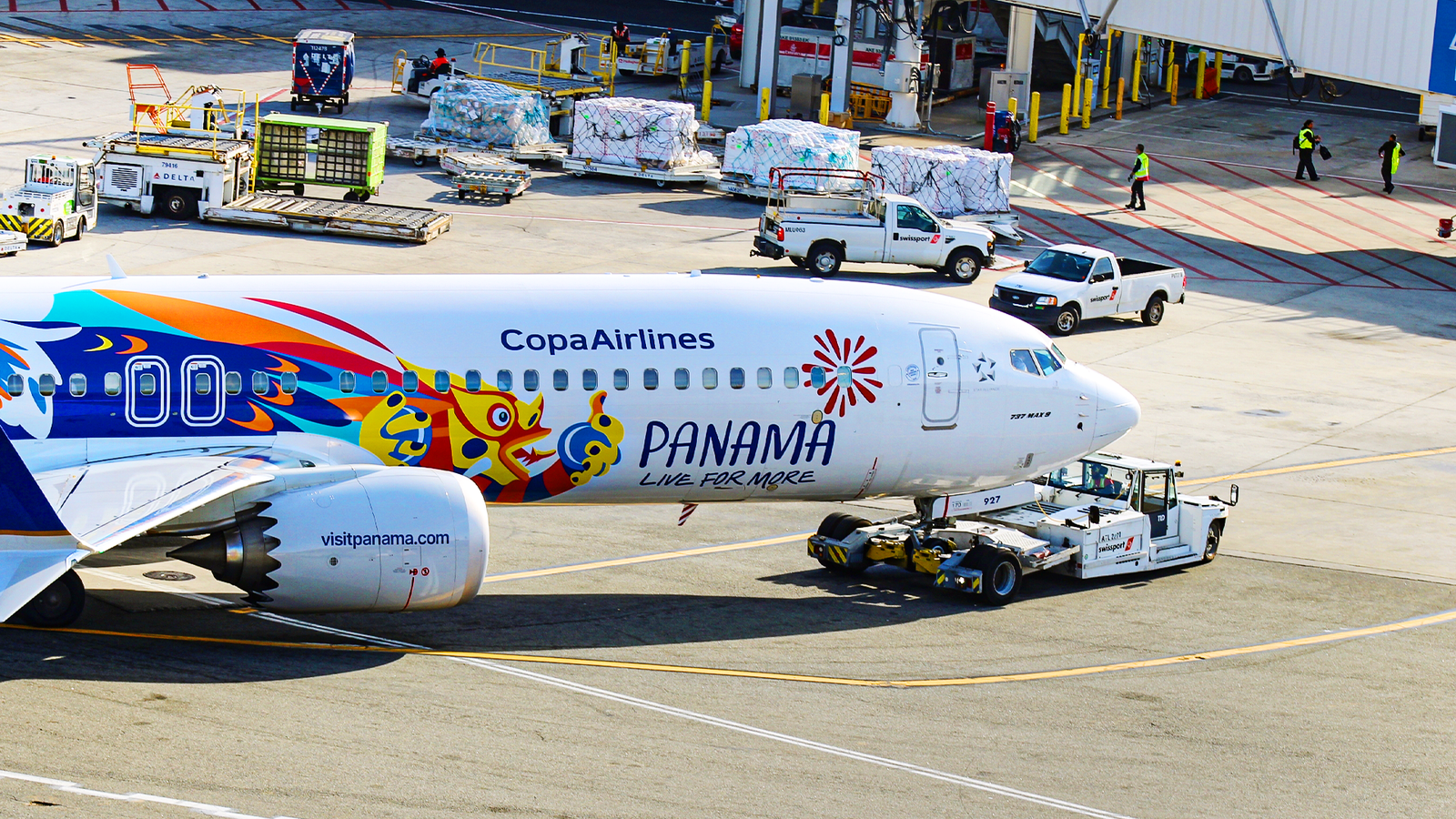
Despite operating an extensive international network throughout the Americas, Copa Airlines does not have a single widebody aircraft in its fleet. That has hardly prevented the Panamanian flag carrier from becoming one of the world’s most consistently profitable airlines. In the 2025 financial year, Copa achieved an operating margin of 22.6% and, excluding the pandemic years, has delivered industry-leading profit margins for almost two decades.
This performance is particularly notable in a Latin American aviation market that has seen numerous airline bankruptcies and restructurings in recent years. While adding widebody aircraft could allow the Star Alliance member to expand deeper into long-haul markets, including Europe, doing so would fundamentally change the economics of the business model that has made Copa so successful.
Why Panama Lets Copa Airlines Avoid Widebodies

The carrier’s hub at Panama City’s Tocumen International Airport (PTY) is strategically located near the center of the Americas. This makes its hub attractive for connections between North America, South America, Central America, and the Caribbean. The distance between Panama City and most destinations in the Americas is comfortably within the range of the Boeing 737 family, avoiding the need for complex and expensive widebody operations.
While Copa was already operating seven-hour flights with older Boeing 737-800s more than a decade ago, the introduction of the Boeing 737 MAX has improved the economics of these longer routes. Flights between Panama City and destinations such as  San Francisco International Airport (SFO) or Buenos Aires Ezeiza International Airport (EZE) can now be operated more efficiently, with fewer potential payload limitations and lower fuel consumption.
The MAX has also allowed Copa to expand its narrowbody network into markets that might previously have been harder to justify economically. This is particularly important for longer routes to secondary cities, where demand may be sufficient to support a 737 but not necessarily a much larger widebody aircraft. Rather than using additional range to build a traditional long-haul network, Copa can therefore use it to add more relatively thin destinations while retaining the frequency and aircraft size that suit its connecting model.
However, geography and range only explain why Copa can avoid widebody aircraft. The bigger reason the airline has little incentive to introduce them is the cost advantage of operating almost its entire network with a single aircraft family.
Copa’s Boeing 737 Fleet Keeps Costs Low

As of writing, Copa Airlines operates a fleet of around 120 Boeing 737 family aircraft, giving the carrier a level of fleet commonality that is unusual for a full-service network airline of its size. Earlier this year, Copa also placed an order for up to 60 additional Boeing 737 MAX aircraft to support growth and modernize the fleet over the next decade. This common fleet is crucial to Copa’s disciplined approach toward cost management.
Operating only one aircraft family simplifies pilot training, maintenance, crew scheduling, and aircraft utilization, while also giving network management more flexibility to move capacity between routes. The complexity of introducing widebody aircraft such as the Boeing 787 or Airbus A330 would reduce these scale benefits and change Copa’s fleet economics and ultimately its cost base.
These advantages are reflected in the airline’s unit costs. In the 2025 financial year, Copa reported a Cost per Available Seat Mile (CASM), excluding fuel, of just $0.058. This is closer to the cost base typically associated with a low-cost operator than a traditional full-service network carrier. For comparison,  Aeromexico‘s equivalent cost exceeded $0.09 per available seat mile, while LATAM Airlines and Azul both reported figures of around $0.071.
Copa Combines Low Costs With Network-Airline Revenue

The more important point, however, is that Copa has not had to sacrifice network-airline revenues to achieve its relatively low cost base. In FY2025, the carrier reported Revenue per Available Seat Mile (RASM) of $0.112, leaving a particularly wide spread between unit revenues and controllable unit costs. This is partly because Copa does not operate its Boeing 737 fleet like a traditional point-to-point low-cost carrier. Instead, Panama City functions as a highly connected hub, where each arriving flight can feed passengers onto numerous onward departures.
Many of Copa’s largest markets also support relatively high frequencies. Rather than concentrating demand onto fewer flights using larger aircraft, the airline can operate multiple narrowbody departures throughout the day and align them with different connection banks at Tocumen. A passenger arriving from a major South American city can therefore connect to destinations across Central America, the Caribbean, Mexico, or the US. Each additional frequency consequently does more than add capacity between Panama and one destination, as it can also increase the number of viable origin-and-destination combinations across Copa’s wider network.
Airline | FY2025 CASM ex-fuel | FY2025 RASM |
|---|---|---|
Copa Holdings | $0.058 | $0.112 |
Abra Group | $0.068 | $0.109 |
Azul | $0.071 | $0.124 |
LATAM Airlines | $0.071 | $0.119 |
Aeromexico | $0.093 | $0.150 |
Note: Figures have been converted into US dollars per available seat mile. Metrics are not perfectly comparable, as Abra and LATAM report adjusted passenger-specific unit costs and revenues, while the other airlines report broader consolidated measures. | ||
The same network structure also allows Copa to combine passengers traveling between numerous thinner city pairs onto the same flights through Panama. Routes that might struggle to survive on local demand alone can therefore remain viable by feeding traffic into the wider hub. At the same time, passengers traveling between some of these markets may have relatively few convenient alternatives, particularly when competing itineraries involve longer routings or additional connections.
Star Alliance membership further strengthens this model by extending Copa’s connectivity beyond its own network. Through codeshare and alliance partners, the airline can feed passengers onto destinations it does not serve itself, while simultaneously receiving additional traffic onto its own flights.
The resulting strong economics are visible in Copa’s FY2025 figures. Its RASM of $0.112 was slightly above Abra Group’s $0.109 and only modestly below LATAM Airlines’ $0.119, despite Copa operating at a substantially lower ex-fuel cost base than either group. The airline’s model therefore depends heavily on frequency, connectivity, and keeping aircraft appropriately sized for individual departures.
Introducing much larger widebody aircraft could therefore work against each of these advantages, even if they would open destinations beyond the range of Copa’s existing narrowbody fleet.
Why Copa Never Needed Latin America’s Airline Reset

Copa’s strong profitability predates the wider improvement seen across Latin American aviation. Excluding the pandemic years, the airline has delivered industry-leading margins for almost two decades. One notable exception came in 2015, when economic instability in Venezuela and Brazil reduced air travel demand across the region.
Since 2020, many of Copa’s largest competitors, including LATAM Airlines, Avianca, and Aeromexico, have all entered Chapter 11 bankruptcy protection. This has allowed them to renegotiate aircraft leases, reduce debt, return inefficient aircraft, and reconsider parts of their wider business models.
Avianca subsequently moved closer to a low-cost model by increasing seat density, simplifying its onboard product, and expanding ancillary revenue, while LATAM retained a more traditional full-service strategy, but emerged with a lower cost base and a more efficient balance sheet.
Copa never required the same financial reset. Its relatively simple Boeing 737 operation, disciplined approach to capacity, and highly connected Panama City hub were already embedded in the business model. However, the airline also benefits from another structural advantage that many of its regional competitors do not have.
Panama’s Dollarized Economy Gives Copa Another Advantage

Panama’s dollarized economy reduces one of the major financial risks faced by airlines elsewhere in Latin America. Many large aviation expenses, including fuel, aircraft leases, maintenance, and spare parts, are priced directly or indirectly in US dollars. For airlines earning much of their revenue in weaker local currencies, depreciation can therefore increase costs at the same time as inflation and weaker economic conditions reduce passenger purchasing power. Copa is considerably less exposed to this mismatch.
The airline also operates in a country that has historically treated aviation and connectivity as an important part of its wider economic model. Panama continues to promote itself as a regional transportation hub, while its government actively negotiates bilateral air service agreements and invests in aviation infrastructure.
The country’s tax structure is also relatively compatible with Copa’s connecting model. According to Copa, Panama does not tax revenues from foreign operations, and instead bases airline income tax on traffic with an origin or final destination in the country. This matters for an airline carrying large numbers of passengers between foreign markets through Panama City.
That does not mean Copa operates free of taxes or government charges. However, Panama’s combination of a dollarized economy, supportive aviation policy, and economic interest in maintaining Panama City Tocumen’s position as a major connecting hub between North and South America creates a favorable environment for the airline.
Together with Copa’s low-cost narrowbody operation, these advantages help explain how it achieved a 22.6% operating margin and an 18.6% net margin in 2025. The remaining question is whether any long-haul opportunity could become valuable enough to justify changing this model.
What Would Have To Change For Copa To Add Widebodies?

Copa could theoretically use aircraft such as the Boeing 787 or Airbus A330 to reach markets beyond the practical range of its 737 fleet. However, additional range alone would not make widebodies attractive. A second aircraft family would add new pilot, maintenance, crew scheduling, and spare-parts requirements to an operation built largely around commonality.
Widebodies would also change the economics of Copa’s hub as the airline currently benefits from operating relatively frequent narrowbody departures that can be aligned with different connection banks throughout the day. Larger aircraft could reduce unit costs on sufficiently dense routes, but they would also concentrate more capacity onto individual departures.
For widebodies to make sense, Copa would therefore need long-haul markets with enough demand and revenue potential to outweigh both the added complexity and the loss of some fleet flexibility. Its order for up to 60 additional Boeing 737 MAX aircraft suggests that, for now, the airline still sees considerable room to grow within the model it already knows.
