


Air cargo demand in the central Asia region has been on the rise in recent years, but building charter operations to meet the growing number of infrastructure projects does have its challenges.
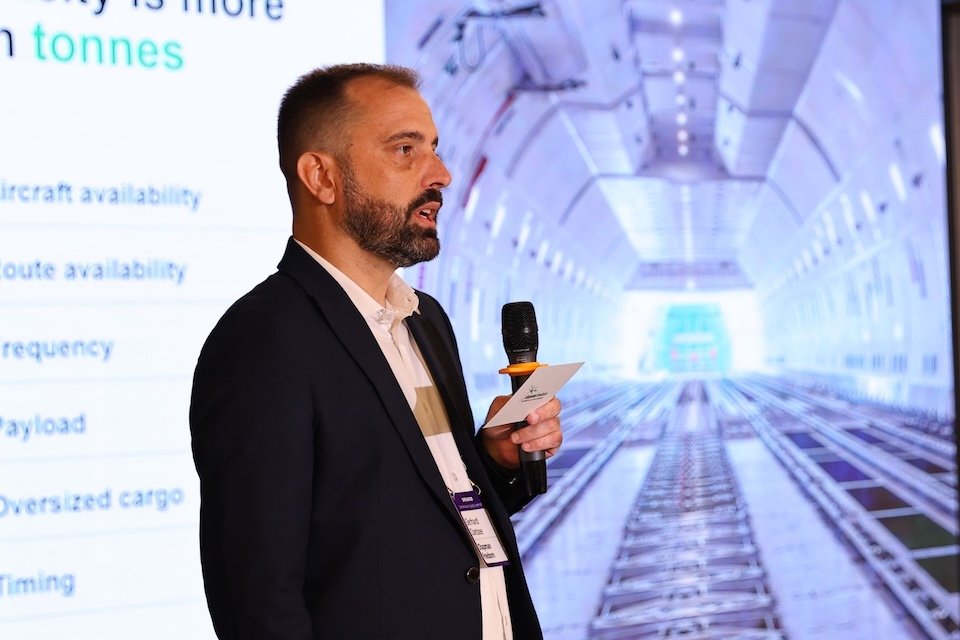
Speaking at the Central Asia Air Cargo Summit, Chapman Freeborn vice president of cargo for the India, Middle East, Africa region Gerhard Coetzee highlighted the speed of demand growth in the region.
He said that the region needs to invest around $33bn annually in infrastructure projects while trade through the so-called Middle Corridor is set to triple by 2030.
Growth in mining, energy, infrastructure and manufacturing is also creating more demand for heavy, oversized, time-critical and project cargo, he added.
“The important point is that cargo demand is increasingly being generated inside Central Asia – rather than simply passing through it,” said Coetzee.
“Every one of these sectors creates a different type of cargo requirement, and not all of that cargo can move efficiently through a scheduled network.”
Coetzee added that while connectivity to and from central Asia is improving, with China increasingly connected with Kazakhstan, Uzbekistan and Kyrgyzstan, and scheduled links with Europe are also developing, that does not always mean the right type of capacity is available.
He said this is particularly important for project cargo as an aircraft may have sufficient available payload, but the cargo may be too large for the aircraft type, the required route may not be available at the right time, or the airports involved may not have the infrastructure to handle the movement.
“There is an air cargo network, but it isn’t necessarily designed around the cargo that these new industries are generating,” Coetzee said.
He explained that a scheduled service may work well for standard freight, but a heavy industrial component moving to a remote destination against a project deadline creates a different requirement altogether.
There are also airport limitations when it comes to handling larger aircraft such as the Boeing 747s, Boeing 777s and AN-134s.
Cargo such as a 70-tonne transformer or 16-metre pipes requires suitable loading equipment, runway capability and specialist handling.
Permits and regulatory approvals add another layer, while winter weather and de-icing can affect both timing and operating cost, he said.
Coetzee concluded that as Central Asia becomes more integrated into global supply chains, the challenge will not simply be how much air cargo capacity exists in the region – it will be whether companies can access the right capacity, in the right place and at the point when their project requires it.
The growth of demand levels has been one of the major developments this year as cargo airlines have been looking to alternatives to the Middle East due to ongoing conflicts in the region.
Sources have also suggested that Chinese e-commerce platforms are utilising the region to move some shipments to the US.
