


New image-based questions will require applicants to interpret aviation charts, while existing Part 107 regulations remain unchanged.
The Federal Aviation Administration (FAA) is updating its Part 107 remote pilot knowledge test beginning October 26, 2026. The changes will introduce image-based questions using aviation charts that do not appear in the existing testing supplements.
The update affects the Unmanned Aircraft General-Small (UAG) knowledge test, which applicants take to earn their initial remote pilot certification.
According to the FAA’s August 2026 Airman Testing Community Advisory, the agency is working with testing provider PSI to incorporate images directly into exam questions.
What Is Changing?
Beginning October 26, applicants may encounter questions featuring updated aviation chart images that are not included in the printed testing supplement.
The FAA provides two sample questions in its advisory. One asks applicants to identify the airspace around an airport and determine whether drone operations require air traffic control authorization. Another asks applicants to identify the correct airport communications frequency.
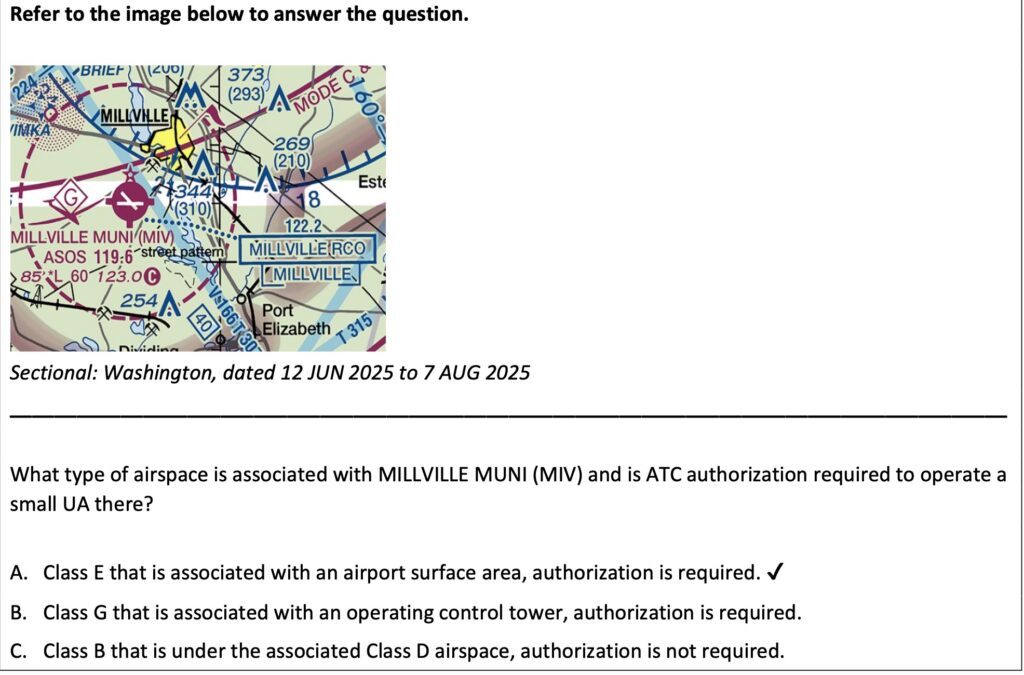
The change means applicants must be prepared to interpret unfamiliar chart excerpts rather than rely on memorized figures from existing study materials.
The FAA has not announced when it will remove printed testing supplements. Applicants will continue to have access to them until that change takes effect.
The update does not change Part 107 operating regulations or introduce new certification requirements.
Resources for Applicants
The FAA recommends that applicants review sample questions through its official testing provider, PSI, to become familiar with the updated format.
Independent training provider Fly107Prep has also published a free explanation of the October 26 changes, along with study tools focused on interpreting aviation charts. Fly107Prep offers both free resources and a paid test preparation app.
The updated format is part of a broader FAA initiative to modernize airman knowledge testing. For prospective drone pilots, the underlying knowledge requirements remain the same, but the way that knowledge is tested is changing.
Read more:

Miriam McNabb is the Editor-in-Chief of DRONELIFE and CEO of JobForDrones, a professional drone services marketplace, and a fascinated observer of the emerging drone industry and the regulatory environment for drones. Miriam has penned over 3,000 articles focused on the commercial drone space and is an international speaker and recognized figure in the industry. Miriam has a degree from the University of Chicago and over 20 years of experience in high tech sales and marketing for new technologies.
For drone industry consulting or writing, Email Miriam.
TWITTER:@spaldingbarker
Subscribe to DroneLife here.
