


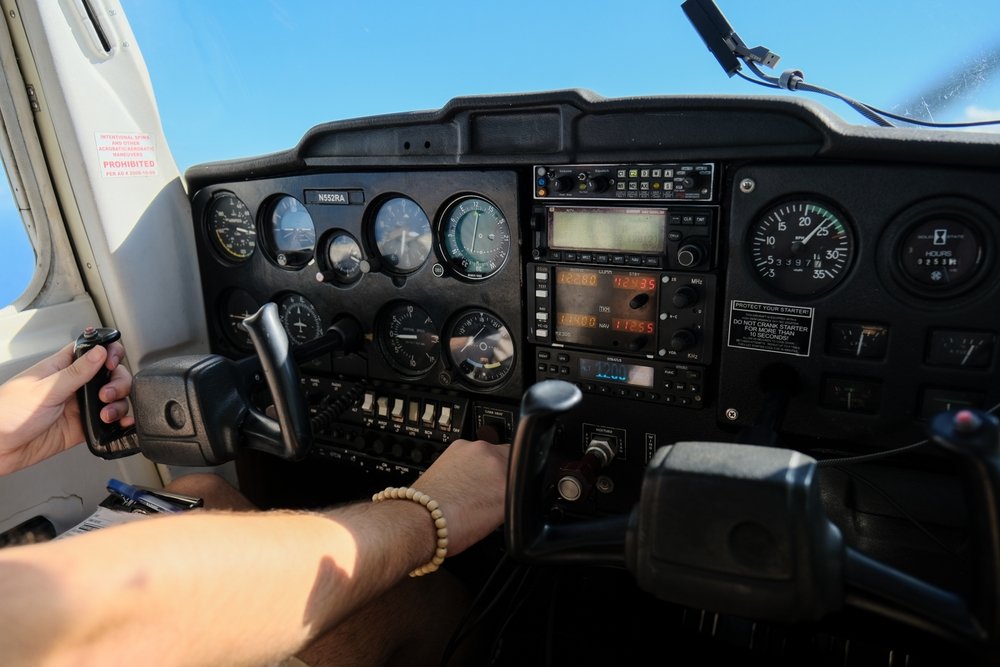
Serving as a chief flight instructor, I often receive questions about how to handle and teach different types of students. Every student is different. Male or female, young or adult, student pilot or commercial pilot, we all may struggle with something during training. Sometimes everything goes as expected. Sometimes it does not.
Recently, one of our non-senior flight instructors came to me with a concern about a student pilot who was afraid to perform stall maneuvers. After a few minutes of conversation, I realized that the instructor himself was also uncomfortable trusting the student to bring a plane into a full stall. That is not uncommon. That conversation immediately reminded me of something that happened to me several years ago.
It was 2020. I had recently earned my flight instructor certificate and started working as a CFI at a Part 141 flight school. I had already worked with several students and felt comfortable teaching stalls in both the Cessna 152 and 172, in both takeoff and landing configuration. I was becoming comfortable flying with student pilots and confident in my ability as an instructor. One student brought me back down to earth. I remember a clear, sunny day with calm weather and a beautiful Florida view outside.
My student and I were flying to the practice area to work on private pilot maneuvers, including slow flight and stalls. It was not the student’s first time performing these maneuvers, and he had previously demonstrated good performance. He was a little shy and did not usually share his concerns or show much fear. Based on how he handled the airplane and followed my instructions, I had no reason to expect that anything unusual was going to happen.
The training plan was simple; climb to 3,000 feet MSL and begin with slow flight. The student completed the pre-maneuver checklist, identified our position and altitude, reviewed airspeed and emergency landing options, and announced our position on the frequency. I listened to him and watched his actions. After establishing slow flight and maintaining the required standards, I instructed him that the maneuver was complete and it was time to transition into a power-off stall.
We were already in the landing configuration, which is required for a power-off stall, and he completed the maneuver within private pilot standards. From the instructor’s seat, I was watching a student doing exactly what a good student should do. He followed the procedures, understood my instructions, and demonstrated that he knew the maneuver.
We recovered and continued with a power-on stall. The student had also performed this maneuver several times and was familiar with the procedure. There was no rush. We followed the checklist, cleared the area, and prepared for the maneuver. The student established the clear configuration and began reducing airspeed before applying power and increasing pitch for the stall.
A Cessna 152 can be noticeably more sensitive during stalls than a Cessna 172, particularly when directional control is not maintained. For a private pilot, the maneuver requires recognition and recovery from a full stall. As our airspeed decreased, we heard the stall warning horn just above Vs1. I knew the student understood that he was expected to continue until the airplane actually stalled before beginning the recovery. Up to that moment, everything looked normal.
Then it happened. As the airplane stalled, the left wing dropped and the airplane began rolling and yawing rapidly to the left. The first thing I noticed was the student’s reaction. Instead of using proper rudder and reducing the angle of attack, he moved the yoke aggressively to the right. That control input lowered the left aileron, increasing the angle of attack on an already stalled wing and making the situation worse. The airplane continued rolling and yawing toward an incipient spin. I immediately told him to neutralize the ailerons, lower the nose, and apply right rudder. He did not respond.
Within a second or two, I called loudly: “I have the controls!”
Normally, that would be the end of the story. The instructor takes control, recovers the airplane, and the maneuver is considered unsatisfactory. But this time, I did not have the controls. I tried to neutralize the ailerons, but the yoke would barely move. I tried to push the nose down, but I could not move the controls normally. I tried to apply right rudder, but my student’s body was interfering with my ability to use the controls.
That was when I realized what was happening. He had completely frozen.
His hands were locked on the yoke. His body was tense. He was no longer reacting to my instructions. Fear had taken over, and for those few seconds, he was physically preventing me from recovering the airplane. Aviation often requires pilots to think carefully before making a decision, especially when safety is involved. But some situations do not give us much time to think. Flight training, in particular, can require an instructor to make an immediate and rational decision.
At that moment, mine was simple. I physically pulled the student back by his jacket and forced him to release the controls. I did not know whether it would work. My only thought was that I needed to break his reaction to the situation long enough to regain control of the airplane. Fortunately, it worked. I recovered the airplane and returned us to normal flight.
I did not allow the student to continue flying back to the airport. For a few moments, I was barely able to get him to talk to me. After landing and securing the airplane, we sat down for a detailed briefing. I started asking questions, trying to understand what had happened and what I could do differently to prevent the same situation in the future.
His answer was simple. He was afraid of going into a spin.
I asked whether he remembered what a spin was and whether he knew the recovery procedure. He gave me the correct answer without hesitation. That surprised me. He knew the procedure. He understood the aerodynamics. He had performed stalls before. From a knowledge standpoint, he knew exactly what he was supposed to do. But knowing something and being prepared to react to it are not always the same thing.
That was one of my first important lessons as a flight instructor. Human factors can be unpredictable. We cannot always know how another person will react when fear, stress, or surprise suddenly appears. This is especially true with low-hours student pilots. As instructors, we spend a great deal of time teaching procedures, checklists, maneuvers, and standards.
But before asking a student to demonstrate something that may create fear or uncertainty, we also need to understand how that student feels about it. Explain what will happen. Demonstrate it. Discuss what can go wrong and how the airplane will respond. Encourage the student to ask questions, including those they may be embarrassed to ask.
And even after a student has performed a maneuver several times, never assume that confidence and understanding are the same thing.
Today, when an instructor asks me how to work with a student who is afraid of stalls, I remember that flight at 3,000 feet. I no longer start only with the maneuver. I start by making sure the student understands what can happen, and why.
