


I own four corduroy suits—a fact, I realize, that suggests more pathos than taste. There’s the mustard Alex Mill, the gray Ralph Lauren, the black J. Mueser, and a mauve Todd Snyder, an impulse buy that has yet to leave the closet. I’d love to tell you that each serves a discrete purpose in my wardrobe, but that would be a lie.
It began almost by accident—with a pair of wide-wale trousers. I liked them enough that, as an afterthought, I bought the matching jacket. Worn together, they felt complete without being especially formal. Corduroy, it seemed, suited me. The fact that people kept commenting on it—friends, colleagues, strangers—didn’t hurt. So, I bought another. Then another. By the time I ordered the black made-to-measure number, what had started as an offhand purchase had become a running joke in our office. But make no mistake. I love them. All of them.
It’s a strange fixation. After all, corduroy has a decidedly workaday history. Not so long ago, it was the stuff of schoolmasters, suburban dads, and thrift stores. Robin Williams wore it as the unorthodox poetry teacher in Dead Poets Society; Donald Sutherland donned his own wide-wale version as the burnout professor in Animal House. One inspired young minds. The other smoked weed with his students. Corduroy, apparently, could outfit the full range of academic achievement. My own first memories of it come from the back-to-school racks at the mall.
If those references sound old, there’s a reason. Corduroy’s dusty reputation still lingers, but the material itself has become more supple, richer, and far more sophisticated in recent years. Corduroy has grown up—and it has gone upscale.
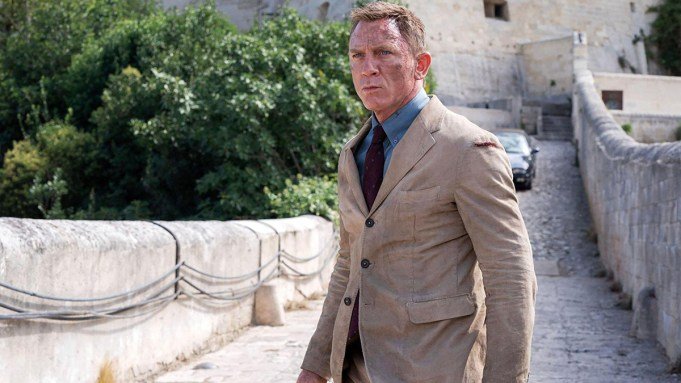
Last January, at Pitti Uomo in Florence and Men’s fashion week in Milan, it was everywhere—and I’m not talking about leisure trousers with an elastic waist. Massimo Alba, Brett Johnson, Cesare Attolini, and Brunello Cucinelli all showcased it in tailored form. At Cucinelli, a designer walked us through the intricate construction of a fine-wale double-breasted gray suit whose ribs appeared in two subtly different shades. I listened with the solemn attention of a man already building a case for a fifth. Had it been for sale at the time, I might have snapped it up on the spot. Alba, for his part, has been making the case for tailoring in the material for years. In No Time to Die, Daniel Craig’s 007 (pictured above) wears one of the designer’s corduroy suits during the film’s opening chase. The fabric, it turns out, looks just as dashing while evading assassins.
Brunello Cucinelli’s frosted cotton corduroy one-and-a-half breasted Tailor blazer with metal buttons, $6,150
Courtesy of Brunello Cucinelli
So what, exactly, makes a corduroy suit so irresistible?
The modern version is far more sumptuous than the hard-wearing trousers of our youth—an everyman’s velvet, rich but rarely showy. It can take bold color, but the true pleasure lies in that striated cloth. The ribs don’t announce themselves like pinstripes. They emerge gradually, adding depth without demanding attention. It’s the same satisfaction a watch enthusiast might find in a linen-dial Datejust: a surface that appears plain at first glance but reveals itself upon closer inspection.
The real fun, though, begins when corduroy is cut as a suit. It ought to feel like too much. Instead, the texture softens the formality. You get tailoring’s structure without looking like a company man. It allows for personal flourishes, too: Dress it up with a tie or a cashmere sweater, or play it down with a simple sweatshirt. I wear mine with everything from derbies to combat boots—not something I can say about all my suits.
That tension is the draw: the collision of the democratic with the rarefied. Corduroy is sturdy yet soft, familiar but just eccentric enough. If a suit traditionally signals conformity and respectability, corduroy gives it a louche edge. Even at its most refined, it never feels too precious—which may explain why an old punk like me feels so at home in it. I like to think that if Joe Strummer had a chosen suit, it might have looked something like my black J. Mueser. Complete control, with a little give.

J. Mueser’s black corduroy single-breasted jacket, part of Waverly suit, $2,050
Courtesy of J. Mueser
Call it the anti-suit suit, then. It can accommodate a tie, oxfords, and crisp, worsted formality, but it needs none of them—not even an occasion.
The problem with this argument is that it gives me permission to buy more. Once a corduroy suit has been declared practical, quietly subversive, and fictitiously endorsed by a punk legend, restraint doesn’t come easily. I can already hear myself explaining that the next one would fill a very important gap in my closet—olive, perhaps, or tobacco, with a wale width I really need.
For now, the mauve suit stays where it is, awaiting its debut. I claim to be saving it for the right moment, though the point of a corduroy suit is that it doesn’t need one. More likely, I’m waiting to see whether I can wear mauve without looking like I’ve finally become an eccentric professor with strong opinions about hand-blocked wallpaper and Japanese ceramics. We’ll see if that day ever arrives.
Then again, maybe that’s the point. Corduroy lets me dress up while maintaining plausible deniability. I might be wearing a suit, but I can still pretend, convincingly, that I’ve rejected the whole enterprise. That’s my kind of soft power.
Top: With help from Massimo Alba, Daniel Craig’s 007 proved that a corduroy suit could look dashing even while fleeing assassins.
Authors

John Vorwald

