


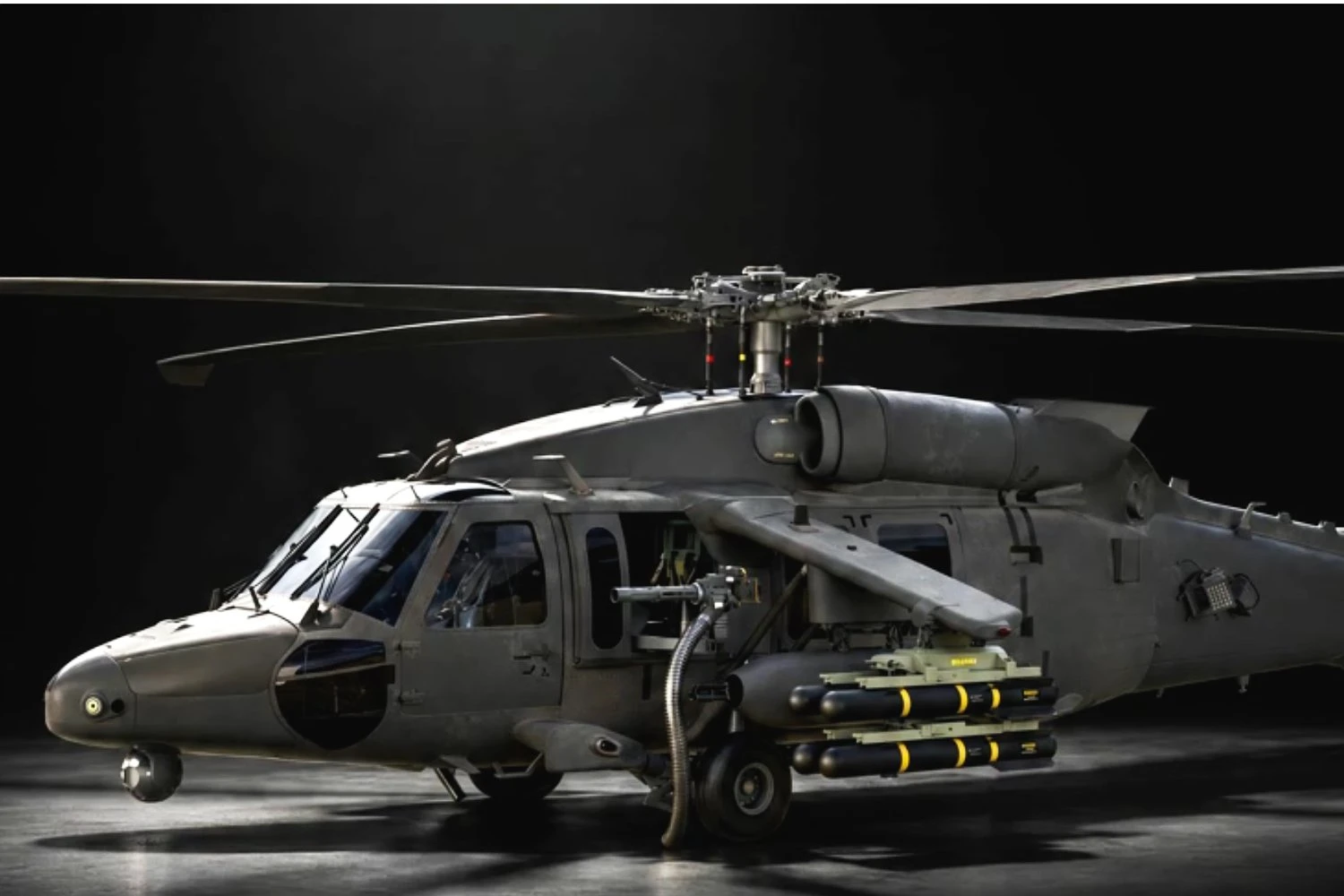
Sikorsky has detailed a new configuration of the UH-60 Black Hawk military helicopter designed to increase payload, range and mission flexibility while introducing autonomous flight capabilities and a digital architecture intended to simplify future upgrades.
Provisionally called Black Hawk Next, the configuration was presented during a media event held in connection with the Association of the United States Army (AUSA) annual meeting in Washington, D.C., on October 12.
The manufacturer is developing the modernization around four main areas: more powerful engines, structural modifications, increased autonomy and a new digital backbone. The changes are expected to be available both on newly built helicopters and as upgrades for aircraft already in service.
Sikorsky says the combined improvements would provide at least 1,000 lb (453 kg) of additional payload, increase range by more than 100 nautical miles (185 km) and add approximately 45 minutes of time on station.
Follow Air Data News: WhatsApp | Instagram | LinkedIn | Twitter | Facebook
The concept builds on modernization work previously disclosed by the company, but the latest presentation provided additional details about the proposed configuration and its expected performance.
More power and structural changes
One of the most significant changes is the installation of GE Aerospace T901 Improved Turbine Engines (ITE), replacing the General Electric T700 engines currently used by the Black Hawk.
Each T901 produces approximately 3,000 shp, compared with about 2,000 shp from the T700, providing 50% more power.
The U.S. Army and Sikorsky have been flight-testing the engine aboard a UH-60 since 2025. The campaign has accumulated more than 70 flight hours, including operations at maximum gross weight and high density altitudes.
A second test helicopter is being added to the program. Upcoming trials are expected to include high-altitude operations in Colorado and cold-weather testing in Fairbanks, Alaska, with the current flight-test campaign scheduled to conclude during the second half of 2027.
Sikorsky says the additional power will allow the Black Hawk to exploit structural changes intended to increase its useful load rather than simply providing additional engine margin.
Black Hawk Next also features an extended and modular nose designed to accommodate additional sensors and avionics. The company is working on increasing internal fuel capacity without reducing the volume available inside the cabin.
The helicopter would also receive external stub wings capable of carrying weapons and launched effects, including uncrewed systems intended for reconnaissance, strike, communications and other missions.
Autonomous Black Hawk
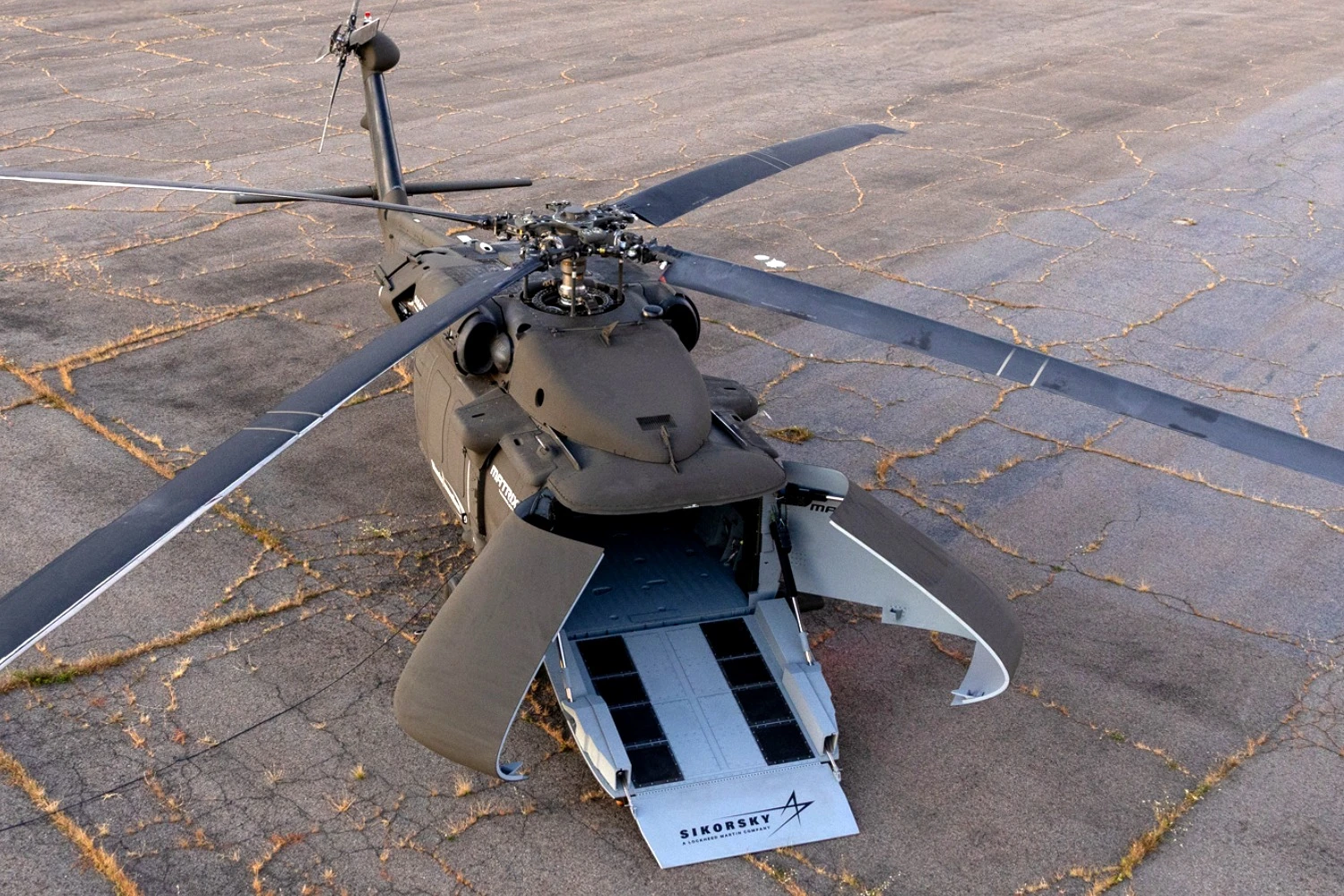
Autonomy forms another major element of the Black Hawk Next concept. Sikorsky plans to integrate its MATRIX autonomous flight technology into the configuration.
The system uses fly-by-wire flight controls and onboard computing to allow the helicopter to perform missions with reduced crew requirements or without pilots aboard.
Sikorsky has already demonstrated autonomous operations with modified UH-60s and is delivering four MATRIX-equipped UH-60MX helicopters to the U.S. Army. The service plans to use the aircraft to evaluate operational concepts and develop procedures for employing autonomous rotorcraft.
The technology is separate from Sikorsky’s S-70UAS U-Hawk demonstrator, which removes the conventional cockpit entirely to create additional cargo space. Black Hawk Next retains the conventional helicopter configuration while incorporating autonomous capabilities.
Sikorsky also plans to introduce a new digital architecture intended to make the integration of sensors, weapons and software easier throughout the aircraft’s service life.
The U.S. Army operates approximately 2,300 Black Hawks, meaning any large-scale introduction of the new configuration would take place progressively. The service is simultaneously introducing the Bell MV-75 tiltrotor for missions currently performed by the UH-60, but plans to retain a substantial Black Hawk fleet for decades.
Sikorsky has said its modernization strategy is intended to keep the Black Hawk operational into the 2070s, more than a century after the first prototype of the helicopter flew in 1974.
