


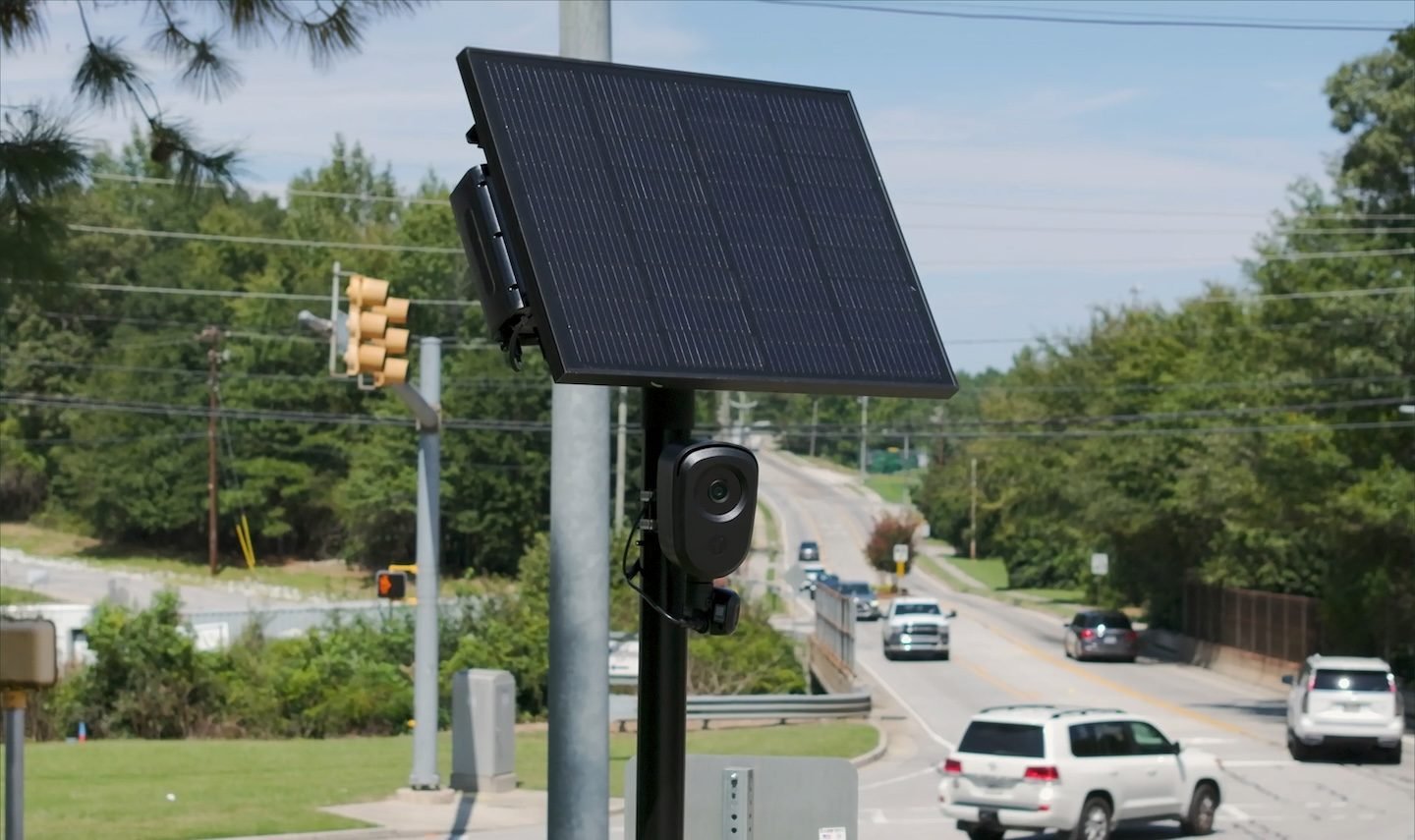
Proposed federal legislation would limit government use of automatic license plate readers and place new conditions on federal funding for state and local agencies.
Legislation introduced in the U.S. House of Representatives would restrict government use of automatic license plate readers (ALPRs), including systems that collect data using drones.
Rep. Alexandria Ocasio-Cortez (D-NY) introduced H.R. 10691, the Ban Flock Act, on October 1, 2026. The bill would restrict federal agencies from using ALPR systems or accessing captured license plate data without specific congressional authorization. It would also impose conditions on federal funding for state and local governments.
How the Bill Applies to Drones
Section 2 defines “captured plate data” to include information produced by or derived from:
“fixed cameras, mobile readers, police vehicles, trailers, drones, tolling infrastructure, parking systems, private security networks, homeowners’ associations, commercial parking operators, and data brokers.”
The definition covers license plate numbers, images, locations, timestamps, vehicle characteristics, and related information.
Under Section 3, federal agencies would be prohibited from acquiring, possessing, accessing, or using ALPR systems and captured plate data, subject to exceptions for activities specifically authorized by Congress and certain toll collection uses.
Section 4 would condition federal financial assistance from five departments, including Justice, Transportation, and Homeland Security, on state and local governments adopting comparable ALPR restrictions.
Section 5 would prohibit using federal funds to purchase, operate, or maintain ALPR systems or obtain their data, subject to specified exceptions.
The legislation does not propose a general ban on drones, aerial surveillance, or Drone as First Responder (DFR) programs.
Background: Scrutiny of Flock Safety
The proposal follows increased scrutiny of automated license plate reader networks, particularly those operated by Flock Safety. Concerns about data sharing, access controls, and the use of collected information have prompted questions about oversight of surveillance technology.
At the same time, an article published October 13, 2026 in Fast Company says that Flock’s drone sectors are the most profitable n the company.
Legislative Status
H.R. 10691 was referred to multiple House committees following its introduction on October 1, 2026. It remains proposed legislation and has not become law.
Read more;

Miriam McNabb is the Editor-in-Chief of DRONELIFE and CEO of JobForDrones, a professional drone services marketplace, and a fascinated observer of the emerging drone industry and the regulatory environment for drones. Miriam has penned over 3,000 articles focused on the commercial drone space and is an international speaker and recognized figure in the industry. Miriam has a degree from the University of Chicago and over 20 years of experience in high tech sales and marketing for new technologies.
For drone industry consulting or writing, Email Miriam.
TWITTER:@spaldingbarker
Subscribe to DroneLife here.
